Nearly $1.9 billion traded on midterms in booming prediction markets
Several lawmakers have introduced legislative proposals to regulate, or ban, elements of prediction markets. Most aim to curb insider trading or bets on military action.
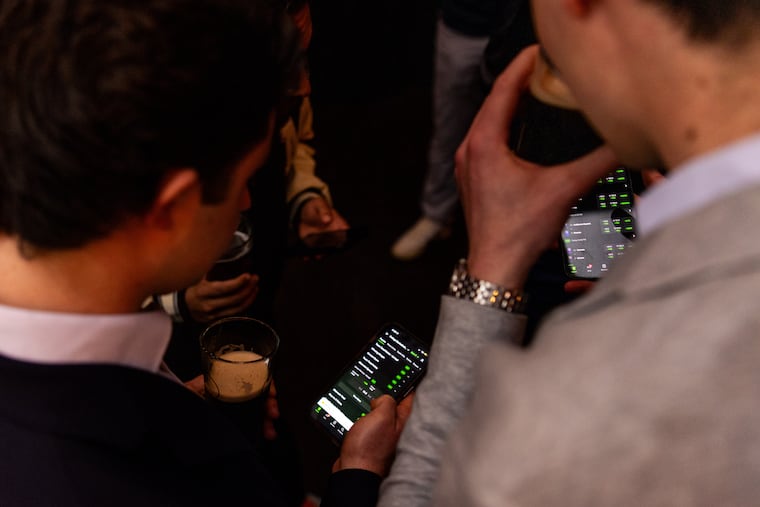
Americans had wagered nearly $1.9 billion on the midterm elections as of late Monday, risking money on over 7,000 different outcomes ranging from what a candidate will say in a specific campaign speech to the broad balance of power in Congress, according to a Washington Post analysis.
Most of the staggering sum, about $1.3 billion, was traded on Kalshi, the Post found, while Kalshi’s main competitor, Polymarket, has recorded about $600 million in trades, according to the analysis.
The acceleration of these largely unregulated markets into elections — taking bets on the literal mechanics of democracy — shows how deeply they have embedded themselves into American life since they burst onto the scene about four years ago.
In prediction markets, traders make bets on the outcomes of real-world events, such as which candidate will win an election. The bets pay $1 if the outcome happens, and nothing if it doesn’t. Traders can place multiple bets on the same event in the hopes of securing a larger payout. The price is set by supply and demand — not by a bookie, as in traditional gambling. A bet on an outcome seen as unlikely might cost 10 cents, while a likelier one might cost 90 cents.
Both markets tend to have similar odds on most questions. Kalshi cautiously predicted the Democrats to win both the House (93% chance) and the Senate (74% chance).
The total sum bet as of Monday in the midterms is less than in the 2024 election, when more than $3.6 billion was wagered on Polymarket alone on whether Donald Trump or Kamala Harris would win the presidency.
Because there are multiple trading platforms and users are anonymized, it’s impossible to know exactly how many people — or, often, who — has bet on the midterms.
That has led to a host of questions and concerns about who can and should be allowed to bet. Prediction markets are already subjected to Commodities Future Trading Commission regulation. Kalshi has been pushing for greater federal regulation to further prevent insider trading.
This year, Kalshi has banned several candidates for betting on their own races, including one House candidate in North Carolina; NPR has reported that many campaign consultants have said they bet on races, including ones they’re working on. Congress has also implemented its own internal rules to bar conflicts of interest. The Senate implemented a ban on members and staff from prediction markets in April.
Several lawmakers have introduced legislative proposals to regulate, or ban, elements of prediction markets. Most aim to curb insider trading or bets on military action. But a few would also do away with trades related to election outcomes.
“People are clearly going to take advantage of this. People with an ability to influence elections, consulting firms, polling agencies, candidates’ staff — all of this — they are going to know what to do,” said Rep. Blake Moore (R., Utah), who has introduced bipartisan legislation to ban trades related to terrorism, assassination, war, or elections. “We are allowing such nefarious opportunities to exist, and it’s time to put some clamps on.”
Sen. Jeff Merkley (D., Ore.) and Rep. Jamie Raskin (D., Md.) have also introduced a bill to ban contracts related to election results. Sen. Chris Murphy (D., Conn.) has also called for banning election-related trades.
Alex Keeney, founder of Eventual, a prediction-markets focused media company and a frequent trader on political markets, said bettors are often a mix of professional traders and armchair pundits.
“There are traders who do this for a living,” he said. “And there are hobbyists who make some money on the side or just enjoy the hunt for better info.” Many choose how to bet by evaluating political polls, news, and campaign fundraising totals — turning those traditional sources into a single prediction, he said.
Most traders are casual users making relatively small bets that aren’t profitable, said Ross Dahlke, a communications professor at the University of Wisconsin-Madison who studies political prediction markets. “When surveys ask, about four in 10 say they’re looking to make money, and about half say they do it for fun,” he said.
Prediction markets, meanwhile, have said they offer a service in allowing more insight into what really may happen on election night.
“By shifting the focus from what people want to happen to what they think will happen, backed by their own research and their own money, these markets filter out social media noise and pundit bias to deliver a level of clarity and predictive power that’s hard to match,” Dani Lever, a spokesperson for Kalshi, said in a statement.
A Post analysis from June found that prediction markets on the primaries were reasonably accurate in determining the chances of whether a candidate would win.
But it can be tempting to misinterpret those probabilities as certainties, because unlikely things happen all the time. The Republicans still have a 24% chance of retaining the Senate — not far from the odds of flipping a coin twice and getting two heads — hardly a surprise when it happens.