Lawmaker seeks dozens of messages between Kennedy Center and Trump aides
The administration says presidential communications privilege protects the exchanges from disclosure, though legal experts have cast doubt on that argument.
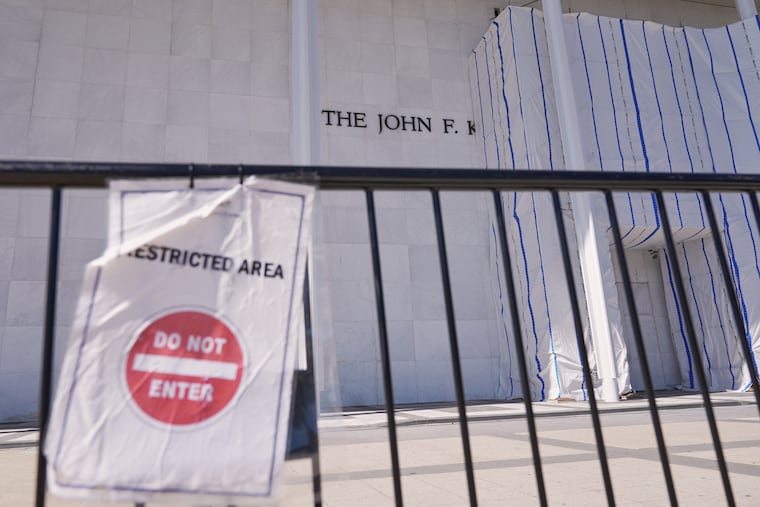
A newly filed court document reveals extensive communications between Kennedy Center management and President Donald Trump’s advisers, including exchanges with Commerce Secretary Howard Lutnick and presidential aide Natalie Harp around pivotal court rulings and board votes over the institution’s future. But exactly what they’re saying remains secret, amid a court battle over whether presidential privileges apply to Trump’s role at the center.
The administration’s list of withheld records identifies roughly 180 text messages between Kennedy Center executive director Matt Floca and Lutnick, who holds no formal position at the center. Their exchanges began the day after Trump publicly declared Lutnick’s involvement with the institution.
The list also identifies 19 messages between Floca and Harp, including 11 on Sept. 15, when trustees voted once more to close the main building for a two-year, $257 million renovation.
The records show how closely Trump’s advisers have become involved in managing the national arts institution he chairs, with officials fielding information about the center’s finances, litigation, and the Kennedy Center Honors. The contents of the withheld exchanges could help clarify who shaped decisions about the center’s future and how much authority its trustees exercised, which has become a key question in the court fight over the center’s closure.
The administration says presidential communications privilege protects the exchanges from disclosure, though legal experts have cast doubt on that argument. U.S. District Judge Christopher Cooper has yet to rule on the matter.
Rep. Joyce Beatty (D., Ohio), a trustee challenging the center’s decisions, filed the list Sunday after defendants provided it late last week. Her lawyers argue that the records could show whether trustees exercised independent judgment or approved decisions made beforehand.
“This latest revelation underscores how Trump personally micromanages the operations of the Kennedy Center,” attorneys Norm Eisen and Nathaniel Zelinsky said in a statement. “It would be a serious blow for the rule of law if, after appointing himself Chairman, Trump can evade accountability for his misdeeds through a sham invocation of executive privilege.”
The center, the White House, and the Commerce Department did not immediately respond to questions about the communications.
The Lutnick correspondence began against the backdrop of a legal setback. On May 29, Cooper ruled that the board had illegally voted in December to add Trump’s name to the center. Trump responded by announcing that he was working with Congress to transfer control of the institution and had directed Lutnick to facilitate the change.
That same day, the list identifies an email exchange involving Floca and White House official Joshua Fisher, with a memorandum addressing center “operations, statutory duties, and litigation risks,” along with material about its financial outlook.
Their exchanges continued through Sept. 15. Messages were recorded June 11, when trustees voted to appeal Cooper’s ruling and seek to delay his order, and June 12, the deadline for removing Trump’s name. Crews removed the lettering early June 13.
The defendants describe the conversations with Lutnick as relating to operations, renovation, and board matters, intended to help advisers “formulate plans to and reflect advice from” Trump. The Harp exchanges concerned similar subjects and were intended to inform and reflect presidential deliberations.
Other entries identify arrangements for a presidential meeting July 30 and a summary concerning Kennedy Center matters that Floca sent that day to Commerce advisers and a White House employee.
Beatty’s lawyers argue that the records concern Trump’s work as board chairperson and should not be shielded by presidential privilege.