‘The mystery continues’: Latest hunt for Amelia Earhart’s plane comes up empty
An American team searching a remote atoll in the South Pacific said in a statement Monday that it had found “no conclusive evidence” of wreckage from Earhart’s Lockheed 10-E Electra.
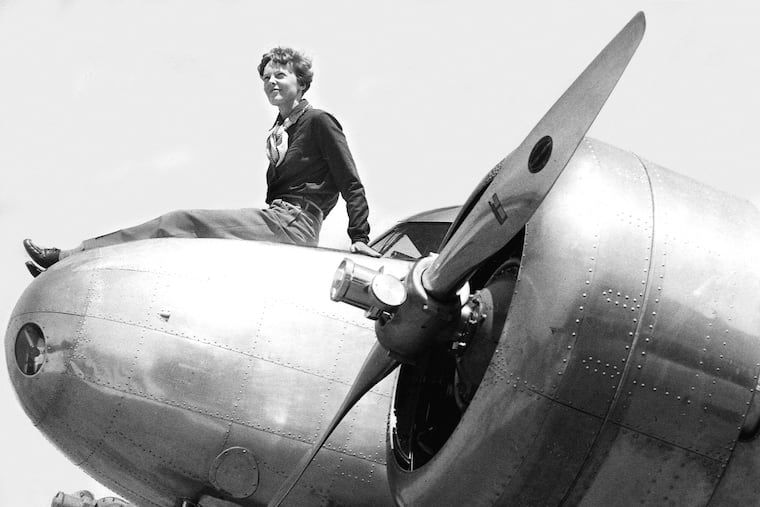
Search after search has failed to find the plane of Amelia Earhart, the pioneering pilot who disappeared over the Pacific Ocean in 1937. One recent expedition mistook rocks for the aircraft. Now, another has found trees.
An American team searching a remote atoll in the South Pacific said in a statement Monday that it had found “no conclusive evidence” of wreckage from Earhart’s Lockheed 10-E Electra.
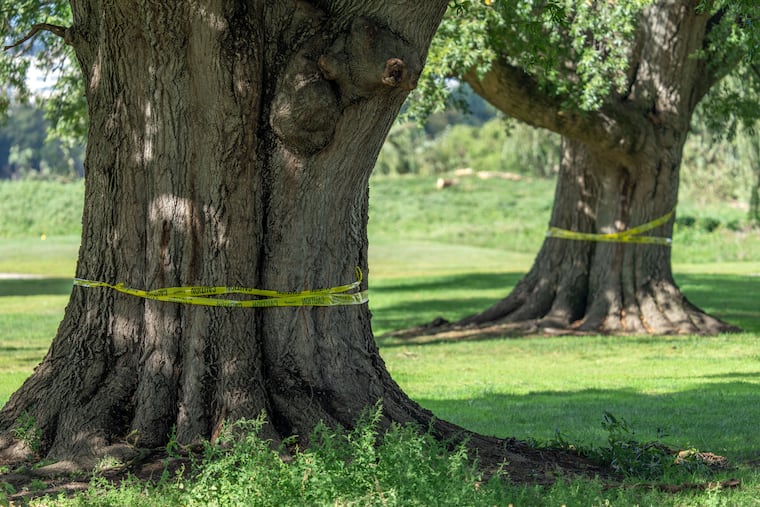
What had looked like a metallic Y-shaped fragment in a satellite image was most likely a collection of trees covered with coral sand, the team said.
“This mystery has been ongoing for 90 years, and the mystery continues,” Rick Pettigrew, a member of the expedition, said in a video from an atoll in Kiribati, the Pacific island nation where the search took place.
Here’s what to know Earhart’s disappearance, the decades-long effort to find her plane and the latest search.
Who was Amelia Earhart?
Earhart was born July 24, 1897, in Atchison, Kan., according to the Federal Aviation Administration. Her father was a lawyer, and her grandfather was a judge. After attending school in Chicago, she moved to Toronto in 1918 to become a nurse’s aide at a military hospital.
She took her first plane ride in 1920, an experience that inspired her to become a pilot. “As soon as I left the ground, I knew I myself had to fly,” she declared, according to the National Air and Space Museum at the Smithsonian in Washington.
She began taking flying lessons from Anita Snook, a pioneer of aviation, in 1921 and received an international pilot’s license in 1923.
Earhart achieved many aviation milestones. She was the first woman to fly to an altitude of 14,000 feet (1922), to fly across the Atlantic Ocean as a passenger (1928), and to make the crossing solo (1932), according to the National Air and Space Museum.
In 1937, she was attempting to become the first woman to fly around the world at the Equator when she and her navigator, Fred Noonan, disappeared over the Pacific Ocean. They had left Papua New Guinea on what was to be the third-to-last leg of the journey and were heading to Howland Island, about 400 miles northwest of Nikumaroro, the remote atoll where the latest search unfolded.
She was 39 when she disappeared and was declared dead in 1939.
Searches have come up empty
After Earhart and Noonan disappeared, the U.S. launched one of the largest air-sea searches in history at the time, spending two weeks scouring an area of the Pacific Ocean roughly the size of Texas. That search cost more than $4 million.
Over the following decades, others invested millions in efforts to locate the wreckage of their plane.
Since 1989, a nonprofit organization called the International Group for Historic Aircraft Recovery, or TIGHAR, has led repeated expeditions to Nikumaroro, pursuing a theory that Earhart and Noonan landed on the island and eventually died there as castaways.
In 2012, the group led a $2.2 million search that received public support from then-Secretary of State Hillary Clinton. The expedition failed to locate the aircraft, and a sonar image of an underwater object also failed to produce a confirmed discovery.
In 2019, Robert Ballard, the explorer famous for discovering the Titanic, led a two-week, multimillion-dollar search. His team came up empty.
In 2024, Tony Romeo, CEO of Deep Sea Vision, said a sonar image that his company captured on an $11 million expedition appeared to show a plane resting about 3 miles below the surface of the Pacific Ocean. The object lay somewhere within a 100-mile radius of Howland Island.
The company later announced on social media that what it had thought was wreckage from the plane was a rock formation.
The disappearance has recently drawn renewed attention from Washington. Last year, President Donald Trump called on the federal government to unseal all remaining classified files on Earhart, a trove of more than 4,600 pages of documents.
What’s the latest?
The Taraia Object expedition, a joint effort by the Archaeological Legacy Institute, Purdue Research Foundation, and Purdue University, was looking for an object with a reflective surface that it first saw in a satellite image of the Nikumaroro atoll in 2020. The team thought the object could be a metallic fragment from Earhart’s plane, which had been purchased with money from the Purdue Research Foundation.
TIGHAR’s longtime leader, Ric Gillespie, was skeptical, arguing before the team arrived that the object was probably a fallen tree.
By the time the team of 17 arrived at the island last week, a large portion of the material they had once seen in the satellite imagery had washed away, leaving a smaller, Y-shaped fragment. In its statement Monday, the team said the fragment was most likely part of a collection of trees coated in a shiny, hardened mixture of coral sand.
Despite the findings, the expedition said its members continue to support TIGHAR’s theory that Earhart and Noonan survived as castaways on the atoll.
This article originally appeared in the New York Times.