Josh Shapiro called Trump ‘profoundly and pathetically weak’ after his embrace of Putin and Xi
Gov. Josh Shapiro cautioned about Chinese influence in an event at the University of Pennsylvania Friday, one day after President Donald Trump embraced the Chinese president.
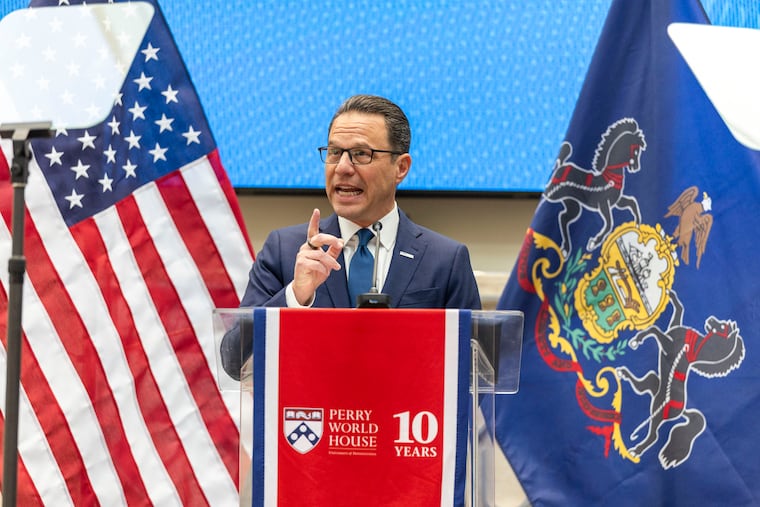
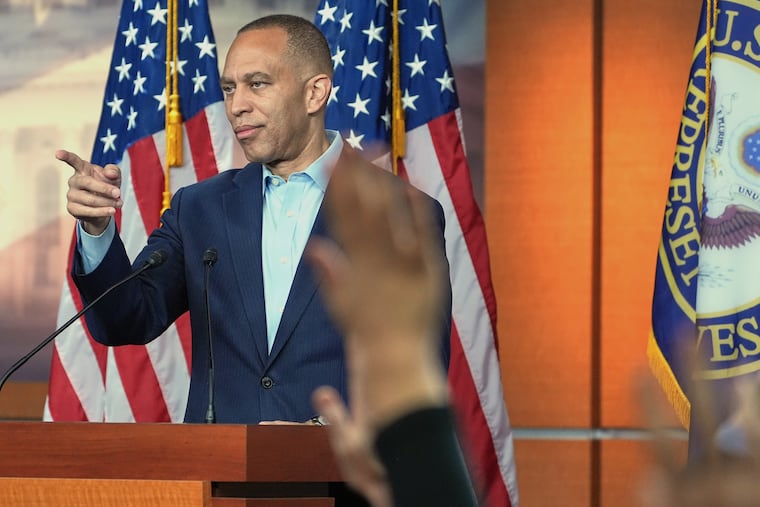
Pennsylvania Gov. Josh Shapiro called China “perhaps the greatest adversary of the United States” Friday in Philadelphia and blasted the White House’s current handling of the country, in remarks that covered his broad vision for American foreign policy as he likely prepares a campaign to become the nation’s next commander in chief.
“The reality is, with China, we have to understand they are economically trying to overtake us,” Shapiro said, at the University of Pennsylvania’s Perry World House as part of an event series on trans-Atlantic policy. “But we also have to understand that we have to find ways to be able to work with them to deal with some of the most pressing challenges.”
Shapiro, who is widely expected to announce a 2028 presidential run after his recent election to a second term, used the event to criticize President Donald Trump, who met with Chinese President Xi Jinping and Russian President Vladimir Putin in a trilateral roundtable in China Thursday.
He called the president “profoundly and pathetically weak” during the meeting, which did not produce any meaningful agreements, and said Trump made America “the laughing stock of the free world.” Shapiro said his approach would be to work with China in areas both countries have an interest, namely artificial intelligence, but not give them a free pass.
“It’s not that we shouldn’t engage, but we should engage from a position of strength. And Donald Trump is engaging from a position of weakness,” Shapiro told Frederick Kempe, CEO and president of Atlantic Council, which partnered with Penn to host the summit on foreign policy.
For years, Shapiro said, it hasn’t been clear to Americans, including farmers in Lancaster and construction workers in Philadelphia, how foreign policy impacts their lives here at home. That changed during this year’s midterms, when Democrats trounced the GOP in races up and down the ballot, including in Pennsylvania, where four Shapiro-endorsed Democrats flipped competitive congressional seats helping provide a majority in the U.S. House. These Pennsylvanians, he said, experienced the impacts of Trump’s war with Iran that began in February and led to sporadic closures of the Strait of Hormuz, where oil flows and caused a spike in gas prices.
“They feel the effect of foreign policy, even if they’re not sort of thinking about it, debating it every day,” he said.
In his opening remarks Friday, Shapiro introduced his three-pronged proposal for a stronger relationship with America’s allies, including Canada and some European countries. First, he said, the U.S. should grow its economy and industrial strength with allies together, calling Trump’s tariffs and trade war “foolish.”
Shapiro, who has boasted his efforts to speed up the state’s process to get licenses or permits to do work, said cutting red tape and welcoming other countries’ investment into Pennsylvania would help, not weaken, workers.
Next, he said, the alliance should work together to face emerging challenges, like developing guardrails on A.I. — something he said no country can go at alone. In August, amid mounting concern from constituents, Shapiro unveiled a sweeping executive order that dramatically restricts data center development in Pennsylvania.
“A.I., in particular, carries massive risks to our communities, to our jobs, to that very same way of life that it promised to change for the better,” he said. “A.I. must make life better for all of us, not replace us, or God forbid, endanger us. There are critical steps we need to take here in this country to mitigate the dangers of A.I. — steps that this administration in Washington has repeatedly refused to take.”
And third, he said, countries that belong to NATO — a political and military alliance founded in 1949 of 32 member states in Europe and North America — need to strengthen their collective defense, primarily through deterrence of future military conflict. In turn, America, under a Democratic president he hopes, would never again waiver on keeping NATO’s central premise to come to the aid of other nations in times of attack.
While making the last point, Shapiro indirectly praised Trump by saying rightly pushed allies to invest more of their GDP into defense spending. But when pressed on this, he downplayed Trump’s uniqueness, saying the last two other presidents, Democrats Joe Biden and Barack Obama, also carried that urging.
His plan would provide a new opportunity to develop a foreign policy strengthening existing alliances that links security and prosperity together, he said. And the Democratic Party needs to build a coherent foreign policy that focuses on attracting investment from overseas into the U.S. to strengthen manufacturing and make sure international students, like those at Penn, continue to come to American universities to innovate.
The event Friday was also among the few instances of foreign policy discussion involving Shapiro when he has not been asked about Israel.
Finally, he said, Democrats — now in the majority of both chambers of Congress — need to use their leverage to pressure Trump and Secretary of War Pete Hegseth to send the war in Iran by inflicting the power of the purse strings to reduce funding, hold them accountable for their unlawful actions, and end the blanket tariffs.
“We need to wind this down. We need to save lives. We need to protect the American people,” Shapiro said. “There has to be a plan forward to reopen the Strait of Hormuz, and then deal with the effects of what occurred in Iran.”