Gov. Josh Shapiro lured companies like Chobani and Burlington with state incentives. Will it pay off for Pa.?
The governor has highlighted “big deals” to lure business investment. Some say the strategy carries political risks.
The CEO of Chobani thought he had identified a site in the Lehigh Valley for the yogurt company’s first dairy plant in Pennsylvania.
But challenges with wastewater and energy were holding up Hamdi Ulukaya’s plans. “And if you don’t have that solution, you kind of don’t want to touch anything,” the billionaire founder said in September.
As Ulukaya announced a $1.2 billion investment at a new facility in Allentown — the biggest private investment in the state’s agriculture industry on record — he credited Gov. Josh Shapiro with making it happen. The state expedited permitting for the project and offered $50 million in grants and loans to support site improvements.
“This really speaks to the leadership of this state,” Ulukaya said. “I’ve never seen anything like this.”
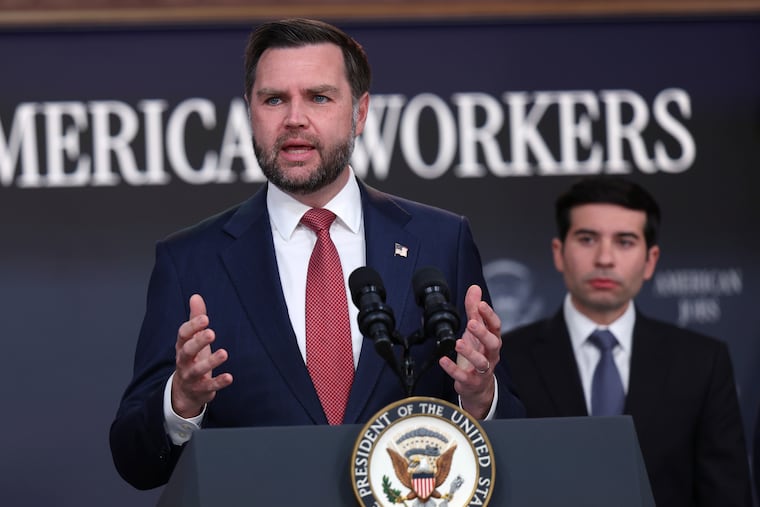
As Shapiro, 53, runs for reelection in November, analysts say, deals with companies like Chobani help reinforce an image the governor has cultivated as a pro-business Democrat who is focused relentlessly on “getting stuff done.”
“I’m competitive as hell. I wanna win every deal,” Shapiro said in September at the Chobani announcement. “For a long time, Pennsylvania wasn’t even on the field. We’re on the field now. We’re competing. We’re winning big deals like this.”
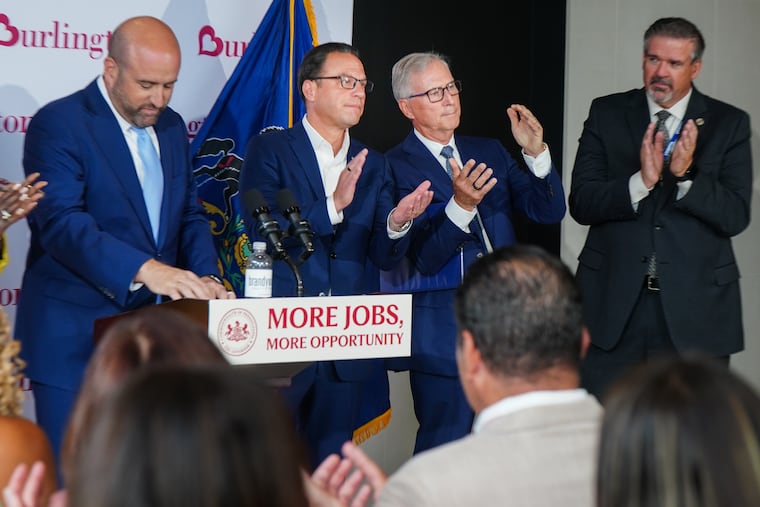
And increasingly, Shapiro has tapped state subsidies to help drive economic development — landing splashy commitments such as pharma giant Eli Lilly & Co.’s plans for a $3.5 billion plant in the Lehigh Valley and discount retailer Burlington Stores’ $370 million move from South Jersey to University City.
Since Shapiro took office in 2023, his business development team, known as BusinessPA, has spent $121.8 million per year on average to attract, retain, and grow businesses through incentives to employers, according to data the state shared with The Inquirer.
That is more than double the $51.6 million the state invested annually on such deals from 2018 through 2022 under Gov. Tom Wolf, according to the current administration.
Shapiro administration officials say incentives are one piece of a broader strategy to make Pennsylvania more attractive to businesses. Other key ingredients include speeding up projects, investing in industrial site improvements, and continuing to reduce the corporate tax rate.
Shapiro’s strategy carries some political risk, however.
In the gubernatorial race, Shapiro is leading Republican State Treasurer Stacy Garrity by a wide margin in polls. But he is also thought to be mulling a run for president in 2028.
Any perceived coziness with big corporations could haunt Shapiro in a Democratic primary, said Chris Borick, a political science professor at Lehigh University. Shapiro has already seen voters turn against an industry he once courted: data centers.
“He left a trail of breadcrumbs that made that connection to the industry that he has had to walk back on this year,” Borick said.
Garrity’s campaign has sought to highlight Shapiro’s early support for Amazon data center projects in Pennsylvania that he said would result in $20 billion in private investment. Shapiro has since sought to restrict data center development. Garrity, too, initially supported data centers publicly, but has since backtracked.
In a statement, Garrity’s campaign said Shapiro’s economic agenda amounted to “corporate welfare.”
A Garrity administration would “cut the red tape that is holding up progress, reduce the tax burden facing families and businesses, and hang a welcome sign — not a handout — to businesses that want to start or move to the commonwealth,” campaign spokesperson Matt Beynon said.
For Pennsylvanians, the bigger question is whether the governor’s economic development deals will pay off in the long term.
But evaluating the efficacy of his incentive spending could prove challenging. A state board created in 2017 to review the performance of tax credit programs and other government spending has not met since 2023, PennLive reported.
“The right scorecard is not the size of the subsidy package or the value of the announcements,” said Bernie Gallagher, executive director of the left-leaning Keystone Research Center in Harrisburg.
“It’s whether public dollars changed business behavior, and then produced additional family-sustaining jobs and left durable assets behind, and then delivered a measurable public value.”
A new strategy for wooing business
State and local governments spend tens of billions of dollars a year on incentives for businesses, research shows.
When Shapiro took office in 2023, his team found Pennsylvania was being outspent “astronomically” by states like New York, North Carolina, Virginia, and Ohio, said Rick Siger, secretary of the Pennsylvania Department of Community and Economic Development.
Ramping up incentives was one part of the Shapiro administration’s economic development strategy rolled out in 2024 — the state’s first new plan in nearly 20 years, according to the governor. It focused on growing five core industries: agriculture, energy, life sciences, manufacturing, and robotics and technology.
“We didn’t have a plan for economic development in the state for a long time,” said Chellie Cameron, CEO of the Chamber of Commerce for Greater Philadelphia, who describes the road map as “significant.”
With bipartisan support in the legislature, Shapiro launched PA SITES, an incentive program aimed at developing shovel-ready sites for businesses. Lawmakers authorized the administration to borrow $400 million to fund it. That is the program Shapiro tapped to incentivize Chobani.
From 2023 through late September, Shapiro’s BusinessPA team pledged nearly $457 million in grants, loans, and tax credits to roughly 90 companies that promised to create or retain jobs in the state, according to the administration. That figure does not account for tax breaks available to certain firms located in Keystone Opportunity Zones, a program established in 1998 to promote economic development.
The top 10 largest incentive deals — including deals with Johnson & Johnson, Eli Lilly & Co., and Chobani — accounted for 65% of the total subsidies.
“We’ve been able to compete for some of these really large-scale deals that the state did not have the capability to compete for financially in the past,” Siger said.
Since Shapiro took office, his administration has tallied $43 billion in planned investments and 29,000 jobs created in Pennsylvania by private-sector employers that got help from BusinessPA or other state programs.
One hub of economic activity has been the Bellwether District, a 1,300-acre industrial campus in Southwest Philly that was previously a Sunoco oil refinery.
Canned beverage manufacturer DrinkPAK is investing $195 million in a new manufacturing facility at the district, which is in a Keystone Opportunity Zone and is being redeveloped by Chicago-based HRP Group. DrinkPAK, which also has locations in California and Texas, says it will create 174 jobs at the factory and produce billions of cans a year.
Company executives said they evaluated sites across five states. In addition to Bellwether’s KOZ — a designation that required city and state approval — the Shapiro administration offered DrinkPAK a $2 million grant.
“I’m going to say it really, really plainly,” said Holly Schroeder, DrinkPAK’s vice president of organizational strategy. “DrinkPAK would not be standing here in Pennsylvania without the support of the incentives the commonwealth brought to the table.”
Jeff Hornstein, executive director of the Economy League of Greater Philadelphia, said Bellwether shows how incentives can help stimulate economic activity that would not have occurred otherwise.
“Bellwether was a disgusting, decrepit brownfield, and through visionary leadership and a lot of money, like a lot of tax incentives, it is going to become a job node, much like the Navy Yard became,” he said. About 16,000 people now work at the Navy Yard, for employers including Urban Outfitters, Tastykake, and Jefferson Health.
But Hornstein questioned whether some of Shapiro’s incentives — like one with Burlington, which is relocating its headquarters from South Jersey to Philadelphia — will benefit the region as a whole.
Burlington says it will relocate 1,500 existing jobs to University City and create 500 new ones. Shapiro’s team counts all of those as newly created jobs because they are new to Pennsylvania.
“Is inducing a firm to move from one part of the region to another — is that really growth activity or is it zero sum?” said Hornstein, whose organization seeks to promote inclusive and equitable growth. “We win 2,000 jobs. Burlington County, N.J., which is in our region, loses 2,000 jobs. Is that net growth for the region, or just ‘yay Philadelphia, yay Pennsylvania’?”
More broadly, critics say the state’s incentive programs allow politicians to pick winners and losers in the marketplace. They also note that some of the programs are also financed through borrowing, such as Pennsylvania’s Redevelopment Assistance Capital Program — the source of a $20 million grant to Burlington.
“So taxpayers are not only funding those handouts, but they’re also paying interest on those costs, which you know, in our opinion, is kind of the worst of both worlds,” said Elizabeth Stelle, vice president of policy at the Commonwealth Foundation, a right-leaning think tank in Harrisburg.
Who gets the jobs?
Given the amount of money states pump into economic development, there are bound to be some losing bets. And Pennsylvania has had its fair share.
States have been bidding against one another for firms since at least the 1970s, according to academic research, and in that era the big corporate competition featured automaker Volkswagen.
In 1976 the German company chose to build its first U.S. plant in Southwestern Pennsylvania — enticed by $100 million in state subsidies, or about $580 million in 2026 dollars. The plant shut down a decade later.
A 2020 academic paper that reviewed subsidy deals from 2002 to 2012 found that firm-specific incentives were associated with increased average employment in the targeted industry but were not linked to broader economic growth.
“We spend a ton of money on these things, and it’s not obvious they’re always tied to more investment and benefits for the place rather than hollowing out the tax base,” said Owen Zidar, a coauthor of that paper and a professor of economics and public affairs at Princeton University.

- The state offered JBS $10 million to keep its Souderton beef processing plant open, preserving about 400 jobs at the facility, which previously employed 1,700.
- Johnson & Johnson got $25 million in grants plus tax benefits, and plans to spend over $1 billion on a new facility in Montgomery County, creating 500 jobs over 12 years.
- Urban Outfitters will get additional Keystone Opportunity Zone tax benefits as it plans to hire over 1,000 new employees in the Philadelphia region over seven years.
- Amazon plans to spend at least $20 billion to build data centers in Luzerne County and Bucks County, and the state has offered to spend $10 million in support of workforce development programs for data centers.
- GSK was offered roughly $21 million in state grants in 2024 amid plans to spend up to $800 million expanding its Lancaster County facility, creating at least 200 jobs. GSK is also expanding its presence in Upper Merion, with plans to add 300 jobs there, according to the Shapiro administration, and will get tax benefits through multiple state programs.
Then there’s the question of which workers get the jobs created through subsidy deals.
“We really need to think about talent attraction and talent retention alongside business attraction,” said Jennifer Kebea, president of Campus Philly, which works to keep Philadelphia college students in the area after graduation. “Are the young people graduating from our institutions poised to take these roles?”
Shapiro’s team says it is focused on securing good jobs for local residents.
“We base our incentives — and whether we incentivize a deal at all — on the wages and job quality associated with those roles,” Siger, the department secretary, said.
Jobs created under the Shapiro administration pay more than new jobs announced under the previous administration, the state says.
“That’s the exciting part of what this governor’s been able to do. His team has been able to zero in on really good companies that want to pay good wages,” said H. Patrick Clancy, CEO of Philadelphia Works, the city’s workforce development board.
Down the road, Clancy wonders how many of the jobs created will be retained. In other words: “Long term, did it really all pan out?”
A 2017 law requires Pennsylvania’s Independent Fiscal Office to review each tax credit program and state agency at least once every five years, and report its findings to the Performance-Based Budget Board. Board members include four lawmakers from both parties, as well as the governor-appointed budget secretary.
But the board has been dormant since 2023 and its members have declined to say why, according to PennLive.
The Shapiro administration is “awaiting consensus” among board members on how to move the review process forward, a spokesperson said, adding that the panel has not provided “clear direction” to agencies.
In the meantime, the administration continues to evaluate government programs, including tax credits, through its Resource Evaluation and Mission Alignment Project (REMAP), the spokesperson said. That project has already informed changes to some tax credits.
Stelle, of the Commonwealth Foundation, said: “Internal reviews are one thing, but the lack of a public review of outcomes is concerning. Pennsylvania taxpayers deserve to see the impact of tax credits and agency programs. Funding should be based on outcomes, not intentions.”
The state says it has measures in place to ensure companies receiving incentives hold up their end of the deal.
“We have a formula that we negotiate with the company to claw back part — or, in draconian cases, all — of an incentive based on nonperformance,” Siger said.
Since the beginning of 2023, the administration says, it has clawed back over $3.8 million from 64 businesses that failed to create or retain the jobs they promised, or otherwise broke their commitment.
“Our goal, of course, is not to do that,” Siger said. “Our goal is to create the jobs.”
Staff writer Joe Yerardi contributed to this article.