Two prosecutors resigned after they said Philly DA Larry Krasner ‘sought to discredit’ them in court
Katherine Ernst and Steven Wildberger said in a memo that Krasner made misstatements about them in court documents, making it "impossible" to stay in their jobs. Krasner denied wrongdoing.
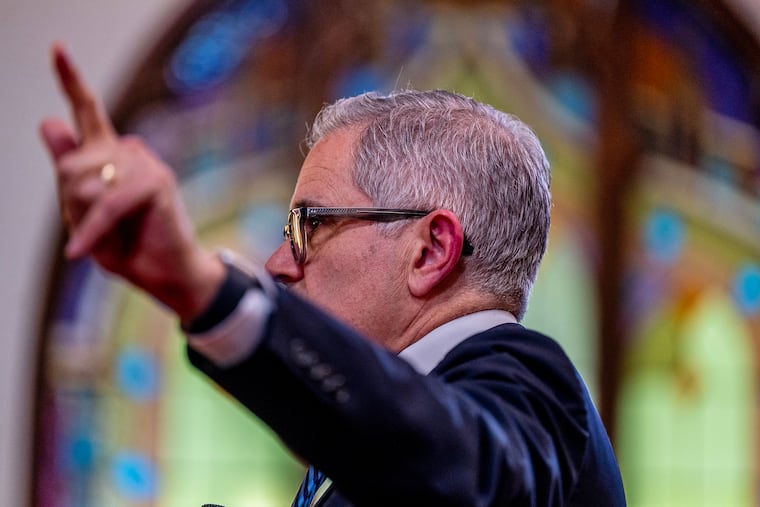
Two prosecutors who clashed with District Attorney Larry Krasner over how to handle a controversial post-conviction case have resigned after saying Krasner made “misstatements” about them in court documents.
Katherine Ernst and Steven Wildberger, both of whom had once served as supervisors in the law division, sent Krasner a letter Monday asking him to correct aspects of filings he submitted to a federal judge last week. Krasner’s documents, they said, contained inaccurate or misleading information about their actions in a federal case and had harmed their professional reputations.
But Krasner declined to modify his filings, saying in an email response to their memo that his recollections were accurate and that his conclusions were drawn “in good faith.” He also accused them of “insubordination” and said they had damaged the office and their coworkers with their actions.
Ernst and Wildberger said that because Krasner had declined to address their concerns, they could no longer work for him, saying he had “sought to discredit us in the eyes of the public we represent.” Their resignations took effect late Tuesday.
Each declined to comment further Wednesday.
The personnel shake-up is another example of how Krasner’s office has been affected by the ongoing federal case — a complex matter in which a man has been seeking to have his murder conviction overturned.
Last month, the judge overseeing the proceedings, U.S. District Judge Paul S. Diamond, made the extraordinary statement that Krasner and one of his top supervisors, Matthew Stiegler, may have committed crimes including conspiracy, obstruction of justice, or perjury while participating in the case. And Diamond said he was referring the matter to the U.S. Attorney’s Office for a potential criminal investigation.
Federal prosecutors have declined to comment on whether or when they might open an inquiry. But in the wake of Diamond’s decision, Stiegler stepped down from his supervisory position in the office. (He remains employed in its conviction integrity unit.)
Another former prosecutor connected to the case — Jaclyn Mason — also resigned earlier this year, saying she did so because she believed she was being set up to take the blame for some of the office’s mistakes, even though she viewed Stiegler as more culpable.
The underlying case is centered on Dennis Johnson’s attempt to have his 2009 murder conviction overturned. Krasner’s office had, for a time, supported that effort, but reversed course earlier this year after Ernst and Wildberger discovered that a brief filed by Mason endorsing Johnson’s claims contained significant errors.
Diamond went on to conduct hearings this summer to determine how those errors occurred. And Mason largely blamed Stiegler, saying he had pressured her to file a brief supporting Johnson.
When Mason’s colleagues — including Ernst and Wildberger — told her they needed to try to withdraw her error-plagued brief, Mason said, she thought she was going to be scapegoated on behalf of Stiegler, and she quit.
After her departure, Ernst and Wildberger testified, the two of them, along with two of their colleagues, had frequent disputes with Krasner about various aspects of the case — including whether it should be referred to the state attorney general’s office, and whether staffers should look into other cases Mason handled to see if she had made similar errors.
Diamond said some of the testimony suggested Krasner might have been attempting to obstruct justice or conspire with Stiegler to present a “false narrative” to the court — accusations Krasner has vehemently denied.
Ernst and Wildberger also said Krasner, in filings he submitted last week, had misrepresented some of their actions or intentions, calling some of his written statements about them “untrue.”
One of the disputes concerned their belief that Krasner had inaccurately characterized Ernst as “a panicked, irrational woman terrified of Judge Diamond.” Another concerned Krasner’s contention that they had been motivated to speak out about the case due to “fear” of potential consequences; they said they were driven solely by their ethical responsibilities to be truthful.
“Your actions make it impossible for us to continue to represent the Commonwealth,” they wrote to him.
It was not immediately clear what Ernst and Wildberger might do next.
The fate of Johnson’s case also remains unresolved.
Krasner has asked for Diamond to be removed from overseeing the matter moving forward. The judge has not weighed in on that request.
On Wednesday, the state attorney general’s office — which has been participating in the matter at Diamond’s request — said Diamond has demonstrated fairness throughout the proceedings and should be allowed to continue overseeing it.