Here’s how Pa. and the Secret Service are fighting EBT skimming
A seismic disruption to EBT skimming is coming to Pennsylvania, but federal, state, and local law enforcement are already preparing for the next iteration of scammers.
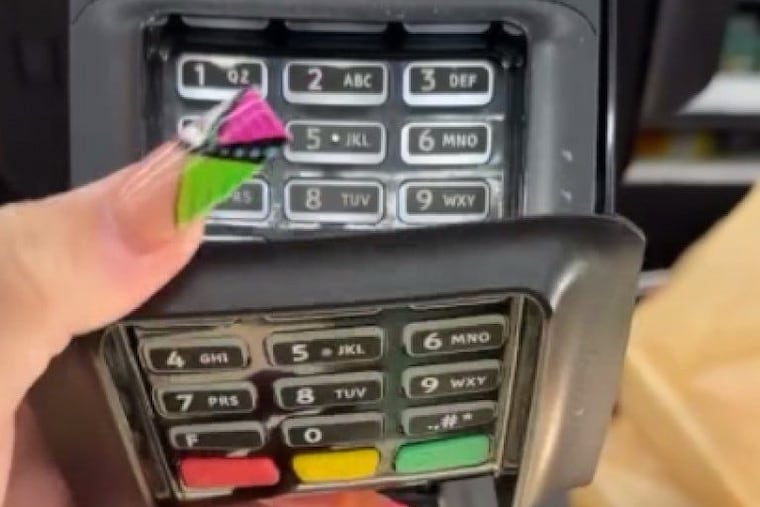
By the time state and local law enforcement in Northumberland County, Pa., connected a device stealing people’s food assistance benefits from a 7-Eleven to Patricia Bogdan and George Lazar, the pair had already fled to New Jersey.
Authorities allege Bogdan and Lazar placed the contraption on a point-of-sale terminal in February, which went undiscovered for days. Bogdan and Lazar then allegedly retrieved the stolen electronic benefit transfer card data in a process known as skimming and spent people’s benefits at BJ’s and Sam’s Club locations in Pennsylvania and New Jersey.
Authorities would later learn Bogdan had multiple aliases and fake passports, while Lazar had a warrant out for an attempted murder charge in Belgium.
“It illustrates how quickly they’re moving, the type of individuals that are involved in this, and just their ability to get in and out, that makes these really complex cases,” said State Inspector General Michelle Henry, whose office investigates EBT thefts in Pennsylvania.
With the help of authorities in New Jersey and North Carolina, Henry’s office was able to find Bogdan and Lazar in March and later bring them back to Pennsylvania, where the cases are ongoing. A small win in what victim advocates argue has risen to a nationwide crisis because the federal government has failed to invest in more secure card technology. The magnetic strips on the cards are too easy to exploit.
Still, a seismic disruption to these scam operations is slated to come to Pennsylvania before Jan. 1, 2028.
The latest state budget appropriated $7 million in funds that would pay for chip-enabled EBT cards, giving the outdated magnetic stripe technology, which the federal government required states to use until 2024, a sorely needed upgrade.
The chip cards are not invulnerable to scammers but exploiting them requires more sophisticated technology, according to the Secret Service. Early adopters of the chip technology, such as California and Alabama, have reported significant drops in thefts already.
To the victims of this sort of fraud, scarred by the memories of an unexpected zero balance while trying to pay for groceries, the change is long overdue. There are countless stories of families learning about how the scam works and having to scrape meals together with the aid of food pantries. Benefits were reimbursed between October 2022 and December 2024, but that ended when Congress did not extend funding.
For now, law enforcement in Pennsylvania continues to confiscate skimming devices and prosecute perpetrators, even when it can feel like a high-stakes game of whack-a-mole, while preparing for the next iteration of scammers.
An ever-evolving scheme that knows no borders
Much of the skimming scam — from recruiting to reselling the goods purchased with EBT data— happens online through the dark web and social media platforms such as Facebook and Instagram.
Transnational criminals, more recently from Eastern European countries, will send already assembled skimmers to partners stateside or provide instructions on how they can piece together the devices themselves. The local partners stick the contraptions onto a point-of-sale machine, steal data, and use the stolen benefits to purchase high-ticket items such as baby formula, which is then offloaded by word of mouth or on social media networks like Facebook and Instagram.
Michael Ross, special agent in charge of the Philadelphia field office for the United States Secret Service, said the advent of Bluetooth technology has made it much harder to catch people in the act since they can digitally collect the stolen data, instead of taking back the physical machine where police might be waiting for them.
Combating these crimes requires a multipronged approach, from the use of digital forensics to old-school public awareness efforts.
“We will send out a small group, not necessarily a formal task force, with state and local law enforcement representatives, and we will go to businesses,” Ross said. “We will go in, we’ll educate, we’ll show what some of these devices look like, things that can be done to make sure that the EBT fraud is mitigated.”
Various states have responded in a similar fashion, educating businesses and placing the onus of protecting food assistance benefits on recipients, who are encouraged to download apps on their phones that allow them to lock their cards until they’re ready to pay for groceries.
Still, Pennsylvania has aimed to be more aggressive in its fight against skimming.
The Office of State Inspector General piloted “Skimmer Response Teams” last year. Since its inception, the six- to eight-person group that works with the broader office on cases, seized more than 55 of these devices before scammers could come back and drain more than $20.5 million in benefits from more than 40,000 accounts.
Despite these strides in prevention, the state reported more than 5,100 skimming incidents that accounted for more than $2.5 million in stolen food assistance benefits in the first five months of the year.
It’s one of the reasons the task force pilot is now permanent and is expected to stay even as the EBT cards switch to chips.
“In my experience as a longtime prosecutor, anything that makes it more difficult to complete the crime is a deterrent,” said Henry. “If it’s super easy, you’re going to have more of it.”
And Pennsylvania wants to make stealing people’s food assistance benefits as difficult as possible.