President Trump says he’s opposed to immigration amnesty. But here’s how it could change the United States.
Immigration amnesty would allow undocumented people ― either a few, some, or all ― to gain legal status.

Even as President Donald Trump seemed to soften his stance on immigration enforcement, saying his mass-deportation policy may have been “too tough,” he opposed any deal with Democrats that would include “amnesty” for those living in the country without permission.
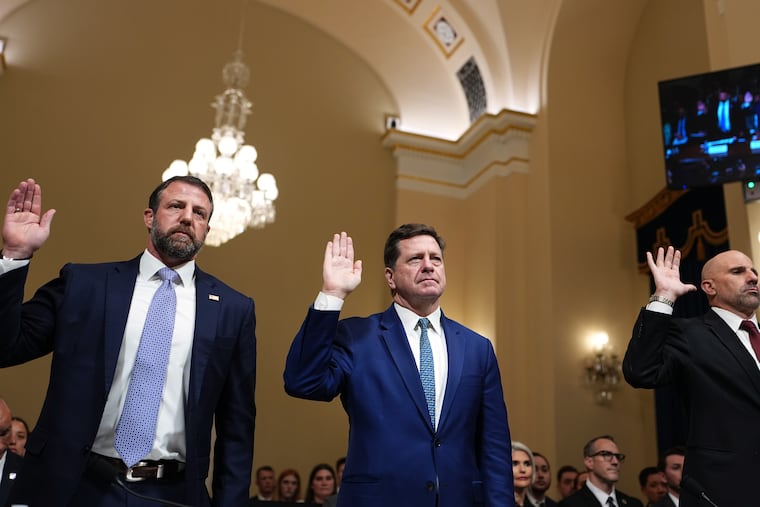
Homeland Security Secretary Markwayne Mullin, who oversees Immigration and Customs Enforcement, said he was likewise adamantly opposed.
What exactly is amnesty, and what could it mean to the millions of undocumented immigrants in the U.S.? It is not going too far to say that were such a plan approved, it could dramatically change both individual lives and the nation at large. Here is a look at its meaning and potential impact.
What is amnesty?
Generally speaking, amnesty is an official act of forgiveness granted by a government to a group of people. It comes from the Greek word amnestia, meaning “forgetfulness,” in this case the forgetting of past violations. In immigration, amnesty would take the form of government-granted legal relief to allow undocumented people ― a few, some, or all ― to gain legal status.
So people who came to the U.S. without permission would be rewarded for violating federal law?
That is the GOP view, and a big reason that amnesty proposals have struggled in Congress. It is important to note that individual circumstances vary widely. Some people were brought to the country as children, having had no say in where they went or lived. Others entered legally as adults, then overstayed visas. Some have tried for years to legalize their status but have no path to do so.
Generally, in other instances, people seeking amnesty have been required to come forward and to meet certain benchmarks. That could include proving their continuous physical presence in the U.S. as of a specific cutoff date, paying fines, and passing background checks. The government could even impose requirements like community service. It is likely that, at best, amnesty would offer a path to legal permanent residency, not to citizenship.
How many undocumented people live in the U.S.?
Millions. The Pew Research Center puts the figure at about 14 million, while the estimate of the Migration Policy Institute is even higher. That agency reported this year that the undocumented population reached 15.8 million in mid-2024. Both those figures are higher than the population of Pennsylvania, which is about 13 million.
Why not simply deport people who have no authority to be here?
The Trump administration is trying. But here’s where the machinery of deportation and the cry of “No amnesty!” bump against reality.
During the first 18 months of the president’s second term, Homeland Security completed about 980,000 deportations, according to an analysis by the Migration Policy Institute.
That works out to about 653,000 deportations a year.
Which means even if the government can keep up that fast pace, deporting the 14 million undocumented people who are already in the U.S. would take more than 21 years. And that does not account for the people who would be arriving even as others were being sent out.
Would amnesty have to cover all undocumented immigrants?
No. Multiple configurations could be conceived and implemented to cover smaller groups of people.
For instance, amnesty could be extended to immigrants who have lost temporary protected status, which the Trump administration has stripped or intends to take from nearly a million people, many of whom have lived here for decades. That loss of TPS exposes people to deportation.
Amnesty could also be offered to DACA recipients, people who were brought to the country as children and have lived under Deferred Action for Childhood Arrivals. That program, which covers about 436,350 immigrants, has been in greater or lesser danger of elimination depending on which political party has held power.
Who would benefit from amnesty?
To undocumented people, the gain would be life-changing. No more living in fear that a routine traffic stop could forever separate them from their families ― who routinely include American sons and daughters. They would gain legal work authorization. Meanwhile, projections are that the United States would see growth in gross domestic product and tax income as newly legal workers joined the labor pool ― and as those workers launched their own businesses, spurring greater job creation.
The White House says amnesty would damage the country, exploding federal funding for programs such as SNAP and Medicaid as more people gained access to those benefits.
Has immigration amnesty been granted before?
Yes — by President Ronald Reagan, an architect of the modern conservative movement. He signed the 1986 Immigration Reform and Control Act, which granted legal status and a path to permanent residency to nearly three million undocumented immigrants, most of them Latino.
Former Reagan speechwriter Peter Robinson told NPR: “It was in Ronald Reagan’s bones ― it was part of his understanding of America ― that the country was fundamentally open to those who wanted to join us here.”
That has all changed, of course. In his first year in office, former President Joe Biden offered a sweeping immigration bill that would have provided undocumented people with an eight-year path to citizenship. The bill died in Congress.
Today the word amnesty has become toxic to many Republicans in Congress and in the executive branch, as campaign promises of harsh enforcement helped sweep Trump to the Oval Office. Even some Democrats are queasy about calling amnesty what it is, preferring terms like reform.