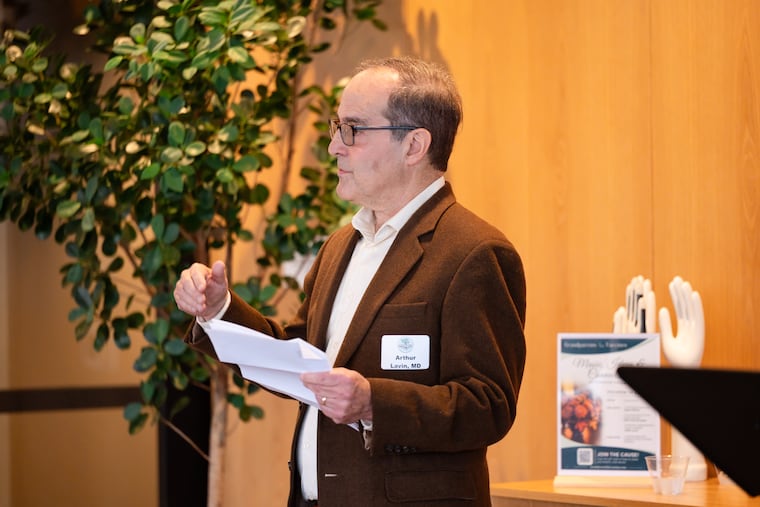
KYW’s Larry Kane signs off after six decades of broadcasting
Plus, Shapiro's outlook for 2028.
Every Sunday, Mike Newall brings you an inside look at a story defining Philly this week and a preview of what’s coming in the week ahead.
The big story tonight: Philadelphians won’t have Larry Kane to tell them the truth anymore.
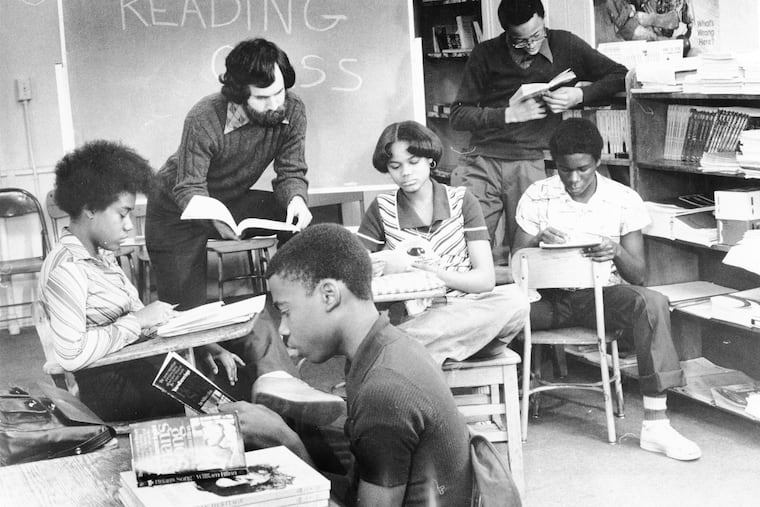
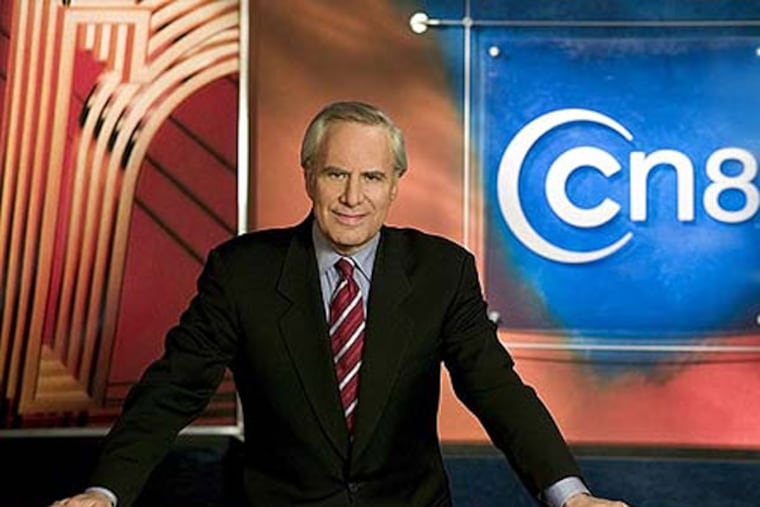
Kane, Philly’s answer to Walter Cronkite during the Golden Age of local news, retired from broadcasting today at 84.
Kane, who worked at all three major networks in the city and transformed nightly news with his catchphrase — “The big story on Action News” — was king of the airwaves when anchormen were civic institutions and celebrities. When local news was appointment viewing and ratings and rivalries roared.
At 27, he became the youngest major-market television news anchor in America, and eventually the only Philly anchor to helm all three major networks. Proudly Jewish, he said in 2005 that he once battled doubts he could succeed in a town that was “really run by the white Protestant establishment.”
He rode shotgun with the Beatles during the fever pitch of Beatlemania. Covered presidents and popes and world leaders. And endless Philadelphia triumph and tragedy. He witnessed Philadelphia bomb itself.
For nearly 60 years, Larry Kane told Philadelphians the news — and why it mattered. And Philadelphians believed him.
Before his farewell broadcast Sunday on KYW Newsradio, where he has offered commentary for over two decades, the iconic newsman issued a warning about attacks on the media and the slow erosion of local journalism.
“It’s all about local news,” Kane told me. “If people don’t have local news, they can’t understand what’s going on around them.
I’ll be reporting more on Kane’s singular career in the coming weeks — and would love to include some of your favorite Larry stories. Share them with me at mnewall@inquirer.com.
For now, let’s hear from Larry.
Mike: You were the only broadcast journalist to travel to every stop on The Beatles 1964 and 1965 North American tours. It was an assignment you famously almost turned down.
Larry: The first time I met them, I went down there to their room. I was wearing a suit and a skinny tie. Very conservative. Before I could even open my mouth, John said, “Who are you and what planet are you from?” I said, “It’s better than not brushing your hair.” At that point, I asked him some questions about the war in Vietnam and the racial unrest in Great Britain. I went back to my room, thinking, “I don’t think I’m going to last another day on this trip.” All of a sudden I felt two hands on my neck, and John actually gave me a little hug, and said, “That was really great, I look forward to traveling with you.”
Mike: You got Lennon to take an Amtrak from New York City to 30th Street Station for a station charity event in 1975. He wound up doing an Action News weather report.
Larry: It was his first Metroliner (laughing). The doors opened and he had a little box and bag. I said, “What’s in there?” He said, “That’s for me to know, and you not to know.” The people on the train said, “Bye, John. Great to see you, John.” He said, “Let’s take a little tour, so I took him to the Liberty Bell.” He was kind of dazzled by the fact that people knew who I was.
Mike: You arrived in Philly from Miami in 1966, at 23. What was it like?
Larry: I spent the first two years here on the streets [reporting]. When you’re out on the streets of the city — you see everything. You know the suburbs. You know the geography. You come to streets nobody has been on. When I went on the air, I was so familiar with the streets, people thought I was here my whole life.
Mike: Who most shaped the Philadelphia of today?
Larry: Ed Rendell. In some ways, he brought together the city and suburbs in a quiet bond.
Mike: Philly can break your heart. Did you fall in love with it?
Larry: Absolutely When I went to New York [briefly in 1977], it was professional pressure. I commuted most of the time. The minute I got there, I wanted to come back. I wanted my family to be here — and I wanted to be here. It was my home.
Mike: What did you love about it all?
Larry: Recognition and glamour wasn’t really something I loved. I loved doing the news. I loved the interaction with people about the news.
Data deep dive: Shapiro vs. the Pack
Gov. Josh Shapiro’s strongest case for the White House may be written in the election returns, reports Inquirer political reporter Michelle Baruchman. Shapiro’s landslide victory outperformed Kamala Harris’ 2024 Pennsylvania showing by nearly 12 points. Shapiro’s edge over Harris also bested five other Democrats with White House dreams. Does Shapiro’s Pennsylvania slamdown automatically propel him to the top of the 2028 contenders? That’s a different ballgame altogether.
Video of the Week
No more shall we behold a fallen jewel of the Atlantic during our weekend Ikea runs. The SS United States spent decades as South Philly’s most awesome piece of waterfront clutter. The great liner slowly sank to its grave at the bottom of the Florida Panhandle, where it will become a marine life habitat.
A look ahead
Rochelle Bilal has elevated dysfunction and scandal into an absurdist art form at the Philadelphia Sheriff’s Office. With City Council finally promising action — and even defenders urging reporters to check beneath her mattress for $20 million in misplaced funds — a judge could rule as early as next week on whether to hold a contempt hearing against the embattled sheriff. “The judge’s decision could come any day,” says Inquirer Investigations reporter William Bender. “It seems like the judge so far has been focused on forcing the Sheriff’s office to accept an outside forensic audit and to pay for it.”
Inquirer investigations reporter Samantha Melamed powerfully explains how Carprice Williams — a public schoolteacher previously accused of abusing a foster child who nearly died — ended up caring for 10-year-old Malayshia Allford. Now the city needs to answer for the devastating systemic failures that preceded the discovery of the girl’s body in a car trunk last month. “There were many, many documented red flags that seemingly should have prevented any child from being placed in that home,” says Melamed. “How was Carprice Williams able to take in children over and over again?”
Is Philly’s endangered Dino museum saved? Not yet, as contentious talks to save the Academy of Natural Sciences come to a standstill. Look for more details to come from Monday’s City Council hearing where subpoenaed Drexel and Academy officials are expected to testify. “Folks are asking for clarity on how we got to this point — and what options do we have in the future,” Councilmember Isaiah Thomas told me.
Ken Burns sweeping new reckoning with 250 years of America’s criminal justice system debuts Monday on PBS. Early episodes of the 8-hour documentary — entitled “Crime and Punishment in America” and directed by Lynn Novick — chronicles how Philadelphia helped create the American penitentiary. “These ideas don’t just start in America,” says Kerry Saunter, president and CEO of Eastern State Penitentiary Historic Site, which features heavily. “These ideas started in Philadelphia.”
One more thing: The marathon is more than running
Back when the kids were younger, Shawn Needham always knew how to scope out the best spots at their track meets.
“The good spots to be when you needed a little extra push,” says his daughter Sarah Needham, 23.
A former Maryland State Trooper, and now a cop in Warwick Township — and a hall-of-fame track star at Holy Ghost Prep in Bensalem — Shawn Needham, now 59, raced home three hours after night shifts to make the kids’ running events. He worked overtime so he and his wife, Linda, could afford the league payments. And he ate peanut butter and jelly in the squad car so he could take the kids to Applebee’s after a race.
“Anything broke he could fix,” said Sabrina Hoehne, who is 28, and Needham’s stepdaughter. “He spent all his money on our sports.”
But last November, Shawn Needham confronted a nightmare he couldn’t fix. Not alone, anyway. A life-altering diagnosis of cholangiocarcinoma, an aggressive cancer of the bile duct, that affects only about 8,000 to 10,000 Americans annually.
Next weekend, five of Shawn Needham’s children — Hoehne, Sarah Needham, Grace Needham, Christian Needham, and Ella Needham will run in the Philadelphia Half Marathon and Marathon to raise money for the Cholangiocarcinoma Foundation.
With thanks to his doctors at Penn, Shawn Needham knows exactly where he’ll be. He’s already scoped out a good spot — behind the Art Museum, where the runners loop around multiple times — and which will leave him time to race back to the finish line.
“I’m proud,” he said. “I’m very proud.”

Sunday Evening note