Drexel agrees to review from William Penn and other foundations to plot a path for the Academy of Natural Sciences
Among the aspects of the Academy expected to be examined are the condition of the building, the financial picture, and a fundraising study to gauge the level of potential philanthropic support.
After an initial, non-committal response to an offer from the city’s largest foundation focused on the region, Drexel University has agreed to a review funded by the William Penn Foundation and other philanthropies for a set of studies to produce a vision for the Academy of Natural Sciences of Drexel University.
The review establishes an advisory board yet to be named and consultants who will work for up to a year on recommendations for the future of the Academy. The goal is a “careful review of current physical and fiscal conditions, and the development of a durable financial model,” according to an announcement Friday from the William Penn Foundation, Connelly Foundation, Hamilton Family Charitable Trust, the Philadelphia Foundation, and the Knight Foundation.
Drexel and the Academy on Sept. 1 announced the abrupt closure of the Academy’s museum with just 30 days’ notice as the Academy and Drexel boards were attempting to renegotiate the terms of a 15-year-old affiliation agreement.
In September, before the museum closed, William Penn had offered to cover Drexel’s operating support of the museum to keep the museum operating while options for the future could be explored.
The Academy had said it was open to the offer, but Drexel neither accepted nor declined it, saying at the time that “no proposal has been presented that would provide a permanent, sustainable path forward” for the museum.
The Academy’s beloved museum closed to the public at the end of the day Sept. 27 after a month of record attendance.
The arrival of a new advisory board and fresh data on the Academy’s condition and prospects aims to inject an independent, authoritative voice into a civic cause that has alarmed the arts and culture community, spurred the involvement of the governor, mayor and City Council, and left shaken thousands of parents, children and former children with warm memories of the Academy’s nearly two-century-old museum.
“It feels like everyone wants to know how to save the Academy, so we were driven by that energy, to try to organize a more formal process around that,” said Shawn McCaney, executive director of the William Penn Foundation, in an interview.
But the start of a study doesn’t mean an immediate reopening of the museum, several leaders said.
As for the potential of a return someday, McCaney said: “I don’t wanna prejudge or predetermine what comes out of this process, but we’re hopefully going to look at a full range of options. One may be that the museum stays where it is. Another option might be it’s a different location or that the museum takes a different form somewhat in some way.”
Academy board chairperson Suzanne Biemiller said Friday that she felt “extreme gratitude” for the foundation support and that it’s clear the foundations share our love and respect for the institution and stepping up in this way is just a demonstration of that support.”
She said the biggest question the studies could answer is about the building.
“There are so many different numbers that are out there about what it would take to renovate the building to serve the Academy into the future — understanding what is that number, what is it really, what are the possibilities?”
Drexel president Antonio Merlo said he was happy to see such a large coalition come together to focus on the issue.
“We have had many conversations with the William Penn Foundation, and I was so delighted to see that they were really willing to just look at the broad picture and in fact that they were willing to bring others to the table as well,” Merlo said in an interview Friday. “I made it very clear from day one that, Drexel was ready to engage in conversations with anybody who was willing to come have a conversation about how do we provide a financially stable long-term model for the Academy of Natural Sciences in Philadelphia…It is clear that Drexel cannot solve these problems by itself.”
“It’s all about long term sustainability, something that is feasible, something that is financially viable and financially sustainable, and that’s what everybody’s coming to the table to address,” Merlo said.
He said he’s looking forward to seeing the recommendations.
Still, the recommendations of the studies are not binding.
“Ultimately, the committee cannot force anyone to implement those decisions,” said McCaney, “but I’m hopeful that because of all the stakeholders that are going to be around the table that the support will be there to drive something forward at the end of this effort.”
Other Academy efforts are continuing
Among the aspects of the Academy expected to be examined are the condition of the building, the financial picture, and a fundraising study to gauge the level of potential philanthropic support for the future.
“I don’t want to predetermine how this will all unfold,” said McCaney, “but we’d like to get experts in contemporary museum and exhibit design involved. What would a contemporary or more modern museum look like or public programming look like? So I expect we’ll look at all the elements of the museum. And it’s important to remember that the public museum is just part of it. There’s also a major research institution that is part of the Academy.”
McCaney declined to say what the total expenditure might be for the studies.
The process will be overseen by an advisory committee of “respected experts and stakeholders” representative of the public’s interest, local and state government, philanthropy, and specialists in natural history museums, collections care, scientific research, architecture, real estate, facilities, construction, museum operations, education, fundraising and communications, Friday’s announcement said.
A smaller working group drawn from the committee will provide regular guidance, and the public will be invited to provide input during the process.
At the end, findings and recommendations arrived at by the advisory board will be released in a public report.
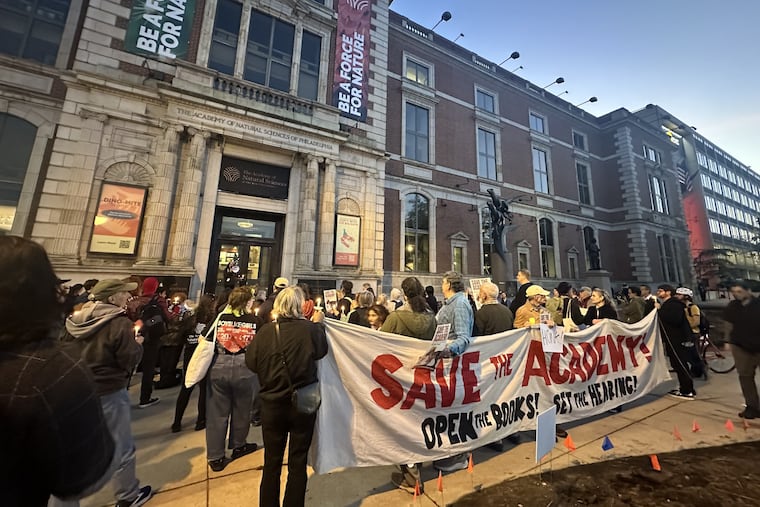
Significantly, the advisory board will have a member of the Save the Academy Coalition, the group of activists who have protested the museum’s closure and decried what they say has been a lack of transparency around plans for the Academy’s future.
As for the discussions between Drexel and the Academy over their relationship, those talks are at an impasse after the topic shifted toward a complete separation of the two institutions rather than a revised affiliation agreement.
Talks will continue on a parallel path as the studies on the Academy’s future proceed.
Philadelphia City Council is set on Monday to hold a second hearing on the closing of the Academy museum, and this week council voted to approve a resolution to authorize a task force to look into the matter.
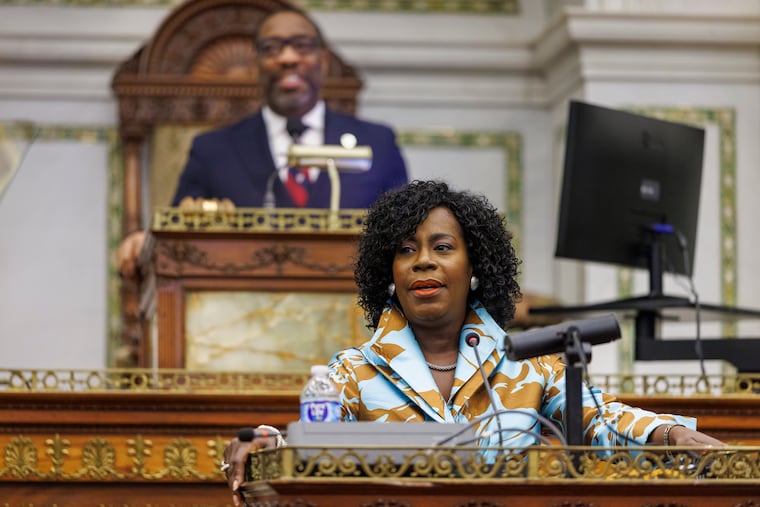
As part of Friday’s announcement, Council member Nina Ahmad said the formation of the new foundation-funded studies “to secure a strong future for the Academy is a meaningful resource to align with the efforts of the City Council’s task force.”
At stake, in addition to the Academy generally — where research and collections work continues — is the potential reestablishment of the institute’s most public-facing function that drew so many for so long with dinosaur cast skeletons, dioramas and, until their recent rehousing to other facilities, live animals.
“We, the William Penn Foundation and others, have invested for years to reinforce the Parkway as a cultural center of the city, with the Barnes and the new Calder Gardens, and this, losing the Academy on the Parkway, seems like a reversal of that many years’ effort to strengthen the Parkway as a center of culture for the city.
“It’s also a really big part of Philadelphia’s history and the nation’s history. and one of the most important museums in the history of science in our country.”