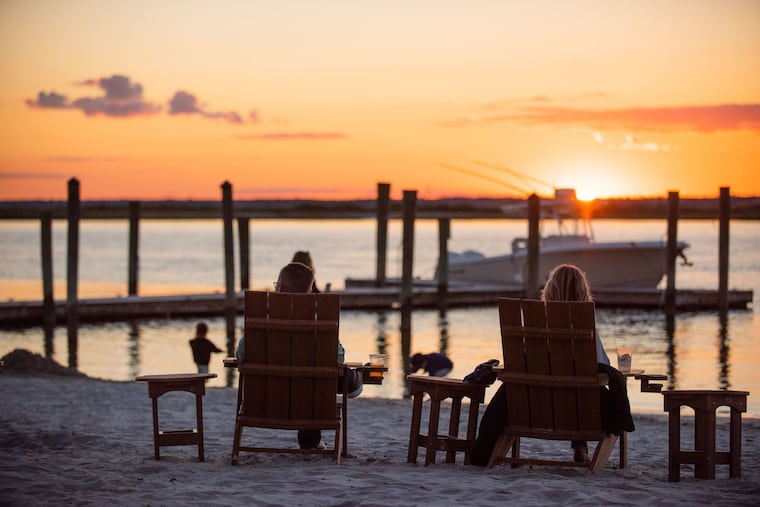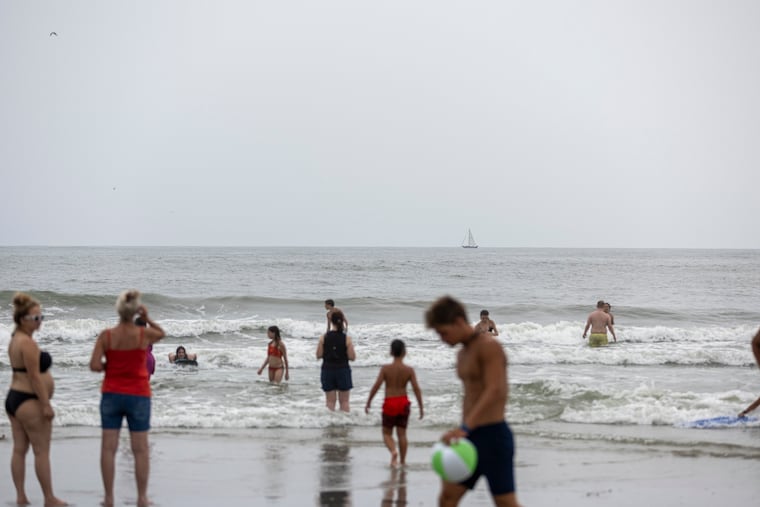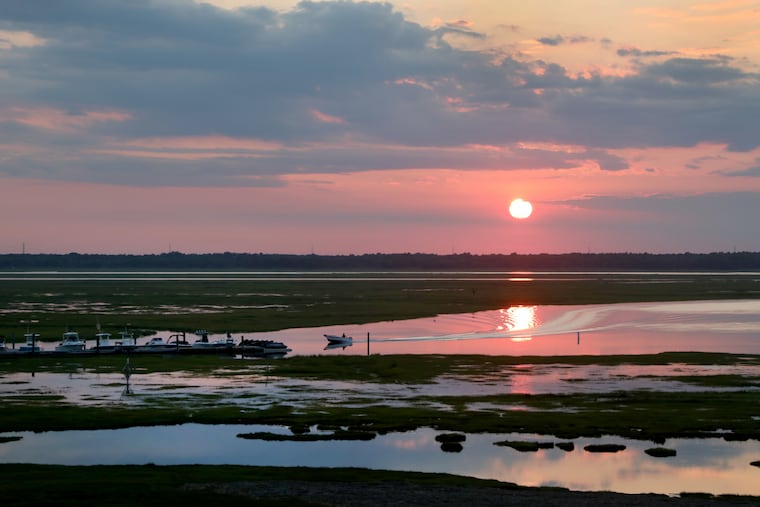
It’s not all spike ball and boogie boards at the ocean’s edge. That singular spot can be a place of reflection, beauty, memories both welcome and painful, a grasping for meaning, a bracing crash of the waves of time.
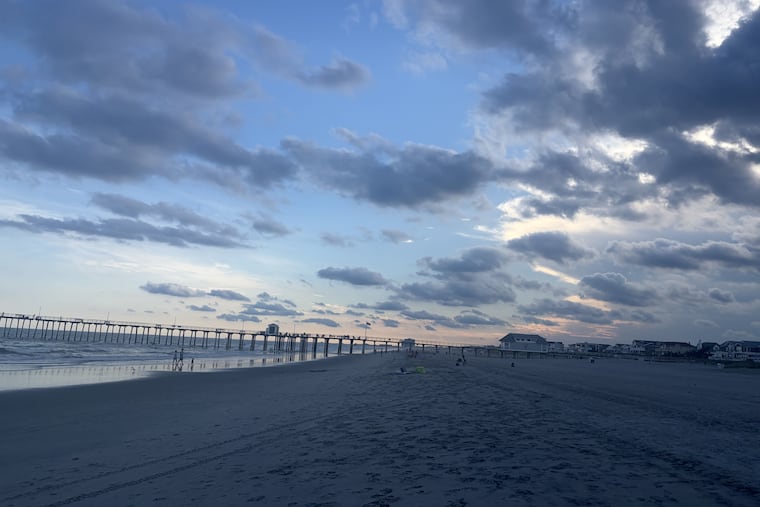
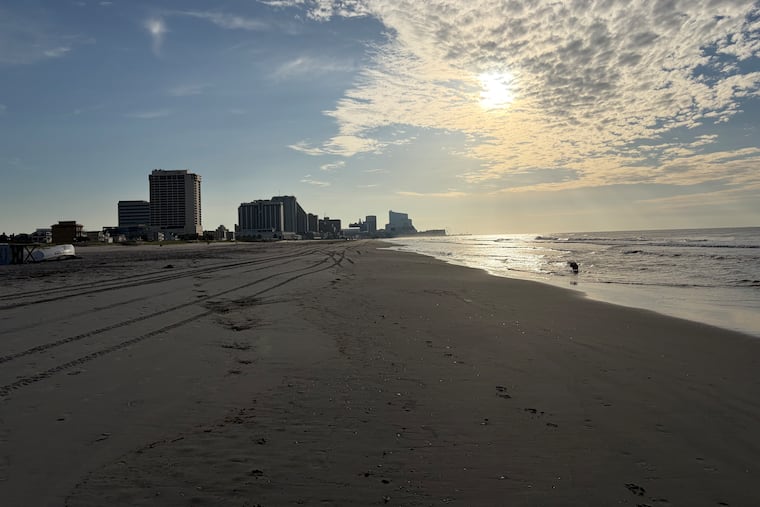
One recent evening, I went to sit out after work, a perk of living here, but it started with an uncomfortable land breeze: hot, flies, stifling air, and existential doubt. Should I just go back inside and watch Jeopardy? But then, a lovely wind shift, spectacular in its suddenness. Things became lighter, cooler, calming. Everything seemed, well, solvable. There was that lesson again: perspective, insight, change, sometimes just a wind shift away. I stayed for that lovely pink dusk.
This week, I spoke with Shanda McManus, former resident of Ventnor, family physician and professor, and author of the riveting new memoir Brother Epistles, a collection of letters to her little brother, Monir Hall, who was shot to death in Philadelphia in 1992 at the age of 20. Now living in Monmouth County, not far from Sea Bright, McManus, 56, has written vividly of her girlhood in North Philadelphia, across from the old Connie Mack Stadium — it’s “a really Philly book,” as she says. She also writes of the adulthood she moved through without her brother, most of it at the Jersey Shore. How, and why, their trajectories diverged underscore McManus’ intimate storytelling.
“I do feel like young Black boys aren’t given the same opportunity to be children,” she said. “Even when I lived in Ventnor, two nephews came to visit, and the police chased them home, they assumed they would have stolen those bikes. What does that do to you if you’re always suspect?”
Shanda’s decades of proximity to the ocean, to the natural beauty and spaces that were mostly missing from her Philly childhood, she says, has helped her grieve.
“The access to the ocean and the beach, natural places in general — if you grow up in the inner city, North Philly, there’s not a lot of places,” she said. “Growing up, my grandmom and granddad, they used to drive down the Shore, but we would never go on the beach. We would go in the stores and get saltwater taffy. It wasn’t until I was an adult that I actually sat on the beach. To have the community here, with my children. It was restorative.”
As she writes in Brother Epistles, “Grief for me is not a series of five steps, but a spiral and a repeating loop. I walk alone outside of time. The past is the present is the future — it is infinite and eternal, like you and me.”
Like the ocean.
Keep scrolling for a slam book Q&A with Shanda, and a Shore memory. Plus, your thoughts on Ocean City remaining a dry town. Shanda’s forthcoming Philly appearances are here.
📮 What is it about the ocean that transcends the usual pandemonium for you? Has it helped you make sense of things in your life? To grieve? Find joy? Let us know, and we’ll feature some of your thoughts in an forthcoming newsletter.
👋 That’s it for me this season. Jason Nark, as usual, will wrap up Down the Shore next week. Thanks for playing along! Let us know what you liked and didn’t like! What would you want to see more of in this newsletter or in our Shore coverage? Send your thoughts to us here.
🥶 Nights are starting to cool off down here, bring on September (local’s summer).
— Amy S. Rosenberg (Follow me at @amysrosenberg, on Instagram at @amysrosenberg. 📧 Email me here.)
If someone forwarded you this email, sign up for free here.
Shore talk
🌊 As seas rise, scientists race to save coastal marshes.
🛥️ Townsend’s Inlet is becoming difficult for boats to navigate, says CBS3’s Joe Holden.
💰 Strathmere approved beach tags.
🎶 Asbury Park got $75 million to restore Convention Hall.
🐢 The Wetlands Institute is temporarily retreating from its causeway headquarters to elevate marshland trails.
🏄🏾♂️ Surfboards but no Wifi for this Ocean City family cottage.
What to eat/What to do
🦀 Go crabbing like this Philly chef.
🌝 Look for Thursday’s near blood moon and near total eclipse.
🏖️ Australian electronic dance music trio Rüfüs Du Sol will perform Saturday on the beach in Atlantic City.
⏰ Be patient. Restaurants have lost employees who’ve gone back to school, and have had to reduce hours or hire new people.
🦪 The inaugural Cape May Oyster Festival is this weekend, with local oysters including those from the elusive Sweet Amalia’s.
🎣 The 72nd annual Surf Fishing Classic begins this weekend on LBI, a Shore sign of fall.
Shore snapshot
🧠 Trivia time
Rich Coniglio was first with last week’s answer: Atlantic City has the country’s oldest operational beach patrol, established in 1855.
This week: Ocean City’s been dry since 1909, and drinking on the beach was officially banned in 1951. But it took a city council vote to totally eliminate BYOB.
What year did Ocean City do away with wine-with-dinner?
A. 1984
B. 1964
C. 1979
D. 1929
If you think you know the answer, email us back!
Ask Down the Shore: Should Ocean City remain dry?
We asked our Shore Line texters. Not many advocated bringing bars or liquor stores to Ocean City, but there was some sentiment for BYOB.
The best case for remaining dry: For years I wanted BYO’s but lately the old charm of this town seems to be drifting away. I have little doubt that the OC would lose its unique identity. It should remain a dry town.
The best case for BYOB: I think it would be nice if Ocean City was at least a BYOB. So many wonderful restaurants, but we just don’t go for that exact reason.
Let us know what you think by replying to this email.
📖 Shore slam book
Author Shanda McManus shared her faves. (She’s still got a soft spot for Ventnor after all these years in Monmouth County.)
Favorite beach: Ventnor. We live 10 minutes from Sea Bright, but we’ll drive down to go to the beach in Ventnor. The sand is softer. I love the community.
Favorite summer breakfast? Blueberries. Fresh.
Perfect beach day: Going to the beach with two books and finishing one and a half and sitting on my chair all day.
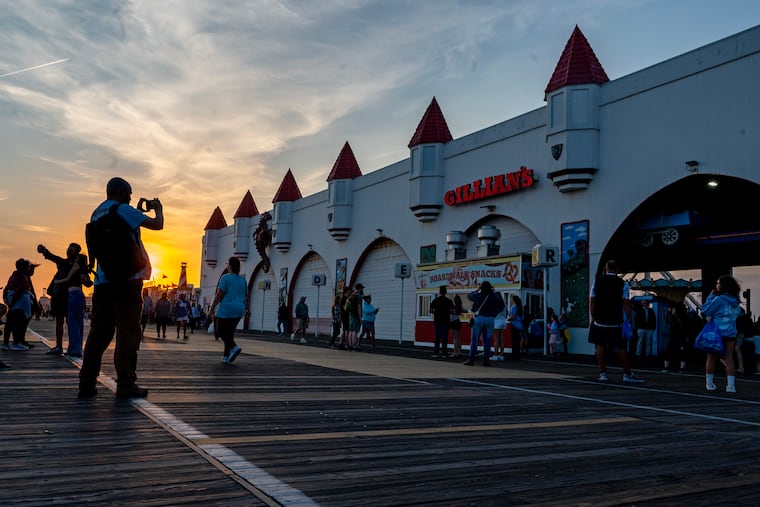
Perfect night: Walking on the boardwalk, stopping for ice cream, walking back with that nice wind.
Favorite Shore sandwich: I don’t usually buy lunch meats, but when I’m down at the beach, it’s Lebanon bologna, peppered turkey, Martin’s potato rolls.
Water ice order: Classic lemon water ice.
When the end of summer approaches I feel: Devastatingly sad. I can feel the winter coming.
Surfing or fishing? Reading.
Sunrise or sunset? Sunrise.
Shore pet peeve: People riding their bikes on the boardwalk during the hours they’re not supposed to.
The Shore could be improved if: It enlarged access. I would love if the beaches were free and open to all. Up here [Sea Bright], I live in the land of the beach clubs. It’ll cost you $5,000 for a locker.
Your Shore memory
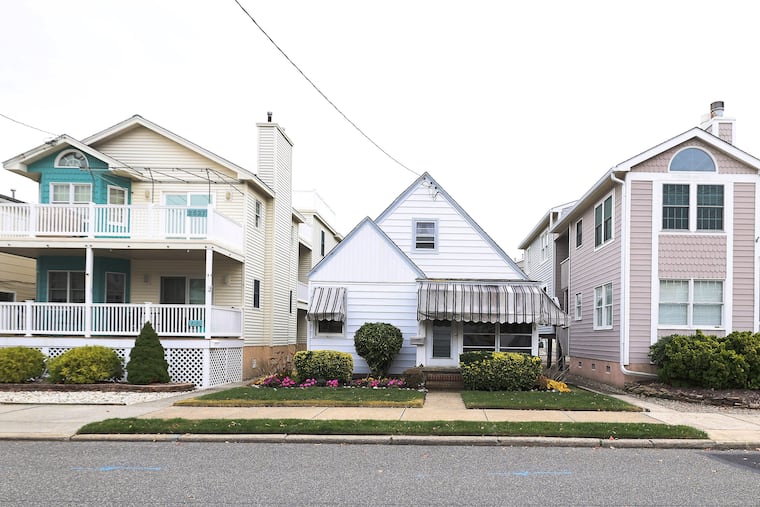
In Brother Epistles, McManus writes: I lived a short walk from the ocean for five years. You know where? Ventnor, the town right next to Atlantic City. I could see the casinos from the beach. AC was the place to go and party. Dad never took us to the beach because he didn’t like sand, and that was even before he had his prosthetic foot. Grandmom took us to Atlantic City and Wildwood, but that was to ride the rides on the boardwalk and get saltwater taffy. It never occurred to me that we might sit on the beach like the white people we saw. Grandmom laughed at them for “trying to get Black.” I never thought of Atlantic City being a place of natural beauty either, where ocean waves crashed and foamed. But it is. From my house in the next town over, I could hear the steady, endless roll of waves crashing at night. The sound made me think of infinity or eternity or our souls. I would pack up however many kids I had at the time, and we’d spend days in the sand and water.
Send us your Shore memory! In 200 words, tell us how the Shore taps into something deep for you, and we will publish them in this space.
By submitting your written, visual, and/or audio contributions, you agree to The Inquirer’s Terms of Use, including the grant of rights in Section 10.