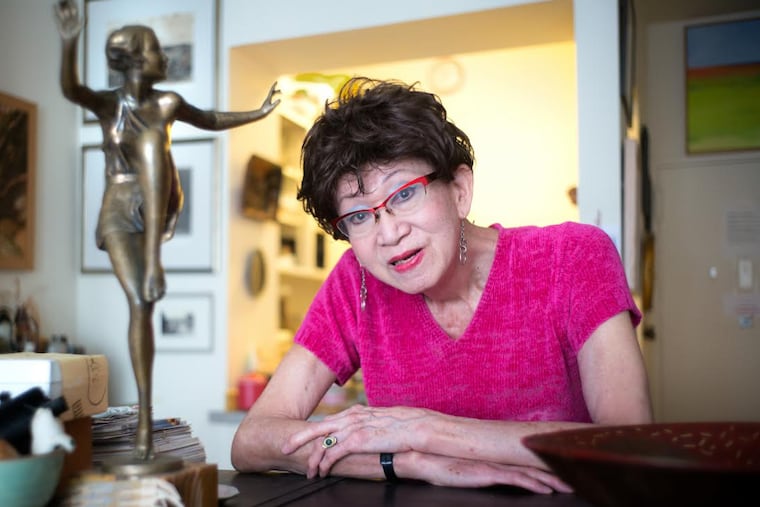
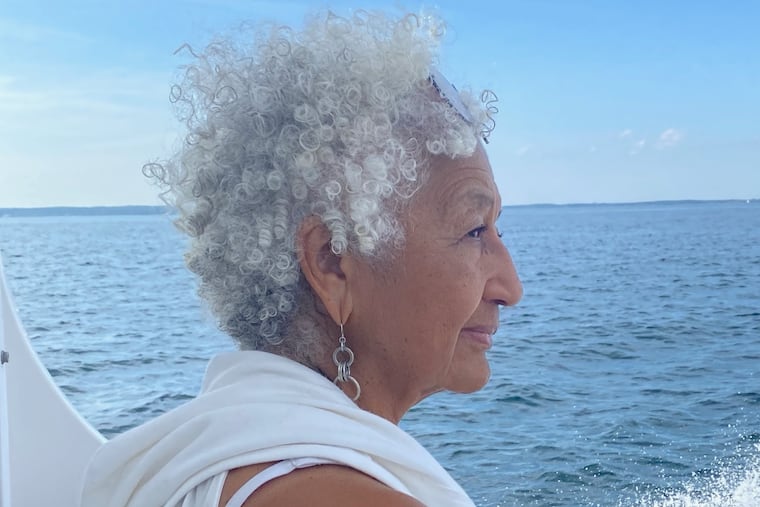
Rachel Blau DuPlessis, experimental poet, literary scholar, and Temple professor emerita, has died at 84
She wrote hundreds of poems — she called many of them “drafts” — about feminism, modernism, connectivity, imagery, and consciousness.
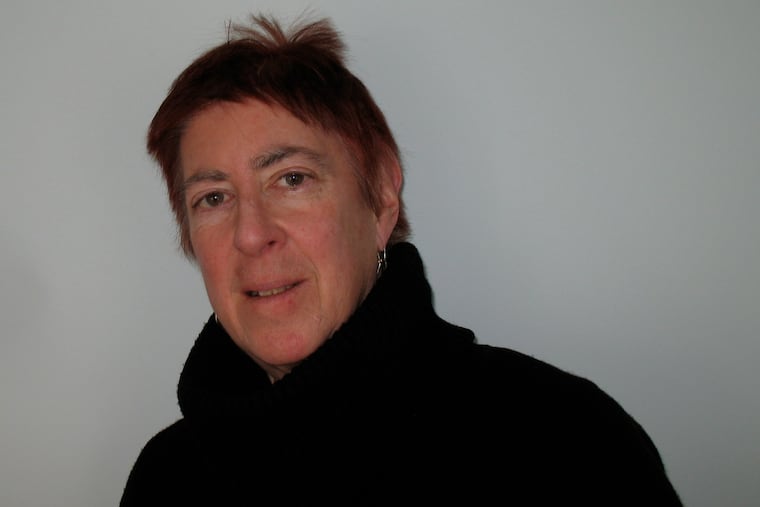
Rachel Blau DuPlessis, 84, of Philadelphia, experimental poet and essayist, literary scholar and critic, Temple University professor of English and creative writing emerita, mentor, artist, and world traveler, died Wednesday, Sept. 2, of respiratory failure at Penn Presbyterian Medical Center.
Professor DuPlessis was an eclectic experimental poet who grew up in New York, lived in Swarthmore and Philadelphia for more than 50 years, and taught a variety of writing and women’s studies classes at Temple from 1974 to her retirement in 2011. She wrote hundreds of poems — she called many of them “drafts” — about feminism, modernism, connectivity, imagery, and consciousness.
She was an expert on cultural poetics and told The Inquirer in 2002 that her poems generally reflect her “awe at the universe, grief at the barbarity of modernism, and sense of how it was to be in the world.” She enjoyed poetic wordplay, reviewers said, and tinkered freely with conventional syntax, sound, tone, and form.
“Reading her is an adventure,” reviewer Robert Long said in The Inquirer in 1997, “and poets this adventurous must be cherished.”
Her poems were published in more than 30 books and in several languages, and also appeared in The Inquirer, other newspapers, magazines, journals, and anthologies. In tributes, fellow poets praised her “unique combination of erudition and exuberance” and her “generosity, brilliance, expansive thinking, and attention to so many possibilities of writing and art.”
“From what I can tell, DuPlessis doesn’t write poems so much as build them,” reviewer Andrew Ervin said in The Inquirer in 2005. “The manner in which she does that is what makes the Temple professor one of the most exciting and inventive writers of our time.”
She told the Oxonian Review in 2015 that “being a poet is not only writing poems. It is an address to the whole apparatus of and the traditions of poetic practice.”
A book publisher said: “She brought such intelligence, generosity, and curiosity to everything she did.” Penn professor Al Filreis told Professor DuPlessis’ husband, Robert: “It’s hard to imagine the Philly poetry world without Rachel in it.”
At Temple, Professor DuPlessis helped establish women’s studies classes and the school’s graduate program in creative writing. She mentored students and other professors, and the English department’s DuPlessis Lecture in Poetry and Poetics is named in her honor.
“She loved being a mentor to people, to encourage them,” her husband said. “She loved being a poet and an academic. She prepared incredibly for her classes and was connected and attentive to her students.”
Earlier, she taught briefly at what is now the College of New Jersey and Rutgers and Columbia Universities. She spent several of her research and study leaves from Temple working with students and colleagues at universities in the Netherlands, France, Belgium, and elsewhere.
She was named a resident poet and distinguished visitor in Italy and New Zealand. She and her husband, a professor emeritus at Swarthmore College, visited every continent except Antarctica, and she spoke French and Italian as well as English.
She earned fellowships from the Pew Center, the Pennsylvania Council on the Arts, the National Humanities Center in North Carolina, and other groups. “She was constantly creating things,” her husband said. “She never stopped.”
Professor DuPlessis also wrote and edited books and articles about writing and poetry, and she reviewed books for The Inquirer and other publications. She read her poems in public, was interviewed often, and earned achievement awards from Temple, the University of California in San Diego, the old Fund for Poetry, and other admirers.
» READ MORE: Why did best-selling author Carol Saline email The Inquirer’s obit writer?
She created a comprehensive website, rachelblauduplessis.com, and made collage art that she augmented with poems. Thomas Devaney, a Philadelphia writer, called her “an important figure of American experimental poetry.”
She told the Oxonian Review: “Poetry is an ethical practice as well as an aesthetic one. Just even thinking about what this means and how it is instantiated is a useful task.”
Rachel Maia Blau was born Dec. 14, 1941, in Brooklyn. She grew up in Queens and the Bronx, and earned a bachelor’s degree in English at Barnard College in New York in 1963 and a master’s degree and doctorate in English and comparative literature at Columbia in 1970.
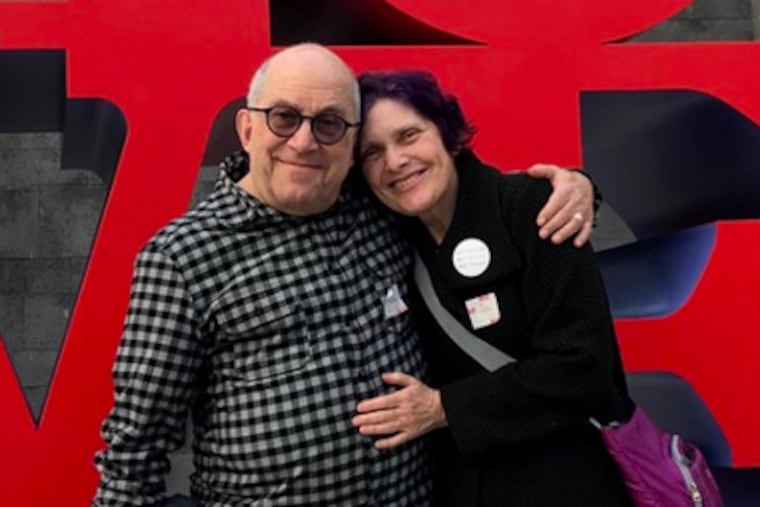
Her father was a professor, her mother a librarian. She met fellow Fulbright scholar Robert DuPlessis on a boat to France in 1966, and they married in 1968 and had a daughter, Kore.
» READ MORE: What do poets do for a living?
Professor DuPlessis enjoyed yoga, museums, art history, and long walks with her husband. They went to see and hear the orchestra, the opera, the ballet, and the theater.
She doted on her daughter and grandchildren. “She always read me stories and sang me songs at night before bed,” her daughter said. “I would hold on to her leg because I didn’t want her to leave.”
Professor DuPlessis started writing poems when she was 12, she said in an interview. “She was determined, hardworking, witty, and a lot of fun,” her husband said. “She was definitely intense.”
In addition to her husband and daughter, Professor DuPlessis is survived by two grandchildren and other relatives. A sister died earlier.
A memorial service is to be held from 1:30 to 3:30 p.m. Saturday, Oct. 17, at Temple University’s Charles Library, 1900 N. 13th St., First Floor, Philadelphia, Pa. 19122.
Donations in her name may be made to Planned Parenthood, Online Services, Box 96771, Washington, D.C. 20090; Philabundance, 3616 S. Galloway St., Philadelphia, Pa. 19148; and the American Civil Liberties Union, 125 Broad St., 18th Floor, New York, N.Y. 10004.