Pa. must institute statutory protection for the right to contraception and fertility treatment
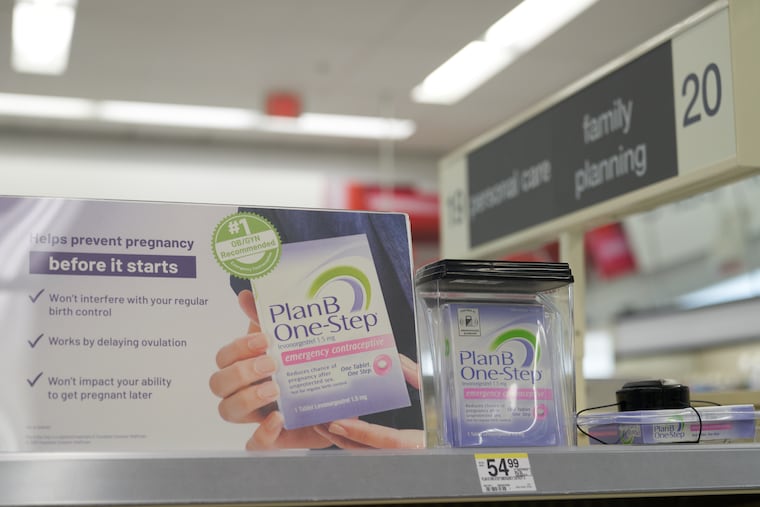
We have seen misinformation about birth control spread — false claims that common forms of contraception are abortifacients — designed to create legal grounds to restrict them.
Sixty-one years ago, the U.S. Supreme Court decided Griswold v. Connecticut — striking down a state law that banned married couples from using contraception. The court recognized what should have been obvious: that the most intimate decisions people make about their bodies, their families, and their futures belong to them, not to the government. That ruling established the constitutional right to privacy, and laid the foundation for modern reproductive healthcare.
Today, those rights are not as secure as they once seemed.
The political landscape has shifted. Forces that once operated at the margins of American politics are now driving policy — and contraception is squarely in their sights, along with access to in vitro fertilization (IVF) and even vaccines.
The legal landscape has also shifted, with the Supreme Court a standout case in point when it issued its decision in Dobbs v. Jackson Women’s Health Organization and took away women’s hard-fought right to abortion care.
In his concurring opinion, Justice Clarence Thomas went even further in his endeavor to strip women of their bodily autonomy. He wrote that the court should “reconsider” earlier rulings, specifically naming Griswold. The right to contraception has been settled law for more than half a century, and this was not an offhand comment. It was a sitting Supreme Court justice signaling that, in his view, the constitutional protection for birth control could be reconsidered next.
Those of us in Harrisburg cannot wait for that to happen.
That is why I introduced legislation to ensure everyone in Pennsylvania has a clear statutory protection to the right to contraception and fertility treatment, no matter what the Supreme Court does. If Washington will not protect this right, Pennsylvania will.
The same constitutional principles Griswold recognized — privacy, autonomy, and freedom from government interference in personal medical decisions — deserve protection under state law, so no court ruling can strip them from Pennsylvanians overnight.
The lesson of Dobbs is that rights cannot be taken for granted.
We have already seen how quickly long-established rights can disappear. We watched Roe v. Wade fall in Dobbs. We have seen misinformation about birth control spread — false claims that common forms of contraception are abortifacients — designed to create legal grounds to restrict them.
The attacks on reproductive freedom are systematic, and they are escalating.
Contraception and fertility treatment are a part of everyday life for millions of Americans. People use birth control to plan their families, pursue their education and careers, and manage health conditions like endometriosis and polyendocrine metabolic ovarian syndrome (PMOS). These are deeply personal decisions that belong to individuals and their doctors — not politicians.
The public understands that. Americans overwhelmingly support the right to contraception, including strong majorities of Democrats, Republicans, and independents.
Yet, there remains a gap between what the public supports and what some lawmakers set out to personally and politically accomplish. That is why action by states matters.
The lesson of Dobbs is that rights cannot be taken for granted.
Pennsylvania has an opportunity to act before another right comes under attack. The question is not whether contraception and fertility treatments deserve protection. The question is whether we are willing to protect them.
I am. And I hope my colleagues are, too.
State Rep. Mary Jo Daley (D., Montgomery) represents the 148th Legislative District. She is cochair of the Pennsylvania Women’s Health Caucus.