Big port investment reminds Philadelphia it’s a maritime city | Shackamaxon
Plus: Kenyatta Johnson is right to oppose business tax proposal, there's a place for automated license plate readers, and the Atwater Kent collection stays where it belongs.

This week’s column looks at a massive investment at the port, the right way to address the city’s business taxes, the debate over automated license plate readers, and a welcome change for the city’s heirlooms.
All aboard
It is full steam ahead at the Port of Philadelphia, which is getting nearly a billion dollars’ worth of private and public investment. The deal should add thousands of jobs, grow the city’s share of commodity traffic, and enable the construction of a new berth at Southport. All this investment, along with the return of cruise travel, has served as a reminder that we are a maritime city.
In the generation or so since the Navy abandoned Philadelphia, we’ve slowly forgotten this part of our civic heritage. Even our shiny new waterfront amenities, like the Spruce Street Harbor Park, are aimed at taking advantage of the majestic views, not utilizing the Delaware River itself. While Jet Skis and other forms of aquatic recreation are a common sight off Manhattan or Baltimore, it is not so here.
One of the ways out of the economic malaise that has afflicted our city for decades is to lean into our natural advantages. Lower South Philadelphia contains what new Philadelphia Regional Port Authority CEO Rich Lazer called an enviable “concentration of assets.” The port, the Navy Yard, Bellwether District, and airport combine with rail and highway access. According to Lazer, there’s also plenty of room to grow.
The former head of the Philadelphia Parking Authority is the right person to make it happen.
While Gov. Josh Shapiro, Mayor Cherelle L. Parker, and the port’s private investors have all contributed to this major investment, Lazer deserves credit for making the pieces fit together. His bias toward action was clear during his leadership of the Parking Authority, which he turned into a problem-solving agency.
While the authority is still primarily known for giving out tickets, Lazer made pedestrian safety a bigger priority, working with disability activists to remind motorists that parking in the crosswalk and on sidewalks impacts real people. Cyclists benefited from a new bike patrol created under Lazer. He also took on the challenge of securing a home for Philadelphia’s intercity bus services.
Broader is better
Ever since city attorneys declined to defend the $100,000 business tax exemption, the city’s entrepreneurs have sought to find a solution.
One proposed fix, which would exempt entire categories of businesses from the tax, is currently being held up by Council President Kenyatta Johnson.
While it would provide needed relief to sole proprietors and single-member limited liability companies, the plan would leave other small businesses behind. It would also hand out big tax cuts to some of the city’s wealthiest business owners, who may also be sole proprietors. Unlike the exemption, which was challenged based on Pennsylvania’s Uniformity Clause, this bill would pick and choose between different businesses.
I understand the urge to provide immediate and substantial relief to our business community, but Johnson is correct that this is not the right way to do it. Any reform efforts should be as broad-based as possible.
That said, this entire episode only makes it clearer that city officials must find a way to speed up the scheduled gradual reduction of business taxes, in particular the net income tax.
Eye in the sky
Automated license plate readers have become a big topic of discussion, with bills in both Harrisburg and Philadelphia urging stronger guardrails over the technology, if not abolition.
After listening to law enforcement experts on both sides of the debate, the case for clear restrictions is strong. These are powerful tools, and like many other policing strategies, they can be dangerous if misused. State and local legislatures should enact laws to prevent their own cameras from being used by others for purposes they do not support.
Federal officials should be blocked from using local license plate readers to enforce immigration law, and cameras should also be off limits for states seeking to enforce their own laws on residents who travel outside their borders. Footage should also be deleted after a statutory waiting period, and access must be restricted.
At the same time, there’s serious potential benefits to using the devices, including for civil liberties. License plate readers have helped solve cases and find fugitives and missing people.
After Penn State student Billy Schmidt was killed in June while walking home at night, one of his alleged killers fled the city. License plate readers helped track his progress across the country, leading to his eventual extradition back to Philadelphia.
The ability to quickly identify the right license plate also helps narrow police searches. Instead of searching for a “blue SUV” or “gray Honda,” responding officers will look instead for the specific vehicle in question. This would avoid subjecting innocent people to unnecessary traffic stops.
Brandon del Pozo, a former police chief who now works as an assistant professor at Brown University, has issued his own suggested guidelines, breaking usage into four distinct categories, which require their own distinct privacy protections. He also compares the data available from the cameras to other forms of surveillance, like cell phone data. Del Pozo was paid by Flock Safety for his research, although he maintained editorial independence.
Legacy loaned
One of the more inexplicable decisions made during Mayor Jim Kenney’s miserable second term was the attempt to hand over the city’s heirlooms.
Kenney closed the Philadelphia History Museum, which now sits as a blighted landmark, all the way back in 2018. He also sought to transfer the collection of artifacts, which include both the wampum belt given to William Penn by the Lenape at Shackamaxon, and President George Washington’s working desk, to Drexel University. While this change was approved in 2022, it was apparently never finalized.
To anyone who loves our city and its history, this comes as a relief.
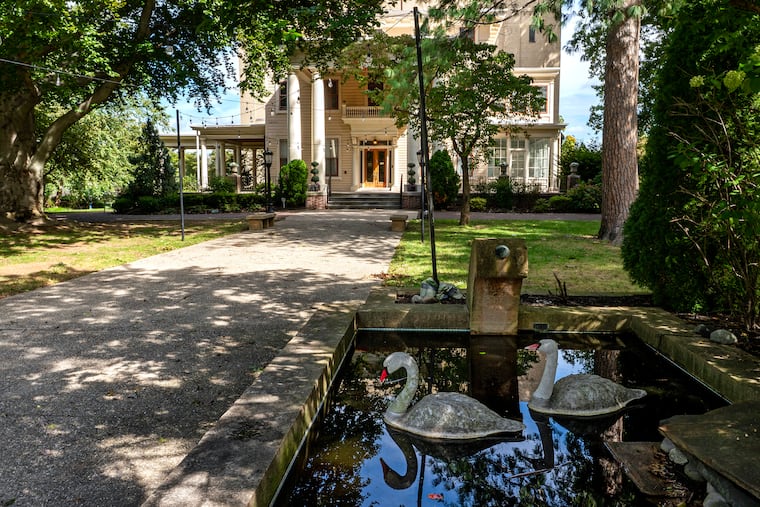
Our inheritance should never have been given over to a private entity and should remain the property of the city and its people in perpetuity. Mayor Parker deserves credit for her role in undoing this mistake.
Now comes the hard part, finding a way to display these artifacts, and restoring the Atwater Kent building to productive use. Both causes are likely to cost money at a time when the philanthropic community is also facing the potential closure of the Academy of Natural Sciences and a budget crisis at the Philadelphia Museum of Art.
About our columnists
In contrast to news reporters, who operate within an independent, nonpartisan framework, columnists are charged with including their perspectives, opinions, and viewpoints when presenting their reporting. Inquirer columnists include Jenice Armstrong, Will Bunch, Luis F. Carrasco, Paul Davies, Daniel Pearson, Trudy Rubin, and Sabrina Vourvoulias.