Objections to the public school closure plan are plentiful. Alternative proposals? Not so much.
School Superintendent Tony B. Watlington Sr. acknowledges criticism of his plan to close 18 school buildings. But he argues it does “the greatest good for the greatest number” of students.

It seems the Philadelphia School District can’t win.
For years, folks complained about the poor quality of the school buildings. But the district’s ambitious plan to renovate, close, and merge schools, was met with swift pushback.
On paper, the $2.8 billion plan to revamp the schools makes good sense. But then there is the reality that closing a school leaves a void in a neighborhood. Moving students could result in longer commutes and impact learning.
So, what is the district to do?
Philly is infamous for resisting change, but the status quo is not a solution.
Many of the district’s 307 buildings were built more than 70 years ago and contain asbestos and lead and don’t have air-conditioning. Many schools lack teachers, libraries, playgrounds, STEM facilities, and music and art programs as well.
» READ MORE: Tony Watlington and Cherelle Parker: Philadelphia’s future is built in our schools | Opinion
At the same time, the city has more space than it needs. Twenty schools are less than 30% occupied. For example, Overbrook High, where Wilt Chamberlain went, has capacity for 2,330 students but an enrollment of just 441. Operating mostly empty buildings is inefficient, unsafe, and unsustainable.
But Superintendent Tony B. Watlington Sr.’s initial plan to modernize 159 schools, close 20, merge six, and build one new facility over the next decade has been met with fierce opposition.
Two schools, Russell Conwell Middle School and Motivation High School, have already been removed from the closure list and will merge with other schools instead.
Last week, nearly 100 parents, teachers, and students turned out for a highly charged meeting to pressure the school board to reject the plan — or at least save their school.
“I don’t see nothing wrong with our school,” said Layla Hernandez, a third grader who attends Ludlow Elementary, a school in North Philadelphia slated to close.
It’s hard to say no to a precocious third grader. Or a parent like Darlene Abner, whose six children have attended the school. “I stay in this neighborhood because of Ludlow,” she said at a different meeting earlier this month.
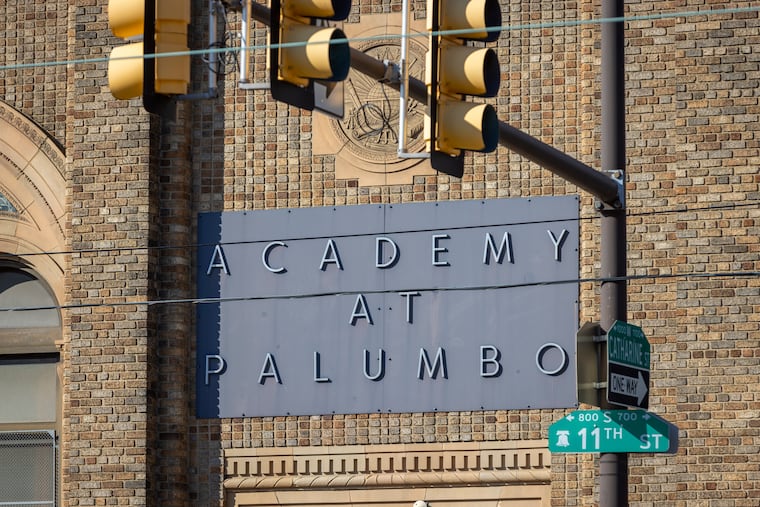
The impact of students and parents is real, but Ludlow’s numbers tell a different story. The K-8 school has just 237 students — less than half of its capacity. The school opened almost 100 years ago and serves a number of special education students.
Ludlow’s performance is considered below average. Just 11% of students tested proficient on the state math exam and 24% in English.
It is expensive to staff and operate an old building that is more than half empty and delivering poor results. Indeed, the district faces billions in deferred maintenance and repairs to its aging infrastructure.
Operating buildings where enrollments are under 50% of capacity makes little sense. The problem will only get worse.
Over the past decade, the district’s enrollment declined by more than 17,000 students to around 117,000 students. Over the next decade, enrollment is expected to drop by another 10%.
» READ MORE: Streater: Why the school board isn’t putting off the hard conversation about our facilities any longer | Opinion
At the same time, schools in some neighborhoods are filled to capacity, thanks largely to the influx of new immigrants. The explosion of charter schools in Philadelphia also contributed to the drop in enrollment and financial resources.
As a result, the district needs to rightsize to adjust for the enrollment declines in some areas and the increases in others. It also needs to modernize, so buildings have basics like heat, air- conditioning, and bathrooms as well as labs and tech spaces.
But renovating the schools takes time and money — two things the district lacks. The problem has been many years in the making. State lawmakers in Harrisburg contributed to the disrepair of schools by not adequately funding public education for decades — an issue a court found unconstitutional.
It is also unconscionable since investing in public education will go a long way to solving many of the city’s (and country’s) problems, including poverty, crime, and workforce development.
This is where charter school advocates argue for more choice, but the hard reality is the test scores at most charters are no better. So, more charters is an empty promise and an argument for a different day.
The goal should be to replace or renovate obsolete and mostly empty schools with safe, clean, and modern facilities featuring all the necessary staffing and resources. Anything less impacts the entire city, whether you have kids in public school or not.
So far, a number of City Council members would prefer to scuttle the plan then find a positive solution. Same for the many state representatives who have voiced their opposition. This is not the time for political grandstanding.
Philadelphia Federation of Teachers president Arthur Steinberg said the plan lacked transparency and detail on how the changes will impact students.
Perhaps Watlington and Mayor Cherelle L. Parker could do a better job selling the plan. But Watlington told me the district has held 90 listening sessions attended by 4,000 residents and received more than 14,000 surveys from every zip code in the city.
“There’s no perfect master facilities plan,” he conceded, adding the district tried “to do the greatest good for the greatest number.”
The school district tried to be fair by ensuring closures and investments would be spread across all 10 Council districts.
At the same time, the critics have not offered any better solutions.
In 2012 and 2013, the district closed 10% of its school buildings. At the time, many feared the upheaval would undermine learning.
But a study by two University of Pennsylvania professors found the impact was mixed. Students who moved to higher-achieving schools saw their test scores go up. However, the displaced students had more absences and received more suspensions. The farther students had to travel to get to their new schools, the more they struggled.
“There’s no perfect master facilities plan.”
This time, the district plans to create a one-stop shop to ensure students get all the help they need from transportation to social, emotional, and mental health support.
“We’re gonna wrap our arms around the children to make sure that performance increases and doesn’t decrease,” Watlington told me.
He added that there are no plans to lay off any principals or teachers at the schools slated to close. Instead, the rightsizing will enable the district to “push more resources into the remaining schools.”
In a perfect world, Watlington said, he would never close schools. But he is trying to position the district to do the best it can with the resources it is given.
“We can either use our resources more efficiently by driving more high quality, academic, and extracurricular resources into a smaller number of schools,” he said. “Or we could continue to spread our resources around less strategically.”
Sounds like the best plan on the table.

Inquirer Opinion Newsletter