‘Phillies Extra’ Q&A: Former GM Matt Klentak on acquiring two aces, and missing out on another
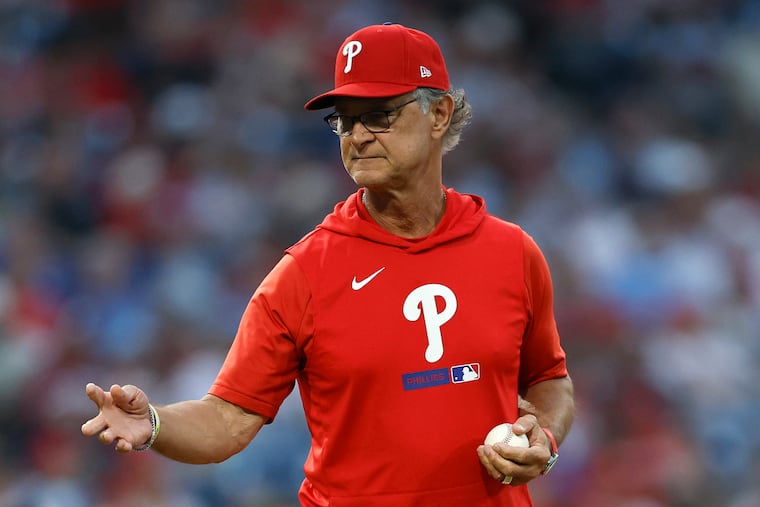
A senior advisor in Milwaukee, Klentak has been a part of four straight division titles with the Brewers. But his fingerprints can still be found on the Phillies’ roster.
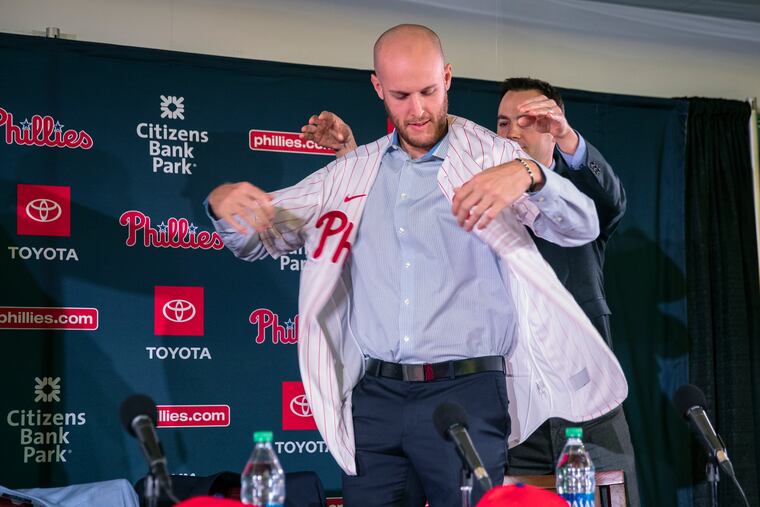
Everything worked out for Matt Klentak.
In his four seasons as an advisor in the Brewers’ front office, Milwaukee has won four consecutive National League Central crowns. This year, the Brew Crew has the best record in baseball and is closing in on the top seed in the NL playoffs.
But Klentak’s fingerprints can still be found on the Phillies’ roster. During his five-year stint as general manager, he drafted Alec Bohm and Bryson Stott, traded for Cristopher Sánchez and J.T. Realmuto, and signed Zack Wheeler and Bryce Harper.
As the Brewers came to town this week, Klentak, 46, joined Phillies Extra, The Inquirer’s baseball podcast, to discuss his time with the Phillies and the Brewers’ success.
Watch the full interview below and subscribe to the Phillies Extra podcast on Spotify or Apple Podcasts.
Q: The Brewers were probably the runner-up in the Tarik Skubal derby at the trade deadline. Can you describe the actuarial exercise of determining the level of risk that you might have been willing to take on for a great pitcher while also being wary of giving up too much?
A: I think just about every general manager, front office person would tell you that in just about every decision you’re making, there is some degree of balancing the present and the future. And how you balance that may differ based on a variety of factors. ... For the nature of our market and the way we build our rosters, we typically put a lot of focus on the future because we know that for this franchise to be successful in the way that we have been, the way that we want to be in the future, we need to continue to have that pipeline of young players come into the big leagues year after year. So we know that.
Having said that, we very much recognized that this was somewhat of a unique year for us, given where we were in the standings, given the construction of our roster, given the strength of the farm system, and given how hard it is to reach the World Series and win the World Series. We did recognize that ... and that’s frankly the reason that we went right down to the wire in the trade discussions for Tarik Skubal.
» READ MORE: What to watch for as the playoffs loom: Phillies counting on Alex McFarlane, starters as relievers, and more
Why the Tigers opted to go with a different package of players vs. ours vs. any other teams, we may never know the answer to that. Was it frustrating in the moment? Sure. The thing was, in looking back on it, it was actually helpful for us was that trade took place several days before the actual [Aug. 3] deadline, so we had time to recover and pivot, and we ended up making the trade with the Cardinals [for starter Dustin May], making a trade with the Rockies [for reliever Antonio Senzatela]. We did a few things afterwards, not to add Tarik Skubal but to bolster our pitching in other ways. ... But I think there are some years where it calls for a little bit more aggression and maybe a little bit more focus on the present. And there are other times when it probably is not as prudent to sink a lot of resources into the present and make sure you’re protecting your future a little bit, and that’s going to change from year to year.
Q: As the Phillies close in on a fifth year in a row in the playoffs, I wonder how you feel about the success that they have, and whether you feel at all a part of that?
A: With each passing year, there are fewer and fewer players on the roster that I overlapped with. ... I was in Pittsburgh for our clincher and ended up running into [reliever] JoJo Romero and spending a bunch of time with JoJo Romero, who was drafted when I was with the Phillies and came up. So, there are still quite a few players throughout the league from my Phillies time.
But yeah, there’s only whatever a small handful that are still on the club. Mostly, I’m happy for that group, that specific group of players you’re talking about, but also for the organization. Because that was always the goal was to build something that would ... be good and that would stay good for a long time. And I happened to be a part of the first part of that, helping to build the roster and I’m not there now as the sustained winning has taken place over the last few years. But I’m just happy that has worked out as well as it has for the players, some of whom have really seen their careers advance to another level, which has been great. But also for ownership and fans and all the people in the front office that I worked with that are still there. It’s a hell of a lot more fun to win than to go through the rebuild like we did for a few years, and I’m glad for the organization that everybody’s getting to enjoy these winning seasons like this.
Q: Is the Zack Wheeler signing and the Cristopher Sánchez trade the two moves that you are most proud of from your time with the Phillies?
A: I appreciate you calling out the good ones and casually omitting some of the ones that didn’t work out. Any time whether you’re sitting in the GM chair in Philly or more of an advisory chair like I am in Milwaukee, but any time that we make decisions, you’re trying to use the information you have to make the best decision you can in the moment based on the information and the resources that you have. So, in virtually all instances, whether the transaction works out really well or OK or not well at all, in the moment, you probably felt good about making the decision. And I would say that about those two transactions you brought up. ... They themselves were very different transactions. Wheeler was [$118 million] free-agent signing, which was not one of the bigger free-agent signings in that offseason. There were some bigger ones for sure, but nonetheless, $100 million for a pitcher is still a big investment.
Whereas Sánchez was a pretty unrecognizable name outside of the scouting community. He was not on top 100 lists, and neither was Curtis Mead, who we traded for Sánchez. So they were very different in terms of profile. These were two very different types of transactions.
» READ MORE: The Zack Wheeler conversation: Why he ‘expected’ to thrive after surgery, and how much longer he wants to play
... Wheeler had been in the big leagues for six years. A few of those were injury years, but he had been in the big leagues. He had more of a track record, but the prevailing thought was that there was more in that tank. We hadn’t quite seen him peak yet, and maybe because he had missed the amount of time that he had with injury, that maybe there are fewer innings on his ledger, and there might be more upside there in the future.
And with Sánchez, it was more of taking a chance on a gangly young lefty that doesn’t always know how all the parts are going to fit together. But if you squint, you can see that coming together. And in both cases, give a ton of credit first to the players for their work habits — they’re the ones throwing the pitches. So you always have to start with that. But behind the scenes ... I think you have to give a lot of credit to the pitching coaches and analysts and those that are helping these players through, in Zack’s case, coming off of a ... very significant surgery, and in Sanchez’s case, going from a true unknown to one of the best pitchers in the league. There are a lot of twists and turns along the way in both of those journeys, and the support those guys have received from various members of the organization should be recognized as well.

Phillies Extra is your deep dive into all things Phillies on Gameday Central! Hosted by Scott Lauber, each episode brings you insider analysis, exclusive interviews with players and experts, reader emails, and more to cover the hottest topics with the Phillies and across Major League Baseball. Don’t miss it — the conversation starts here!
You can also subscribe to the podcast version of Phillies Extra on Spotify or Apple Podcasts.