All eyes are on Democrats to restore Medicaid and SNAP as thousands of Philadelphians lose benefits under Trump’s cuts
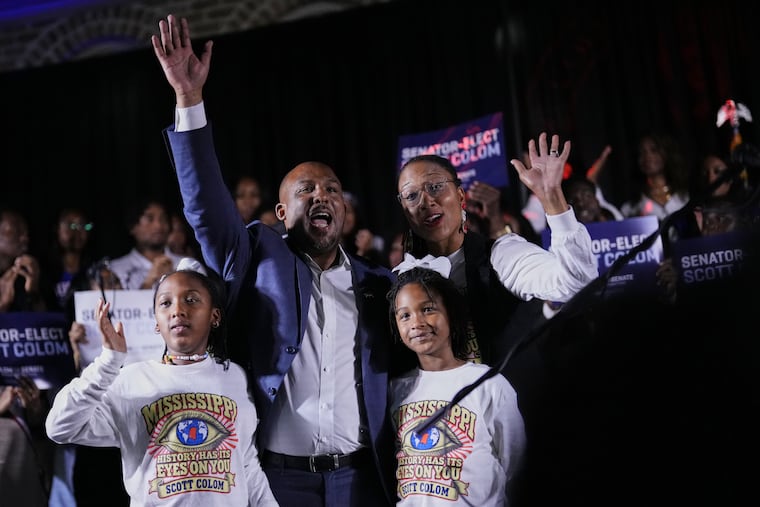
“This election wasn’t a mandate, it was a directive,” wrote Paige Cognetti, the incoming representative from Northeast Pennsylvania. Democrats, she said, must “lower costs” and “reverse Medicaid cuts.”
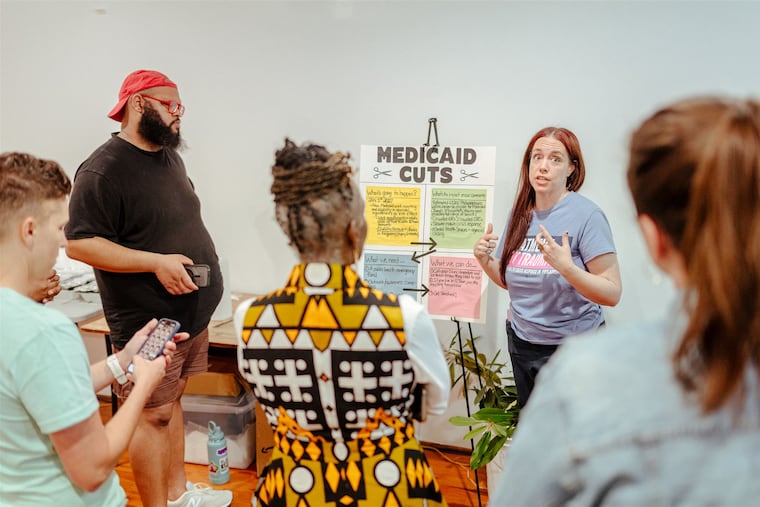
Democrats will take control of Congress in January just as massive cuts to Medicaid go into effect, a dynamic that will put pressure on new lawmakers to act quickly, Philly advocates say.
At a time when Philadelphia has again been named the largest poor city in America, dominion over the House and Senate offers hope to those who believe the Trump administration has trampled economically disadvantaged people by cutting food assistance and other social safety net programs.
“The election was staggering,” said Maria Kefalas, poverty expert at Saint Joseph’s University. “Voters connected the dots, seeing that affordability problems they suffered were linked to the administration bringing Americans pain by slashing insurance and food.”
Kefalas added that voters realized President Donald Trump’s One Big Beautiful Bill Act, which cuts nearly $1 trillion from Medicaid and around $200 billion from SNAP over 10 years to pay for tax cuts, “affects low-income people like little else.”
Eligibility changes to the SNAP program, which took effect in September 2025, have already led to 36,000 Philadelphians losing their benefits.
Changes to Medicaid eligibility began last week, when legal immigrants who were granted asylum, as well as those who are temporary humanitarian parolees, were dropped from the program. Green-card holders and other legal permanent residents will keep their coverage.
On Jan. 1, the federal government will begin focusing on Medicaid enrollees who became covered when the program was expanded under the Affordable Care Act — a pool of about 183,000 people in Philadelphia alone, according to DHS estimates.
While they still see a fight ahead to regain lost benefits, newly elected Democrats believe voters handed them clear marching orders.
“This election wasn’t a mandate, it was a directive,” wrote Paige Cognetti, the incoming representative from Northeast Pennsylvania, in a post on X. Democrats, she said, must “lower costs” and “reverse Medicaid cuts.”
Legislation repealing the cuts would likely be vetoed by the president, without much chance of a congressional override. Democrats are set to have their biggest House majority since the start of Bill Clinton’s administration and their biggest Senate majority since Barack Obama’s presidency, but they’ll be short of the two-thirds needed to override a veto in both chambers.
“Democrats won big, but not so big they can do whatever they want,” said Temple University sociologist Judith Levine, director of the school’s Public Policy Lab.
The hope, she said, is to “modify things in the margins — pressuring changes ... in other bills.” For example, Levine said, Democrats could appropriate funds to ICE only if they offset Medicaid cuts.
Julia Hinkley, director of policy strategy at the University of Pennsylvania’s Leonard Davis Institute of Health Economics, agreed. “The majority will have real leverage this way,” said Hinkley, an expert on Medicaid. “It’s a moment of opportunity.”
Trump’s law could remove 300,000 Pennsylvanians from Medicaid, cutting an estimated $1 billion in federal funding currently allocated to Pennsylvania.
In Philadelphia, more than 70,000 people could lose Medicaid coverage, according to the state Department of Human Services. (Roughly 40% of the city or 640,000 people are currently enrolled in Medicaid, according to the state).
David Fair, a Philadelphia community health activist, warned that the cuts will reverse a trend of decreasing homelessness in the city.
He said the new Congress must tackle Medicaid and SNAP before any other business, and find a way to “freeze what Trump’s doing before coming up with new legislation that restores the programs.”
Allen Glicksman, director of research at the Eastern Pennsylvania Geriatrics Society in Newtown, agreed that addressing Medicaid and SNAP is “job one,” adding that the new Congress must also be ready to explain to constituents what changes will be happening when.
“Messaging what Trump has done, and how the new Congress will fix it, will be one of the biggest challenges,” Glicksman said. “When people, especially older adults on SNAP and Medicaid, hear their programs are changing, they will get confused. And scared.”
People will begin transitioning from annual renewals to having to renew every six months, and will face new reporting and work or community-service requirements, which could cause people to lose benefits if they can’t keep up with their paperwork.
In the SNAP program, major changes have been ongoing since the eligibility revisions in September 2025.
Between July 2025, when Trump signed the bill into law, and September of this year, state enrollment in SNAP declined by around 239,000 people, a DHS spokesperson said. Around 123,000 lost benefits because of eligibility changes and work requirements stipulated by Trump’s law, including 36,000 in Philadelphia, the DHS spokesperson said.
The rest became unenrolled for various other reasons, the spokesperson added.
“What [the law] does is create a ton of administrative burdens so folks who need Medicaid and SNAP will fall off the rolls trying to meet them,” said Cynthia Figueroa, president and CEO of JEVS Human Services, a Philadelphia nonprofit that provides workforce development and other services.
Along with clients, increased paperwork “becomes a massive burden for states as well,” said Community Legal Services attorney Lydia Gottesfeld, a SNAP expert.
States’ difficulties will only increase.
Last month, states began paying 75% of the administrative expenses of SNAP, an end to a long-term, 50-50 cost-sharing relationship with the federal government.
By next October, when the Trump administration’s unprecedented demand that states pay for a portion of SNAP benefits also kicks in, Pennsylvania could be on the hook for as much as $400 million.
In 2025, Pennsylvania received $4 billion in benefits from the federal government. State officials say the commonwealth can’t handle it, potentially exposing some Pennsylvanians to hunger without food assistance.
Congress is still weighing the 2026 Farm Bill, which will fund SNAP through 2031. The Senate version would delay the requirement on states by one year.
White House spokesperson Allison Schuster said in a statement that by cutting Medicaid and SNAP, Trump has reduced costs “to eliminate waste, fraud, and abuse, and allocate funding to the programs and people that truly need it.”
She added, “The mission of SNAP and Medicaid to help those in tough times had completely failed.”
Research by universities contradicts that, showing that programs reduced hunger and poverty, and saved lives.
“Studies consistently demonstrate the significance of the safety net,” said Laura Napolitano, a sociologist at Rutgers University-Camden.
Along with improving Medicaid and SNAP, Napolitano recommends the new Congress restore enhanced Affordable Care Act tax credits that expired last year and expand the Earned Income Tax Credit and the child tax credit.
“It’s an important reason Democrats won,” she said. “People are getting crushed, and we need to augment, not diminish, help.”