Syracuse University can teach us a lot about Ebola panic
The virus may not be the biggest reason to fear Ebola.
Shame on Syracuse University for proving a point—that panic and bad behavior in the wake of the Ebola outbreak in West Africa threatens us as well.
The Washington Post reported Friday that Pulitzer Prize-winning photojournalist Michel du Cille was disinvited by Syracuse to a journalism workshop scheduled this weekend because he had recently been working in Liberia covering the Ebola epidemic. Du Cille has been back in the United States for three weeks and is symptom-free, past the 21-day incubation period for the disease. He is no longer considered at risk for developing Ebola, if he ever was.
Enter Syracuse University Provost Eric Spina, who told the Post that "Even though the risk of exposure is low, the fact that we're responsible for the health and safety our students, faculty and staff, gave us pause. We really don't want to start a panic at our university or in our community."
This is a terrible decision on the part of the university that only furthers the fear mongering surrounding the awful outbreak in West Africa. Yes, Ebola is currently devastating the citizens of Liberia, Sierra Leone, and Guinea. These impoverished nations' health systems were unprepared and are now unable to adequately treat and slow the spread of this outbreak. And the global response has been negligent at best and reckless at worst. The longer this outbreak persists, the more people will die, and the greater the risk to the surrounding regions, and ultimately, to other regions worldwide, as we are seeing with the few isolated cases popping up here in the United States and in Europe.
In the U.S., however, despite some early mistakes in handling the disease, we are not at risk for an Ebola epidemic. But as long as there is an ongoing outbreak in West Africa, we will see sporadic cases here. Most of our health system is able to treat patients safely. Our public health infrastructure can and will handle these cases – points made again Friday by Mayor Nutter and Gov. Corbett – although apparently on a steeper-than-expected learning curve, as we are seeing from Texas Presbyterian Hospital's experience and the embarrassingly late-to-the-game presence of the Centers for Disease Control and Prevention on the ground in Dallas.
Our most immediate and perhaps dangerous problem is panic and fear.
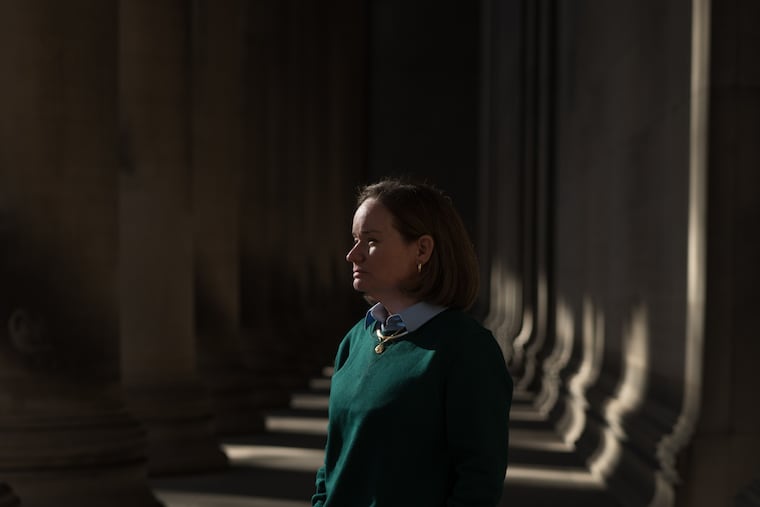
"One might wonder if the university has put students at greater risk through pandering to fear than by allowing du Cille to make his visit," said Scott Knowles, an associate professor in the Department of History at Drexel University, and an expert in disaster planning and public policy. "The university has a responsibility not to foster a culture of psychological distress."
But the Syracuse decision is doing just that. And that doesn't surprise Knowles.
"This case sheds light on the danger that panic poses in the face of an epidemic. Research indicates that in the midst of a natural disaster, people do NOT panic, they instead demonstrate creativity, resolution, empathy, and a communitarian ethos," says Knowles. "The greater risk of panic comes when it is attached to risks that are hard to quantify, poorly understood, and/or expose deeper cultural fears."
And that is so clearly what we are seeing now in the wake of three cases of Ebola across the United States.
So what can we do to stem the growing tide of fear? Knowles thinks "it is then extremely important that public agencies and figures of authority gauge the risk effectively and communicate clearly to the public, so as to avoid a panic that becomes more widespread than the object of fear."
So far the Syracuse example suggests the opposite might be happening. But as photojournalist Du Cille wrote on his Facebook page yesterday, Syracuse's action was "a missed opportunity to teach future media professionals how to seek out accurate hard facts; backed up with full details about the Ebola crisis. I guess it is easier to pull the hysteria and xenophobia cards."
Given its role as an institution of higher learning, maybe Syracuse will learn quickly from its mistake. Or, let's hope that at least other institutions can learn from Syracuse's fumbling and panic-driven response.
Read more about The Public's Health.