U.S. loses measles elimination status after nearly 30 years
The designation is largely symbolic, but means that measles is once again spreading widely in communities across the United States.
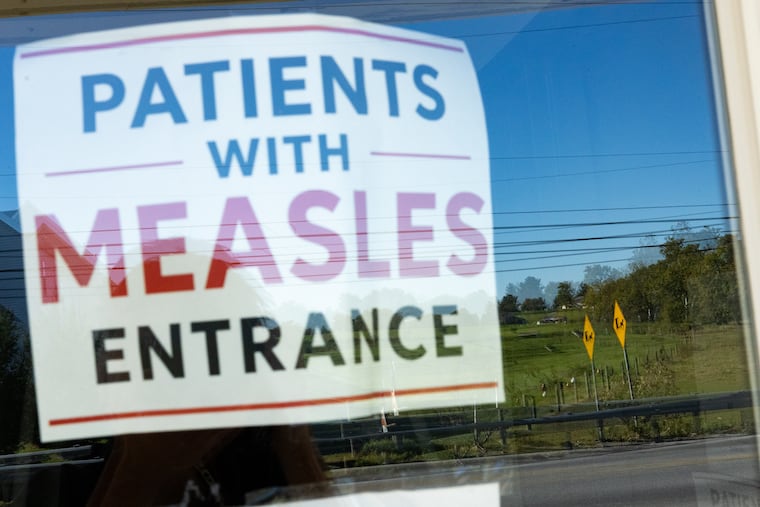
As Pennsylvanians grapple with a major measles outbreak, the Wall Street Journal reported that the Pan-American Health Organization will no longer consider the highly contagious disease “eliminated” in the United States, an extraordinary loss of a public health achievement that the country maintained for nearly 30 years.
The latest designation by PAHO, a division of the World Health Organization focused on the Americas, is largely symbolic, but means that measles is once again spreading widely in communities across the United States. A spokesperson for the international health agency said it would hold a briefing on the matter Tuesday.
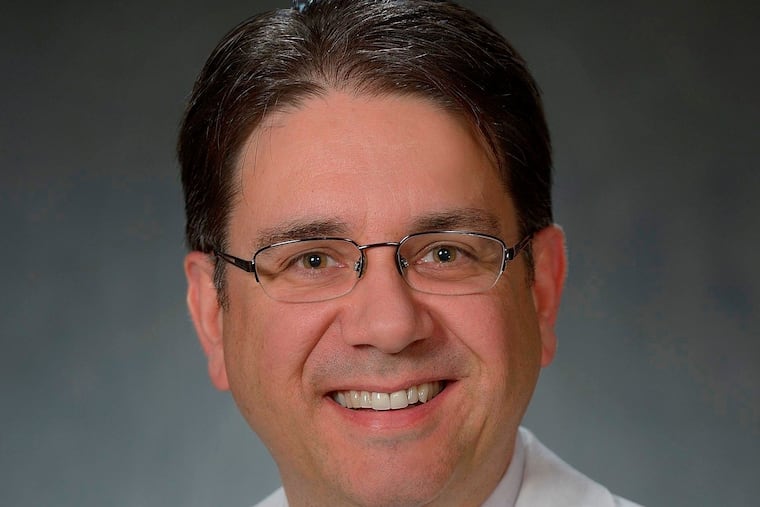
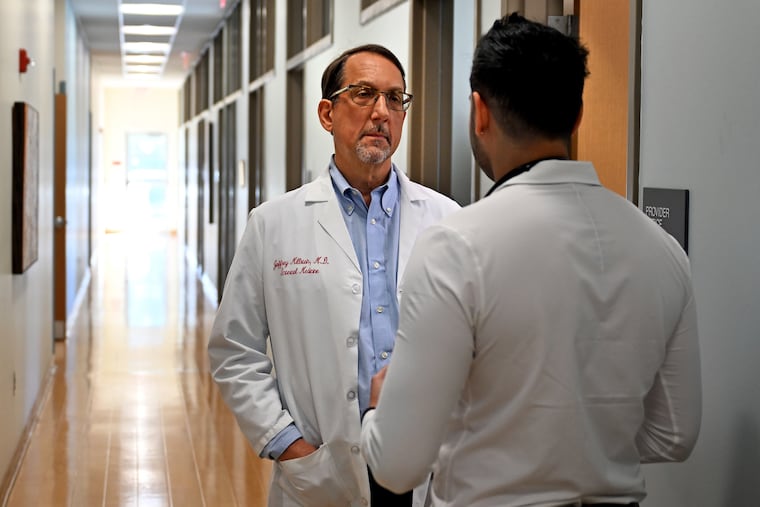
“It is a sad day. I think it is a tremendous step back for public health in this country,” said Paul Offit, a nationally renowned vaccination expert and co-director of the Vaccination Education Center at Children’s Hospital of Philadelphia.
PAHO considers measles eliminated when a country has “no continuous spread of the virus” for at least a year, the Journal reported, adding that PAHO evaluates recent measles outbreaks and reports from the Centers for Disease Control and Prevention to determine how cases in the United States are linked, and whether any outbreaks lasted longer than a year.
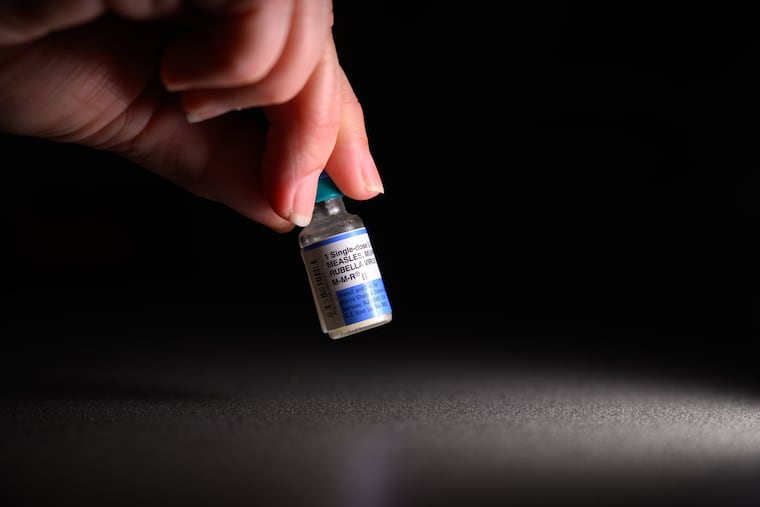
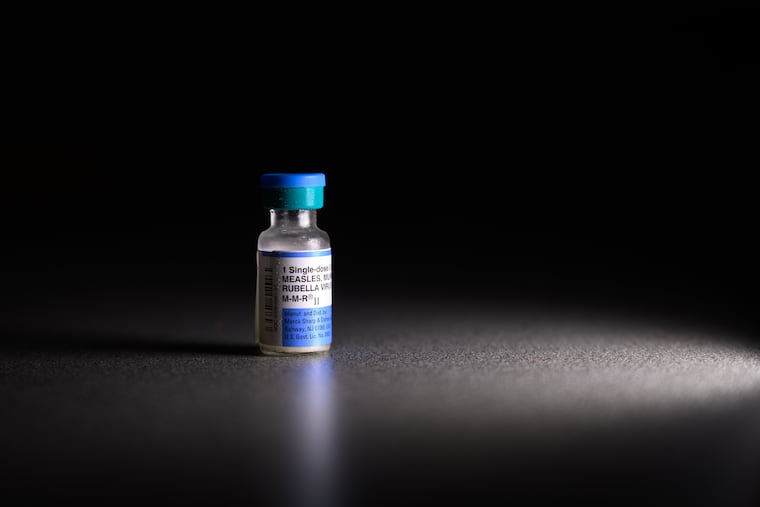
Massive measles, mumps, and rubella (MMR) vaccination campaigns in the United States led to the elimination of the disease in 2000. Many doctors practicing today had never seen a measles case before. The last major outbreak in Pennsylvania occurred in 1991.
In 2025, amid a measles outbreak in Texas, the country recorded its first measles death in a decade. This year, the CDC recorded 5,412 measles cases, the most since 1991.
Pennsylvania has reported the worst measles outbreak in the country this year, with 1,542 cases confirmed as of Friday. About one in five patients have been hospitalized. The state has confirmed seven measles-associated deaths and is investigating an eighth, while New York and Wisconsin have reported three deaths between them.
Offit said that, given the death rate -- typically, about 1 to 3 of every 1,000 children who contract measles will die -- measles cases in the United States are almost certainly undercounted.
The loss of measles elimination status should be a wake-up call for scientists and public health workers, said Brian Castrucci, an epidemiologist and president and CEO of de Beaumont Foundation, a community health philanthropy outside Washington, D.C.
“We’re in an ongoing, day to day war with measles, and for the first time in 26 years, measles is winning,” he said.
Representatives from the U.S. Department of Health and Human Services and Pennsylvania’s Department of Health did not immediately return requests for comment.
Vaccine skepticism rises along with spikes in measles cases
Measles is one of the most contagious viruses on earth, lingering in the air for up to two hours after an infected person leaves an area. Up to 90% of unvaccinated people who come into contact with the virus will contract it.
Experts say that 95% of a given population must be vaccinated to prevent the virus from spreading widely; a two-dose regimen of the MMR vaccine is 97% effective against the disease.
But MMR vaccination rates have been declining for years, both around the country and in the Philadelphia region, amid a burgeoning anti-vaccination movement and the spread of misinformation about the safety of vaccines.
Vaccination rates in Pennsylvania communities and elsewhere have steadily slipped below that rate. In Lancaster County, the epicenter of the state’s spiraling measles outbreak, just 87.6% of kindergarteners had been fully vaccinated against measles for the 2025-2026 school year.
Now, proponents of the anti-vaccination movement are at the highest echelons of the federal government. Health and Human Services Secretary Secretary Robert F. Kennedy, Jr., an appointee of President Donald Trump, is a longtime anti-vaccination activist.
Earlier this year, Kennedy saidthat the MMR vaccine is effective. But he spent years spreading skepticism about vaccine safety -- including as recently as September, when he spoke at a conference for Children’s Health Defense, the anti-vaccination group he once chaired.
Castrucci said anti-vaccination sentiment has long been building in the United States, and that public health workers must communicate more effectively with vaccine skeptics to rebuild trust and encourage vaccination.
“This is our own failure of recognizing this growing problem before it became a crisis. The anti-vaxx movement is a slow-moving cancer in the American psyche,” Castrucci said. “To think this began and ends with RFK, or begins and ends with Trump, or the midterms, is a horribly naive thought.”
Local health departments need more funding to encourage vaccination and conduct contact tracing, he said. Healthcare providers must help parents navigate questions about vaccination with empathy. And public health officials should emphasize that measles outbreaks take a toll on an entire population, disrupting school operations, hospital work, and other aspects of public life, he said.
Kids aren’t the only population at risk
Offit said that years of declining vaccination rates mean the disease is now infecting more adults.
“The epidemiology has shifted,” he said. Before widespread vaccination was available in the 1960s, most Americans contracted measles as children.
“Now you have people in their 20s, 30, and 40s, who didn’t grow up with the virus, who may not have been vaccinated,” Offit said.
Adults make up two-thirds of the measles cases in Pennsylvania, and, like children under 5, people over 20 are more likely to develop serious complications from the virus. Unvaccinated pregnant women are also at high risk, and doctors in Pennsylvania have reported cases of congenital measles -- a rare condition where a woman passes the virus to her child before birth.
“Most doctors have not dealt with congenital measles or measles in adults,” Offit said.
Kennedy must do more to promote vaccination, especially among adults, Offit said, and it’s crucial that state and local health leaders vaccinate as many people as possible as cases continue to rise.
“We have an anti-public health HHS secretary,” he said. “We have to do it ourselves, and do everything we can at the state and local level.”

-
Your questions about Pennsylvania’s measles outbreak, answered
-
Measles is thought of as a childhood illness, but more Pa. adults are getting sick
-
New vaccination data show hundreds of Philly-area schools vulnerable to a measles outbreak
-
Chester County has more measles cases than most entire states in the country
-
Pa. measles outbreak is nation’s worst, echoing deadly 1991 Philadelphia epidemic
-
Pa. measles vaccine messaging depends on word-of-mouth to reach the Amish community
Staff writer Sarah Gantz contributed to this report.