Jefferson Health had an $81 million operating loss in the three months ended Sept. 30
The results improved compared to last year, when the health system had restructuring costs.
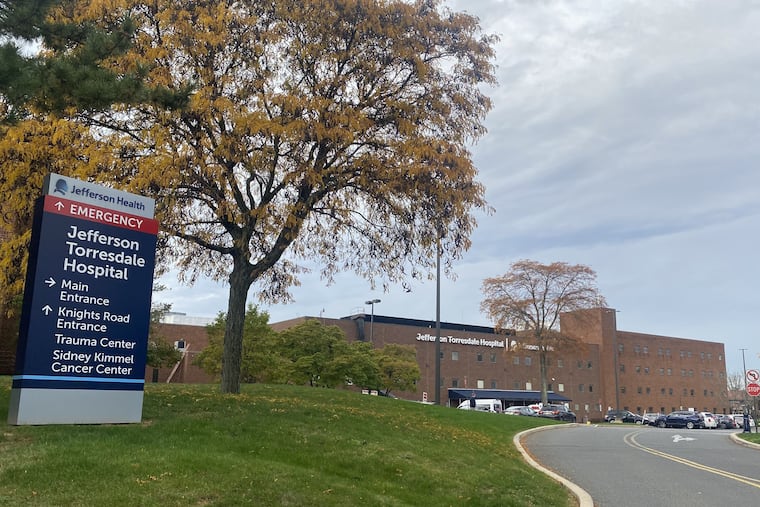
Thomas Jefferson University, which owns Jefferson Health, posted an operating loss of $81 million in the three months that ended Sept. 30.
Last’s year’s $104 million operating loss for the same period included $19.4 million in restructuring costs.
“Despite persistent inflationary pressures and commercial insurers’ unilateral changes to reimbursement policies, we are making meaningful progress on strengthening Jefferson’s financial performance while serving our communities and meeting the evolving needs of our patients,” Jefferson’s chief financial officer Mike Harrington said in an email.
He noted Jefferson is seeking higher payment rates as it currently negotiates contracts with several insurers. “We will continue to advocate for fair reimbursement from insurers to ensure our patients have access to the care they depend on.”
Jefferson, which has more than 30 hospitals stretching from South Jersey to near Scranton, has Dec. 31 contract deadlines with three major insurers: Highmark, Horizon Blue Cross Blue Shield New Jersey, and Independence Blue Cross. Jefferson and the insurers have warned patients that the deadline could pass without a new deal.
Here are more details on Jefferson’s latest results, shared with bondholders on Friday:
Revenue: Jefferson reported $4.34 billion in total revenue, up 8% from $4 billion last year. This is the first report since Jefferson’s acquisition of Lehigh Valley Health Network in August 2024 that has comparable figures for year over year results. Patient revenue was up 4%, insurance revenue climbed 21%, and unspecified other revenue rose 16%.
Patient volumes: The report showed mixed results for patient visits. Hospital admissions rose 2.3% to 64,370, but surgical procedures fell slightly to 47,700. The filing did not address the reason. Independence Blue Cross implemented a policy this year designed to steer selected surgeries to lower-cost ambulatory centers. That could have contributed to Jefferson’s loss of some procedures.
Notable: Jefferson’s operating results included $75 million in investment income in its revenue because it follows accounting rules for higher education, though the vast majority of its business is in healthcare. Without the investment income, its operating loss would have been $156 million.