Finance fiasco slows business at law firms
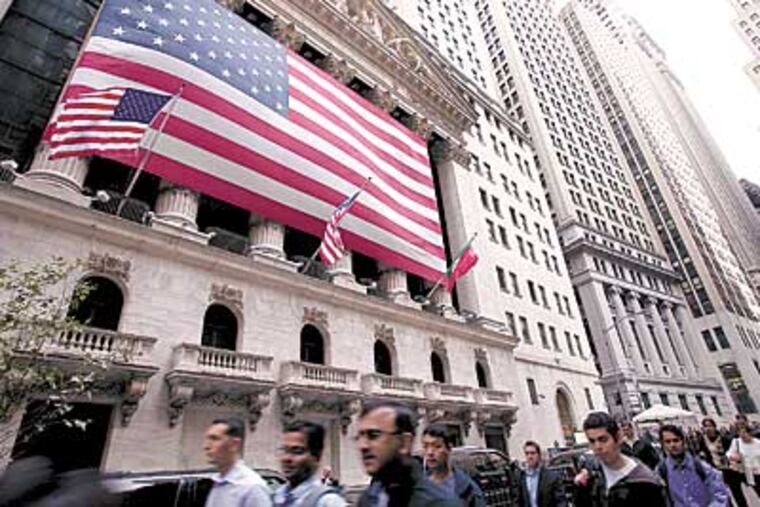
As the ripple effects of Wall Street turmoil course through the economy, law firms are pulling back, cutting costs and bracing for further financial shocks.
As the ripple effects of Wall Street turmoil course through the economy, law firms are pulling back, cutting costs and bracing for further financial shocks.
A recent Citibank survey of the nation's top 160 law firms found the number of hours billed by lawyers to their clients for the first half of the year was down as much as 10 percent. Many firms have had years of explosive growth, but now, they say, clients are spending less, forcing some retrenchment of their own.
At Wolf, Block, Schorr & Solis-Cohen L.L.P., in Center City, law firm managers, in reaction to the downturn, delayed the arrival of recent law school graduates by 60 days, said chairman Mark Alderman.
Dechert L.L.P. has sublet some of its New York office space. Cozen O'Connor is putting off some capital projects, while Reed Smith L.L.P. has cut back marginally on travel and entertainment costs.
In keeping with the results of the Citibank survey, Wolf Block's billable hours are down slightly from last year.
The downturn has been offset substantially, however, by a sharp spike in bankruptcy work at Wolf Block, Alderman said.
"This is a bad year," he said. "It is like everyone's house is worth a little less than last year. We've had a great run, and the hope is that this is a temporary interruption."
What has many lawyers concerned is the seeming severity of the crisis and the government's inability so far to convince the markets that it can fix the problem.
"Confidence is important," said Bart Winokur, chairman and chief executive officer of Dechert, where revenue is flat this year. "Whenever you have something that happens that basically says money is not safe, you are going to have a collapse, unless the government does something."
Fox Rothschild L.L.P. managing partner Mark Silow said the firm had been spared some of the more severe effects of the downturn because it traditionally has focused on bankruptcy representations and does not, as a general rule, do legal work for financial institutions, which have been at the center of Wall Street's downturn.
But the Wall Street gyrations and the general economic softening have affected wide swaths of the economy, particularly home building, and that business has been off, he said.
To a great extent, Philadelphia firms have so far been spared the most dire consequences of the economic downturn because they do far less of the transactional and deal-making work that fueled other firms around the country, especially those in New York.
There, several firms already have announced scattered layoffs of associates, while there have been none so far involving Philadelphia-based firms.
In an odd twist of fate, Reed Smith, a large Pittsburgh-based firm with 140 lawyers in Center City, has gotten some work out of the collapse of Lehman Bros. Holdings Inc., the investment-banking firm that went into bankruptcy, because Reed Smith is representing some of Lehman's creditors.
Some firms are seeing an uptick in business.
Ralph Wellington, chairman of Schnader, Harrison, Segal & Lewis L.L.P., said European clients, seeking to capitalize on favorable currency rates, were wading into the U.S. market and acquiring businesses here.
He said the firm also had benefited from a heightened sensitivity by corporate clients to hourly billing rates. In that climate, Schnader's hourly rate for partners, which ranges from $425 to $625, is appealing when contrasted with rates for partners at larger firms, which can range well above $700 an hour.
William Sasso, chairman of Stradley, Ronon, Stevens & Young L.L.P., which counts among its clients large mutual funds, said he anticipated an uptick in work representing broker dealers who typically are targeted in lawsuits by dissatisfied customers during economic downturns.