A new perspective on bridges
The '09 engineer of the year hopes to shift the focus for students.

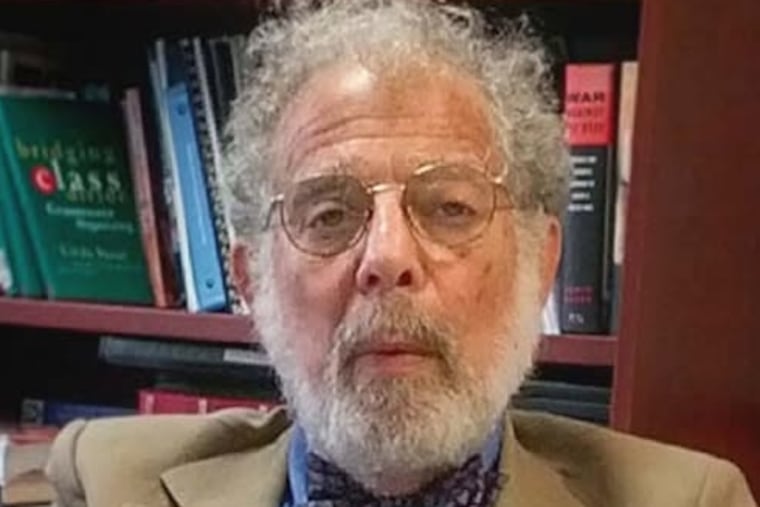
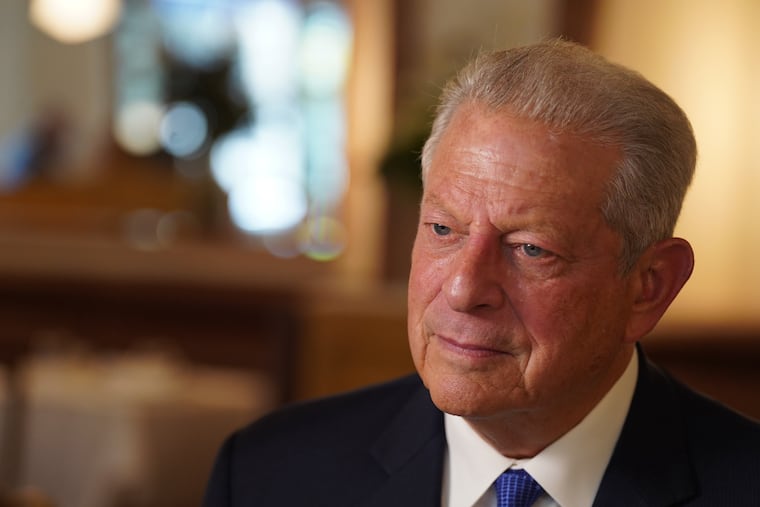
When David S. Lowdermilk graduated from Pennsylvania State University's engineering college, he went to work for California's Department of Transportation, but it didn't take long before he and family wanted to come back to Pennsylvania.
Even though it was in the middle of the recession in the early 1980s, he landed a job at the engineering company responsible for designing the Blue Route.
"I was able to watch it grow from feasibility and actually see it constructed. That was very cool," said Lowdermilk, sitting at the Palmyra Cove Nature Park's nature center, nestled just south of the Tacony-Palmyra Bridge.
These days, Lowdermilk, 51, is engineer of record for the Burlington County Bridge Commission, giving him engineering oversight over the Tacony-Palmyra and Burlington-Bristol bridges.
He also is the Delaware Valley Engineer of the Year, an honor conferred upon him by the 2009 Delaware Valley Engineers Week Council, a local professional association. When he's not acting as Mr. Engineer, Lowdermilk, of Wallingford, manages $20 million in projects as vice president and transportation-technology principal at Pennoni Associates Inc., an engineering firm in Philadelphia.
Like others in the field of civil engineering, Lowdermilk is keeping an eye on President Obama's stimulus package, which includes funding for infrastructure projects involving roads and bridges and water systems.
Question: What was your reaction to President Obama's idea?
Answer: When I heard President Obama in his inaugural address mention roads and bridges, I was ecstatic.
Q: Because?
A: Because, wow, we were up front. And it's been a long time since roads and bridges were in the forefront of people's minds. And he followed that up right away with the stimulus package, which was fantastic.
But that was also accompanied by a fear that everyone is going to think that now roads and bridges are fine.
The truth is that the stimulus package is wonderful as a kick-start to the economy. But it's not going to be enough money to do what needs to be done in terms of really bringing our infrastructure up to a higher level grade.
Q: Can you quantify where you think we need to be?
A: Have you seen the ASCE (American Society of Civil Engineers) report card? They have rated the infrastructure in the United States as a D, grade D. The latest dollar value that they put on it to bring our infrastructure up to a passing grade of a B or an A is $2.2 trillion over five years.
Q: It looks as if there's about $27.5 billion in the stimulus package for roads and bridges nationally, in a larger $80.9 billion infrastructure plan that includes public transport and wastewater-system improvements. How is the roads-and-bridges money getting used, from your point of view?
A: The best that we can tell of what's happening with this first round of money is a lot of deferred-maintenance projects - an influx of money to do some roadway overlays where the pavement might be in bad shape. I know PennDot (Pennsylvania Department of Transportation) has some painting and other repairs planned for the Girard Point Bridge, which is the I-95 double-decker bridge.
Q: These billion, trillion numbers are huge. But you are used to pricing this stuff out. What would $27.5 billion actually get you - supposing we could get the amount earmarked for the entire nation just poured into our area?
A: Well, the PennDot local district, their goal every year is to put in $1 billion worth of bridge repairs.
Q: Just bridge repair? That billion doesn't include roads?
A: Just bridge repairs. And that $1 billion a year is not allowing them to catch up. They're falling behind.
Q: That $1 billion is just Philly and the four Pennsylvania counties, right? Not Jersey?
A: Right. I think New Jersey might be in worse shape, actually, just because of the funding scenarios that have played out over here.
Q: You were named engineer of the year by the Delaware Valley Engineers Week Council, a local professional group. Now that you have your crown, or maybe I should say your hard hat, what are your plans?
A: I think that it's my responsibility to get word out about what civil engineers do, how important it is to our society - for two reasons. Well, probably more than two - two major reasons. One is for the average layperson to know exactly how important civil engineering is when they go over their bridges or drive on their roadways.
But also to promote our profession so we can increase the number of students enrolling in engineering.
Q: You have some ideas about the way engineering is taught.
A: If you think about what we're doing now as engineers, it's really the equivalent of geriatrics. We're taking these bridges that are now 75 to 80 years old, and we're talking about how to prolong their life forever, basically.
But what, historically, has been taught in college is pediatrics - you learn how to build new bridges and design new bridges.
Well, there are very few new bridges being designed. Certainly, we're not going tear this bridge down [pointing to the Tacony-Palmyra Bridge] and put a new bridge in.
So we have to shift the focus when we're educating our students.
Q: And that's not as sexy.
A: Right. Until you start drilling down inside of how to keep these bridges alive, and then it becomes really sexy.
David S. Lowdermilk
Day job: Civil engineer; vice president, Pennoni Associates Inc.
Family: Wife, Melissa, a synagogue administrator; and children, Brian, 26, and Rachel, 23.
Claim to fame: Delaware Valley Engineer of the Year, 2009.
Volunteer gig: Provides technical support to high school stage crews for theater productions.
Favorite bridges:
Tacony-Palmyra - because it includes five types of bridge structures in one span.
Benjamin Franklin - because the builders individually wove 18,000 eighth-of-an-inch strands made of thin steel wire to create each of the bridge's two main suspension cables.
EndText