Mennonites among us - & like us, too
Forget the stereotypes of long-bearded men riding in horse-drawn carriages and children learning their ABCs in a one-classroom schoolhouse. Mennonites, who follow a "simple-life" philosophy and are often confused with their puritanical Amish cousins, are more progressive than one would think.

Forget the stereotypes of long-bearded men riding in horse-drawn carriages and children learning their ABCs in a one-classroom schoolhouse.
Mennonites, who follow a "simple-life" philosophy and are often confused with their puritanical Amish cousins, are more progressive than one would think.
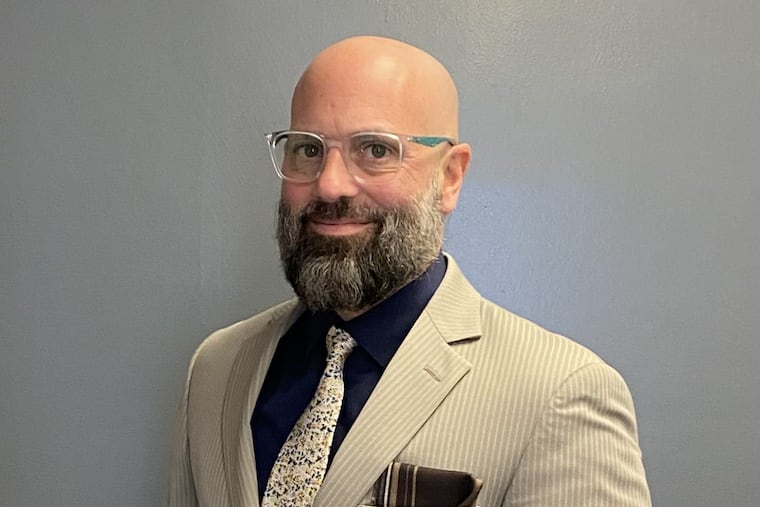
"The overwhelming majority of them wear regular clothes," said Fred Kauffman, program coordinator for the Mennonite Central Committee.
The ones who wear the bonnets and hats are called "plain Mennonites," he said.
In fact, they are so progressive that the MCC recently moved its headquarters in March from Lancaster County to Northeast Philadelphia to be closer to the city's growing Mennonite population.
The committee's East Coast offices had been in Akron, about 10 miles north of Lancaster, in an area more closely associated with the simple life than Oxford Circle.
Kauffman, who works out of the new offices above a Mennonite church on Howell Street near Langdon, said that Mennonites have existed in Philadelphia for at least 100 years, but they simply blend into their environment.
It's only been in the past 10 years or so that a significant spike has happened, though Kauffman said that he wasn't sure what had caused the drastic increase.
He suggested that it could be because the Mennonite religion offers a sense of community to those who may be struggling with poverty or oppression, as is often the case in an urban setting like Philadelphia.
The religion also has several language-specific congregations in the city that appeal to Philadelphia's diverse ethnic groups, said Kauffman, who noted that about 27 Mennonite congregations exist in Philadelphia and the surrounding communities.
"Ethnic groups find something in Mennonite that speaks to them," he said.
MCC East Coast considered Baltimore and Washington for its urban office, but Philadelphia made the most sense, said Larry Guenerich, MCC East Coast communications director.
"It was a strategic direction for us," he said. "Philly was picked because the energy and growth was there more than other cities." *