Pa. puts a heavy stake on I-80 tolls
If the plan does not pass, mass transit and repairs could suffer, and taxes on gasoline could rise.
As Pennsylvania launches its ambitious effort to wring gold from asphalt, the state is betting heavily on its uncertain ability to place tolls on Interstate 80.
If the federal government does not permit tolls on I-80, SEPTA and other mass-transit agencies will get $150 million a year less than promised, and highways and bridges will get $300 million a year less - a cut of 50 percent by 2010.
That would undermine the whole funding plan for transportation adopted by the legislature in July and send the state scrambling for other ways to raise money. Options could include higher gas taxes, higher fees for motor-vehicle registration, higher transit fares, and - Gov. Rendell's favorite - leasing the turnpike to a private operator.
(In New Jersey, Gov. Corzine is seeking to tap existing toll roads to pay off state debt. He said last week that he would announce his plan soon.)
Pennsylvania also is gambling that the federal government will let it use toll revenue from I-80 to pay for road improvements around the state. Currently, tolls on an interstate may be used only to repair that interstate.
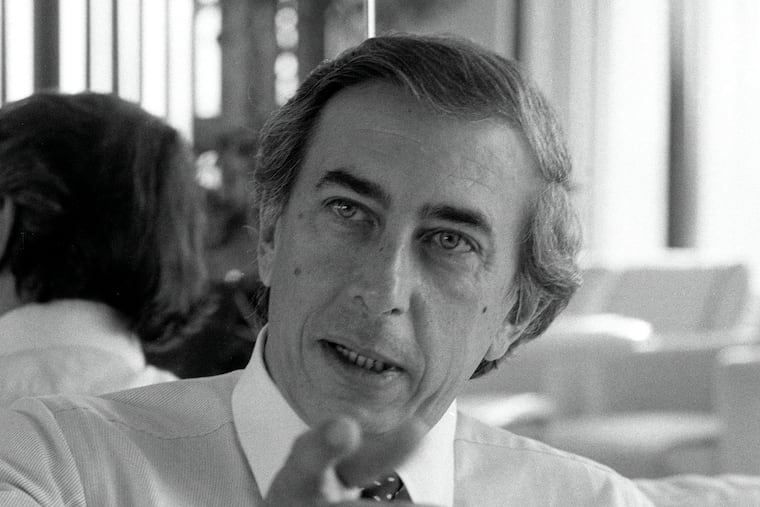
"I think both assumptions are very questionable," said Robert Poole, a former transportation adviser to four presidents and now a transportation expert with the Reason Foundation, a conservative think tank in Los Angeles. Even if Pennsylvania gets authority to impose tolls on I-80, he said, "congressional intent was crystal clear that the only use for the money was to rebuild an interstate for which no other financing was available."
Max Inman, a longtime financing official with the Federal Highway Administration and now a consultant for the Pennsylvania Turnpike Commission, said the chances of federal approval in both cases were reasonable.
"I don't put odds on it. It's a complicated project," said Inman, who helped prepare Pennsylvania's application to the federal government.
Pennsylvania officials expect an initial response from the Federal Highway Administration by next month, although final approval or disapproval is likely at least a year away. If approved, tolls could be in place by 2010.
Pennsylvania is seeking permission to charge tolls on I-80 under the Interstate Reconstruction and Rehabilitation Pilot Program, created in 1998 to permit three states to add tolls to one interstate each. (Virginia and Missouri have taken two of the slots, though neither has received authorization for its project.) That federal law requires that toll revenue "be used only for debt service, reasonable return on investment of any private person financing the project, and any costs necessary for the improvement of the proper operation and maintenance of the toll facility."
Joseph Brimmeier, chief executive officer of the Pennsylvania Turnpike Commission, said the commission viewed revenue from I-80 tolls as an operating expense because the money would be used to make payments to the Pennsylvania Department of Transportation, which would then use the money for highway repairs around the state. Will the Federal Highway Administration agree with that reasoning?
"I guess we'll find out," Brimmeier said.
Poole said: "Obviously, money is fungible, and they think they can play games with the money . . . but I would assume that the feds and the interest groups that reluctantly went along with [the authorizing legislation] would insist on the money being used only for the expressed purposes."
David Seltzer of Mercator Advisors in Philadelphia, a financial adviser to the Turnpike Commission, said the federal authorities should view the payments to PennDot like payments a private operator would make.
"The position we've taken is that part of the cost of operation is paying rent to the landlord," Seltzer said.
The state has already taken the first steps toward "monetizing" the turnpike and I-80 - using revenue generated by the roads to not only pay for their maintenance but to fund other projects. In this case, the state would borrow against future tolls to pay for transportation projects now. The borrowing is designed to give the state about $950 million a year more over the next 10 years for highways, bridges and mass transit.
By monetizing the turnpike and I-80, the legislature converted the highways from mere roads into cash cows. And the Turnpike Commission, faced with extinction just six months ago, has been given the job of milking them.
The commission last month borrowed $532 million, the first installment of about $3 billion it expects to borrow in the next three years and $9.6 billion it is authorized to borrow over the next 16 years. And the commission has made its first two lease payments, totaling $292 million, to PennDot to pass on to mass-transit agencies and to fix highways.
Paying the bill will be drivers on the turnpike and, presumably, I-80. Turnpike tolls will go up in 2010 by 25 percent and then by 3 percent a year to meet the payments on the bonds. Tolls on I-80 would be set at the same rate as on the turnpike.
Drivers on the turnpike would initially provide about $600 million and I-80 users about $400 million for the statewide transportation projects.
At the same time, as political opposition mounts to tolls on I-80, Rendell has resurrected his proposal for privatizing the turnpike.
Turnpike officials, who say they can achieve the same goals as privatization at lower cost, are moving rapidly to fill their new role as transportation financiers.
Here's how it works:
The Turnpike Commission is to borrow about $3 billion billion by the time I-80 tolls kick in. The commission is to use that money to give PennDot $750 million this year, $850 million in fiscal 2009, and $900 million in fiscal 2010.
PennDot is to pass on $300 million to mass-transit agencies this year, $350 million next year, and $400 million in fiscal 2010. Most would go to SEPTA, by far the largest transit agency in the state. The non-transit money would go to highway and bridge repair - $450 million this year, and $500 million each in fiscal 2009 and 2010.
In future years, rising tolls and new borrowing would be used to meet lease payments to PennDot that are to rise by 2.5 percent per year.
Although turnpike officials have been publicly optimistic about the prospects of winning federal approval, they acknowledged in their bond prospectus last month: "There can be no assurance that the application will be approved" by the Federal Highway Administration.
The leading political opponent has been U.S. Rep. John Peterson, a Republican from northwestern Pennsylvania. He and a fellow Pennsylvania Republican, Rep. Phil English, sponsored an amendment to a federal transportation appropriations bill to prohibit tolls on I-80. The House approved the amendment, but a House-Senate conference committee removed it this month.
.