Pa. politicos hear message in Mass. vote
The populist anger giveth and the populist anger taketh away. After riding voter discontent with the status quo to victory in 2006 and 2008, President Obama and the Democrats find that the politics of disquiet is now trending against them.
The populist anger giveth and the populist anger taketh away.
After riding voter discontent with the status quo to victory in 2006 and 2008, President Obama and the Democrats find that the politics of disquiet is now trending against them.
Republican Scott Brown's stunning victory in the Massachusetts Senate special election Tuesday sent a powerful message that the desire for change can cut both ways.
It left Democrats from the White House on down to the suburbs of Philadelphia yesterday scrambling to analyze the loss, figure out a response, and assess the condition of the health-care overhaul pending in Congress (consensus: grim).
Republicans, meanwhile, saw in the Massachusetts race a template for picking up ground in the 2010 midterm elections in the House, Senate, and governors' mansions around the nation.
There were no network exit polls in the Massachusetts race, but preelection surveys suggested that voters were not repudiating Obama personally as much as they were rejecting Democratic policies as not addressing their concerns over the economy while increasing the size and power of the federal government.
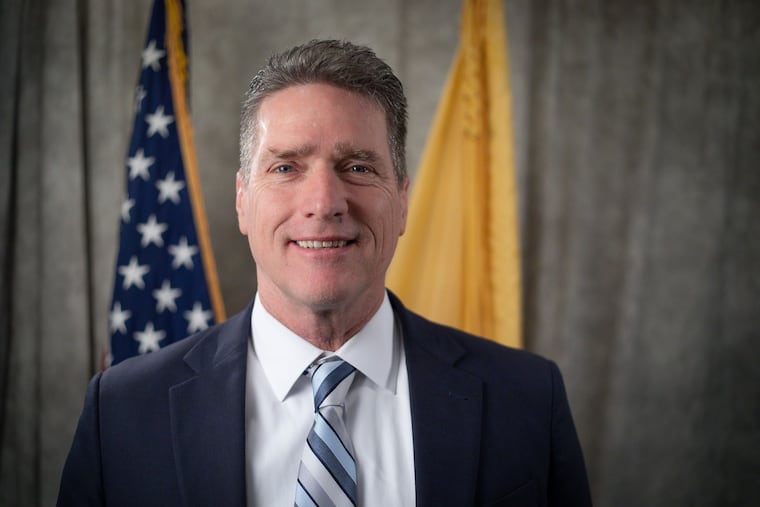
"People are rebelling against government that is spending too much and borrowing too much and taxing too much," said New Jersey's Gov. Christie, a Republican who was inaugurated Tuesday. "Maybe for once, New Jersey is just a little ahead of the curve on this stuff."
Returns and polling also indicated that Brown won over independent voters who had supported Obama in 2008, mirroring the shift that helped the GOP win governor's races late last year in Virginia and New Jersey.
"What happened in this election can happen all over America," Brown said in his victory speech.
Pennsylvania strategists and leaders in both parties agreed yesterday, saying that voter disquiet would likely shape state races for the U.S. Senate, House, and governor this year. One thing was clear: Republicans are energized.
"I think that this just increases our momentum as we move forward with our campaigns in Pennsylvania," said Mary Barket, a Republican State Committee member from Nazareth, in Northampton County.
She was among 42 Pennsylvania GOP operatives and volunteers who took a bus up to Massachusetts and spent nearly three days knocking on doors for Brown in Worcester, Randolph, Gloucester, and other towns.
"I have been waiting for this race for a very, very long time," Barket said. "This is key to people speaking up and wanting to maintain personal liberty and personal responsibility."
State GOP Chairman Robert A. Gleason Jr. said Brown's showing among independents augured well for the party's chances of winning over moderate voters in the Philadelphia area, home to at least two competitive U.S. House races, in the Sixth and Seventh Districts.
'National momentum'
"There are some very strong Democratic areas - areas that have a lot of independents - where our candidates will all be in play," Gleason said.
"I think what Massachusetts does, it sends a message," said Harry Forbes, a Pike County commissioner who also was aboard the GOP bus.
The message, he said, is that Democrats need to "slow down" on health care and also be wary of any other big-spending proposals.
"National momentum helps, especially in close districts," said Vince Galko, a GOP consultant who is working for two congressional campaigns - former U.S. Attorney Pat Meehan's in the Seventh, and that of Hazleton Mayor Lou Barletta, who is challenging Rep. Paul Kanjorski (D., Pa.) in the 11th District.
"One important thing this does is level the playing field in fund-raising," Galko said, with donors more willing to help a candidate with a shot, or at least to hedge their bets.
Democrats said they would be able to counter the trends that lifted Brown by linking Republican candidates to "special interests" who are blocking their efforts to fight on behalf of middle-class people.
"At this point, voters feel that the change they voted for in D.C. is falling prey to the same old pattern of power begetting power," said Patrick Murray, a pollster at Monmouth University in New Jersey. "The president is going to have to give voice to that voter anger. If he doesn't, Democratic members of Congress will be in even more trouble."
Rep. Joe Sestak lay claim to Brown's message of running against the "machine" in his Pennsylvania Democratic primary battle with five-term Sen. Arlen Specter, who became the choice of the White House and leading Democrats after his switch from the GOP last year.
"Look, one shouldn't overreach about the impact in Pennsylvania of an election in Massachusetts, but 2010 is shaping up to be a good year for outsiders, and that's bad news for 'the ultimate insider,' Arlen Specter," said J.J. Balaban, media consultant for Sestak.
Chris Nicholas, Specter's campaign manager said Sestak's "outsider talk is just that," noting that the challenger had been in Congress since 2007.
Democratic strategists said the fall campaign against likely Republican Senate nominee Pat Toomey, a former congressman from the Allentown area, was sure to be a challenge for either Specter or Sestak if present trends continued.
In the Republican primary for governor, State Rep. Sam Rohrer is also running an insurgent campaign against Attorney General Tom Corbett, the choice of most of the party apparatus.
'Work harder'
"It's not exactly the same, but there are parallels," said Jeff Coleman, a consultant to Rohrer. He said that grassroots conservative activists were the key for Brown and that Rohrer drew on the same base.
Montgomery County Democratic Chair Marcel Groen summed up the lesson for his party epigrammatically: "Work harder. Try harder. Don't take votes for granted."
Groen called two fall 2009 local races over open seats "a little bit of a vision" that presaged Democrats' defeat in Massachusetts: The state Senate 24th District race, in which Republican Bob Mensch beat Democrat Anne Scheuring by a more than 2-1 ratio, and a contest for seven Montgomery County judgeships that went 6-1 for Republicans.
Even though Democrats outnumber Republicans in Montgomery County voter registrations, that base was not energized in either election, Groen said.
"When they stop voting, we start losing," he said.
On the other side, a top Montgomery County Republican official saw the Massachusetts result as a harbinger for Pennsylvania elections, if state Democrats can be thoroughly linked to Washington.
"The Democrats have been very slow to pick up on the fact that the public is not going along with their agenda," Montgomery County Commissioner Bruce L. Castor Jr. said. "We aren't going to change anything that we are doing. All we have to do is remind the public that we think the people should have more money in their pockets."
Andy Reilly, the Delaware County Republican chairman, cautioned against overconfidence, though voters there also backed GOP candidates in county and municipal races in the fall.
"We've made mistakes in the past few years," Reilly said. "The Bush administration spent more than they should have - so Republicans can't just sit back and say, 'It's our turn.' . . . Politics shifts quickly."