Dredging project nearing an accord
Once work begins, the dredging vessels will take more than five years to deepen the shipping channel of the Delaware River from 40 to 45 feet.
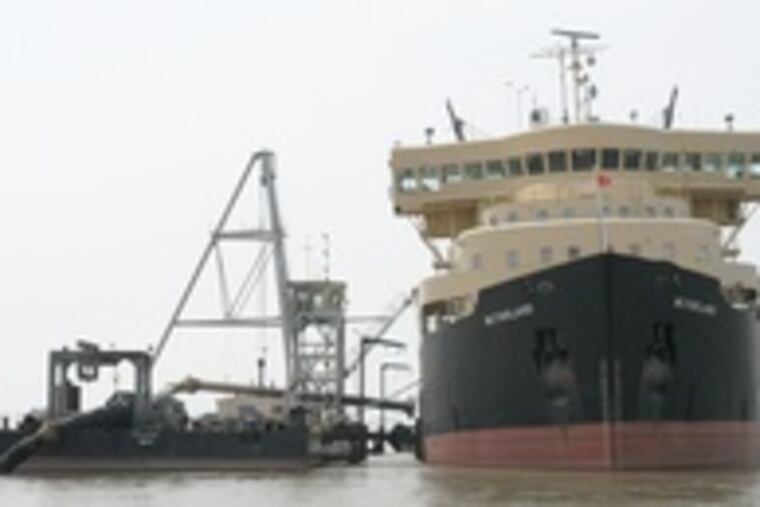
Once work begins, the dredging vessels will take more than five years to deepen the shipping channel of the Delaware River from 40 to 45 feet.
They'll traverse more than 103 miles, removing millions of cubic yards of muck from the river bottom.
But their work has been awaiting a key piece of the puzzle: a cooperation agreement between the U.S. Army Corps of Engineers and the project's sponsor, the Philadelphia Regional Port Authority.
Seven months after Pennsylvania and New Jersey struck a deal to end a dispute over the channel deepening, that piece is about to fall in place.
The agreement, now being analyzed by the corps, "is a milestone, the culmination of years of work," said Kate Philips, a special adviser to Gov. Rendell who is overseeing the project.
It will allow the corps "to tap into more federal money to begin the process of bids and to lay out the scope of services and a time line," said Bill McLaughlin, a port authority spokesman.
On Tuesday, the authority and the corps held talks aimed at working out the agreement, which is expected to be completed in several weeks, officials said.
The corps has already reviewed an environmental-impact statement.
Barring further delays, the dredging vessels could begin work by next fall.
Rendell and maritime and labor leaders have said the dredging is necessary to clear the way for larger cargo vessels. That access could persuade international shipping companies and terminal operators to invest millions of dollars in the ports in Philadelphia, South Jersey and Delaware.
But a controversy over the additional five feet divided New Jersey and Pennsylvania. Opponents of the project, such as U.S. Rep. Robert Andrews (D., N.J.), feared that the dredged material would contain environmental hazards and that the project was ill-conceived and too costly.
As chairman of the Delaware River Port Authority, the original sponsor of the proposal, Rendell refused to call a board meeting of the agency unless New Jersey agreed to the deepening. The authority's meeting in May was its first in 17 months.
At that meeting, the states announced an agreement that made the Philadelphia Regional Port Authority the project sponsor and required Pennsylvania to seek an environmental review from the corps.
Officials must still determine where the dredged material will be deposited before the work can begin.
"That's part of the ongoing process," Philips said. "We have to manage the material carefully."
The cost of the project is expected to be $277 million, with about $180 million paid for by the federal government; so far, Congress has approved $66.4 million. The Philadelphia Regional Port Authority is in charge of raising the non-federal money.
New Jersey and Pennsylvania have already agreed to split the $35.6 million that the Delaware River Port Authority originally set aside for the project.
Pennsylvania will use its part for dredging, and New Jersey will focus on environmental and port improvements.
The Philadelphia Regional Port Authority anticipates legal challenges from dredging opponents, McLaughlin said. "My intuition tells me that they will sue and try to block the project," he said.
Maya K. van Rossum, of the Delaware Riverkeeper Network, an advocacy organization based in Bristol Borough, said the dredging work would be challenged, and she called for a new environmental-impact statement.
"We are fully prepared to walk into the courtroom," said van Rossum, who expects to be joined by other environmental groups in a lawsuit to stop the project.
"The Army Corps of Engineers and Philadelphia Regional Port Authority have done everything they can to manipulate the process to move the project forward. But this is a bad project."
The dredging threatens to stir up toxins on the river bottom and negatively affect the water supply, aquatic life, food chain and recreation, van Rossum said.
"One of the big questions is: What is their plan for dredged soil disposal?" she said.
The dredging work could take place at various locations simultaneously, depending on the availability of equipment and other factors, according to the Army Corps of Engineers. The location of the dredge-disposal site also will affect the operation.
Before dredging is approved and a lawsuit is filed, though, officials of the Philadelphia Regional Port Authority and Army Corps of Engineers must finish their cooperation agreement.
"We remain hopeful that it will be signed this month," McLaughlin said. "It is, in many ways, the key to getting the project under way."