Letters: Preserve historic inn, Sansom Street spirit
ISSUE | HISTORIC PRESERVATION Save the Old Covered Wagon Inn Bravo for running "Preservationists try to save landmark inn" as a front-page story (Feb. 16). In a toxic, throwaway society, voices of conservation should rightly be front page.
ISSUE | HISTORIC PRESERVATION
Save the Old Covered Wagon Inn
Bravo for running "Preservationists try to save landmark inn" as a front-page story (Feb. 16). In a toxic, throwaway society, voices of conservation should rightly be front page.
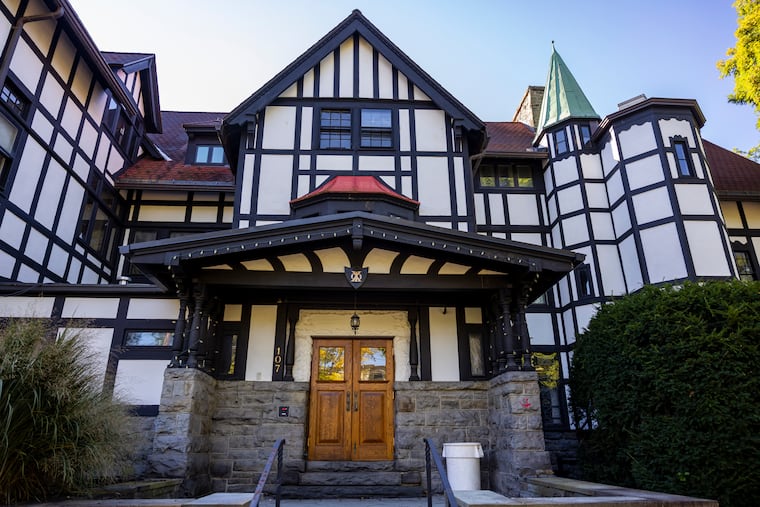
Like so many old taverns, the Old Covered Wagon Inn in Strafford, Chester County, is a landmark, a milestone, a stopping place on the turnpike of our shared history. Inns served as meeting places for traders and travelers, post offices, polling places, and employment centers for immigrants. In the age before radio, TV, and the Internet, locals gathered in them to hear news and discuss the issues of the day. They are our national heritage.
If the developers, Summit Realty Advisors, would build next to, instead of in place of, this old inn, they would gain value and give identity to a CVS pharmacy, unlike those in so many anonymous crossroad malls. The tear-down, throwaway mindset needs to be replaced by recycle, reuse, and renew with creative planning.
|Edward Davis Lewis, retired architect and preservationist, Gladwyne
Spare Sansom Street's 'Warwick Row'
Once again, the historic buildings on the 1900 block of Sansom Street in the Rittenhouse-Fitler Historic District - I call it Warwick Row; others refer to it as the Sansom Street Three - are threatened with demolition, this time by the Southern Land Co.
That Southern Land proposes to save one of the three, the coffee shop, is no consolation. Such an approach defeats the very purpose of the historic district, which is all about saving the aggregation of historic buildings that create an ambience. It is not about saving individual buildings. Warwick Row is an entity; to destroy one building is to spoil the integrity of the whole.
True, the three buildings are not in the best condition, but remember that the former Divine Lorraine Hotel on North Broad Street is being renovated, though it was unprotected for decades and suffered horrible deterioration. Many new uses for Warwick Row can be imagined. Whatever they might be, if we succeed in saving all three structures - providing the developers with a mix of old and new, high and low - a sturdy precedent will be set for continuing administration of the historic preservation law.
|David S. Traub, cofounder, Save Our Sites, Philadelphia, davidstraub@verizon.net
Developer
knew the deal
The Philadelphia Historical Commission is considering an application filed by Southern Land Co., the owner of three historic buildings on the 1900 block of Sansom Street, for "financial hardship" permission to demolish the Warwick apartment building and the former Oliver Blair funeral home.
As president of Friends of the Boyd since 2002, I was concerned about the fate of the Boyd Theatre, whose auditorium was built on Sansom Street opposite these vacant buildings. I observed the neglected condition of these buildings, which occurred while Castleway Properties and, previously, the Philadelphia Parking Authority owned them. Windows were open, graffiti was sprayed, and neighbors told me that homeless people were living in the buildings.
Should the Historical Commission allow the new property owner to assert that because of water and other damage, it would be too expensive to retain the Warwick and Blair buildings? Southern Land knew the buildings were legally protected when it acquired them and should have known their conditions. In the context of the proposed multimillion-dollar redevelopment, Southern Land can afford to repair the buildings.
It is sad that the palatial auditorium of the Boyd Theatre is being lost to redevelopment, but the historic buildings across from it should survive.
|Howard B. Haas, president, Friends of the Boyd, Philadelphia