Could a blue wave in New Jersey be big enough to sweep away Jeff Van Drew?
The four-term congressman from Cape May won in 2024 by 17 points and has a significant money edge. But with President Trump’s approval ratings in free fall, could an upset play out in South Jersey?
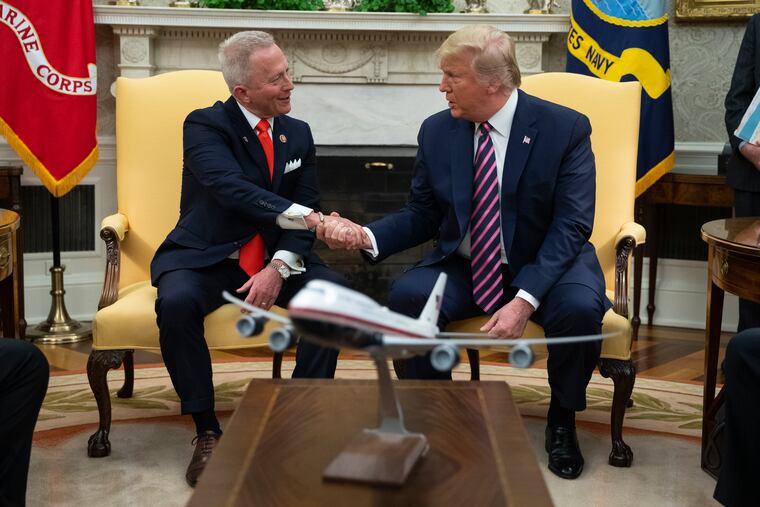
You can hardly blame Jeff Van Drew, the Republican congressman from Cape May, for feeling cocky about his chances to win reelection.
He won in 2024 by a whopping 17 points, and he has a huge money advantage. So he’s been dodging most debates and interviews this year, acting as if there’s really no need to lift a finger. Even among Democrats, few have held much hope for his feisty challenger, Zack Mullock, the 40-year-old mayor of Cape May.
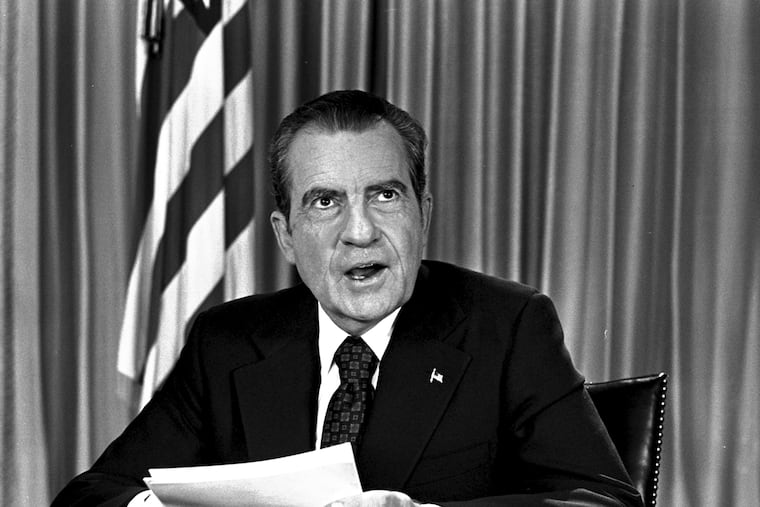
But that’s changing. As a blue wave sweeps across America, and Donald Trump’s nosediving poll numbers head toward Richard Nixon territory, Democrats have a good shot to win next month even in places like Texas and Kansas, according to the Cook Political Report. So why not South Jersey?
“We still need to see the blue tsunami getting bigger to reach this one,” says Micah Rasmussen of Rider University. “But it’s definitely getting closer. Van Drew could be counting on really Republican areas to carry him through, and they may not be fired up to save him.”
The 2nd Congressional District, after all, is not traditional Republican territory. Barack Obama won there twice, and the district includes three of the state’s four poorest counties. Spread across South Jersey from the Atlantic to the Delaware, it is mostly working-class, with just 32% having earned college degrees.
But that’s the demographic group that switched to the Republican Party in mass numbers when Trump arrived, giving him two big wins, and no doubt inspiring Van Drew to leave the Democratic Party in January 2020, declaring his “undying support” for Trump during a visit to the Oval Office.
Granted, Van Drew, now 73, was always more conservative than his fellow Democrats in Trenton when he was a state legislator, at least on social issues. He voted against legalizing gay marriage, for restrictions on abortion, and opposed most gun control measures. When he flipped parties in 2019, by then a congressman, he cited the vote to impeach Trump over the Ukraine scandal.
But the switch reeked of opportunism. Van Drew had spent his first year in Congress as a Democrat voting reliably with Nancy Pelosi. He voted to overturn Trump’s decision to abandon the Paris climate agreement, and against Trump’s efforts to build his border wall by declaring an emergency. He supported citizenship for Dreamers, who entered the country illegally as children, and even to expand legal protections against discrimination based on gender identity. Not exactly a perfect match for Trump.
“He has no spine,” Mullock says. “This is a person interested only in saving his own skin. He’ll do whatever Donald Trump tells him to do.”
The record is clear on his fidelity to Trump. Van Drew voted repeatedly in favor of Trump’s wildly unpopular war in Iran, and hasn’t made a peep about the billions Trump has earned since taking office. He voted in favor of the deep cuts in Medicaid and food stamps that many families in this poor district rely on — especially now, in this crunch created by rising prices.
Mullock sees that as a bull’s-eye painted on Van Drew’s back. “I travel around and see a lot of true poverty out there,” he says. “To think you’d cut those programs to fund a tax cut for the top 1%! It’s insulting. What are we doing?”
Mullock is not running as a hard-left candidate, but as a person who wants to return to normalcy and form partnerships with sensible Republicans. As mayor, he says, two of his three deputy mayors have been Republican, as were the last two city managers.
Still, if Mullock can pull this off, it will be an upset. Mike DuHaime, a Republican who was Chris Christie’s chief political adviser, is unimpressed that national Democrats made this one of their targeted races, one of eight races nationally that were added to the list last Friday. Wait, he says, to see if the Democratic Congressional Campaign Committee (DCCC) backs that up by sending cash to Mullock.
“The real proof will be in how much money they spend,” he says. “No doubt the map is expanding in favor of Democrats. And they’re not fielding a socialist in this race. They fielded a local mayor. But they [Mullock’s campaign] have got to get on Philly TV, and that’s hard.”
DuHaime helped make these decisions for Republicans during the 2006 midterms, amid another blue wave, when he was political director of the Republican National Committee. A hurdle for Mullock, he says, is that advertising in Philadelphia is hugely expensive, and Democrats may conclude their money might make a bigger bang on a race in a smaller market. “That’s the chessboard both sides are playing right now,” he says.
“We still need to see the blue tsunami getting bigger to reach this one.”
Van Drew’s money advantage is huge. In his June filing, he reported that he had $1.5 million in cash on hand. Mullock told me he currently has about $200,000. In the next few weeks, DuHaime says, the DCCC will make its final moves on the chessboard.
“If he gets money in the last few weeks, that means they have polling that shows it’s real,” he says.
Democratic donors and volunteers have, so far, focused their efforts on a safer bet, supporting Rebecca Bennett, the former Navy helicopter pilot, in her fight against GOP Rep. Tom Kean Jr. Much now hinges on whether they turn their gaze southward in the next few weeks.
Tom Moran is the author of the Substack Jersey Lowdown and former editorial page editor of the Star-Ledger in Newark, N.J.