How this Pa. county became the most dangerous place for immigrants in the eastern U.S.
Local cops working with ICE in York County, Pa. have made hundreds of arrests, with many more afraid to leave home.

YORK, Pa. — In this city that was once a critical stop on the Underground Railroad for Black people fleeing slavery, it feels like a bleak period in our history is repeating.
Some 161 years after the end of the Civil War, Black and brown immigrants who live in this blue-collar city of rowhouse neighborhoods, or scattered among York County’s 450,000 residents, are once again terrified of leaving their homes, knowing they are one police siren away from losing their freedom.
For some members of York County’s Haitian or Latino communities, the American Dream can end at any moment — on their commute to a job at one of central Pennsylvania’s Amazon warehouses, or on a trip to a local food pantry. A traffic stop for something as minor as a too-dark license-plate cover can lead to an arrest, then a call to federal immigration agents, then a trip to a squalid detention center, and, finally, deportation.
As many as 12,000 Haitians who left their violent homeland to settle in York County with protected legal immigration status have now become, in essence, sitting ducks for local cops who’ve signed cooperation pacts with U.S. Customs and Immigration Enforcement (ICE). The Donald Trump regime yanked that protection, known as TPS, in late July.
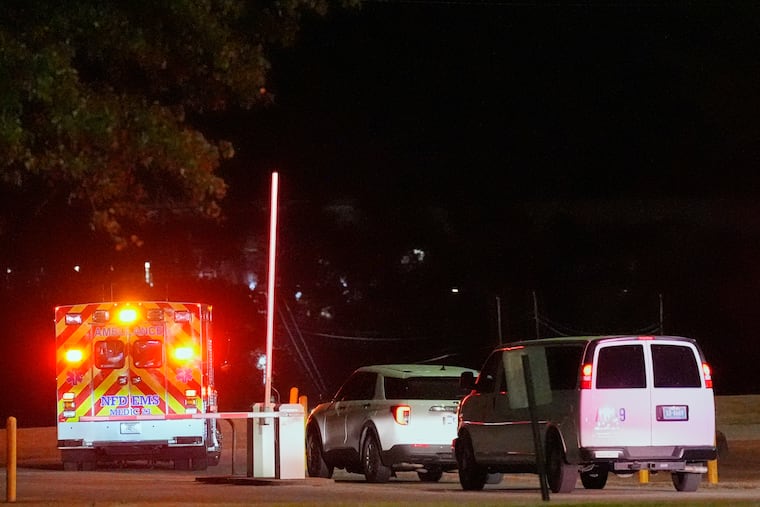
One night in late summer, a local Haitian man who is married with an 18-month-old child left home on a Sunday evening to get cash for his family at an ATM in West York Borough, an epicenter of police cooperation with ICE. He never came home.
When his wife issued a frantic plea for help, York’s 21st-century Underground Railroad of community activists — many of whom keep their work secret from even their neighbors — sprung into action. They tracked down the man at the overcrowded and dehumanizing Moshannon Valley Detention Center in north-central Pennsylvania, while beginning a Kafkaesque struggle to find and reclaim his car.
One of the helpers that night was a high-profile leader of the city’s growing Haitian community: Pastor Molis Augustave, a six-year resident of York who was a minister at Iglesia de Dios Voz de Alerta and had also been employed as a community organizer with We Are CASA, before he lost his work permit when TPS ended.
Just a few nights later, they came for Augustave.
The pastor had taken a job driving for DoorDash to support his U.S.-born wife, their 2-year-old son, and his 9-year-old stepdaughter. But he was pulled over by police in West Manchester Township, a suburb of York that had signed a so-called 287(g) cooperation agreement with ICE just days earlier, despite fierce opposition from some citizens.
The cops who stopped Augustave claimed that he was driving with a broken headlight. Augustave would later allege in a statement that he was treated roughly — “I was pulled to the floor, and I still have pain in my neck and back,” he said — and then turned over to ICE. The feds took him to Moshannon Valley, then flew him to Louisiana — where he ministered to anguished fellow detainees — and put him on a deportation flight to Haiti, the country where he’d fled lethal gang violence a decade ago.
In his manifesto — which reads like a “Letter from Birmingham Jail” for the mass-deportation age — Augustave expressed gratitude for those who fought for him and put him on the front page and TV newscasts in York, but despaired over his cellmates that no one had heard of.
“I now understand something I did not understand before I was detained,” the minister wrote. “For every person whose name becomes known, there are so many others whose names we never hear.”
In York County, there have been hundreds. And thanks to aggressive policing by several departments with 287(g) pacts with ICE, their numbers are growing every day.
The numbers are staggering.
“What the heck is going on in York?”
Records obtained either from the Deportation Data Project, which come from the U.S. Department of Homeland Security, or from local activists filing Right-to-Know requests, show that more than 500 immigrants have been arrested by local law enforcement in York County since the start of 2025, with the bulk coming since this spring.
The best statewide numbers, which come from the data project and analyzed by 287(g) stats guru Andrew Thrasher, show that more than 31% of all 287(g) arrests made in Pennsylvania from the start of 2025 through early August took place in York County, even though it only comprises 3.6% of the state’s population.
The spike in arrests here has happened with such little fanfare that people from other parts of Pennsylvania are stunned when their immigrant neighbors are arrested and detained on a long-distance trip that passed through York County and its police checkpoints.
“We’ve had people from a group in Montgomery County [Pa.] contact us that their people were coming to work in York County, and several of them were picked up by ICE,” Lisa Hoffman, a local activist, told me. “They’re like, ‘What the heck is going on in York?!’” They told Hoffman that in Greater Philadelphia immigrants had been arrested with warrants “but nobody is pulling people over and racially profiling.”
There’s a powerful case to be made that the surge in arrests by local police, and the fear that is keeping families behind locked doors and drawn shades, has made York County the most dangerous place for immigrants in the entire northeastern United States.
The 287(g) program — which in the widely used Task Force model deputizes local police or sheriff’s deputies to partner with ICE and make immigration arrests — has been on the books since 1996, as part of an early crackdown signed into law by Bill Clinton. For decades, few departments joined — but that changed in summer 2025 when the Trump regime and its so-called Big Beautiful Bill pumped in billions of dollars, with the feds dangling new cop cars, money for training, and other financial incentives in front of cash-starved departments.
Still, there’s virtually no participation in regions like Greater Philadelphia, where both Trump and his mass-deportation agenda are wildly unpopular. What’s more, many neighboring states — such as New Jersey, Maryland, New York, and Virginia — have moved to ban any participation by their agencies in 287(g). Critics say that when your local beat cop becomes an immigration agent, it spreads fear instead of promoting public safety, and makes members of immigrant communities less likely to report crimes, or even venture out in public.
But police cooperation with ICE under 287(g) is pervasive in Sun Belt states such as Florida, where local participation is required, and Texas. The program played a key role as ICE posted a record 51,000 arrests in August, even as its isolated and often rural nature shields 287(g) from noisy, whistle-blowing big-city protests.
In Pennsylvania — where efforts to block 287(g) have barely gotten off the ground in a politically divided state government — municipal and county law enforcement agencies in regions of the state that also voted strongly for Trump have embraced ICE cooperation, as police chiefs tout the financial benefits.
In York County, where Trump won nearly 62% of the vote in 2024, three municipalities, two regional squads, and the sheriff’s office have joined since August 2025. The county’s geography as a crossroads for busy U.S. highways like Route 30 and Route 15 have made the York area and its many warehouses a job magnet for immigrants, while drawing heavy commercial traffic from all over the Eastern Seaboard.
“You’re getting money for bounty hunting”
That said, the community that leads not just York County but all of Pennsylvania in 287(g) immigrant arrests is something of a headscratcher.
Carroll Township, which surrounds the borough of Dillsburg in the county’s northwest corner and is bisected by Route 15 on its busy stretch between the Pennsylvania Turnpike and Gettysburg to the south, is a fairly affluent exurb that’s nearly tripled in size since 1970. Behind Route 15’s large shopping centers, stately colonial homes are interspersed with cornfields. Although it has grown slightly more diverse in the 21st century, Carroll Township is still 87% white, according to the 2020 census.
But since Carroll Township began making 287(g) arrests in April, through the end of August — the most recent statistics obtained by residents filing Right-to-Know requests — police here had apprehended 252 immigrants and handed them over to ICE agents. And the pace of arrests has been accelerating, with more than 90, or an average of three every day, tallied in August.
The police operation here takes place out in the open — local activists see traffic stops and apparent apprehensions in the busy parking lot for the Giant supermarket or nearby on Route 15 — yet also remains shrouded in a thick veil of secrecy that should make citizens uncomfortable in a supposed democracy.
The Crimewatch page for the Carroll Township Police Department is full of news releases and photos of accused trespassers or a man suspected of leaving only $6 for a $20 bouquet of flowers, but nothing about the immigration arrests. There is chillingly zero information about who these 252 human beings are, or what happens to them when they are disappeared into ICE’s gulag archipelago.
I met the police chief, Thomas Wargo, on a recent visit and he was cordial and told me to call back and I could talk with him and Sgt. Terry Williams, who’s involved in running the 287(g) program. But Wargo later emailed to say “I have been advised that the U.S. Immigration and Customs Enforcement media inquiries are to be sent directly to the U.S. Immigration and Customs Enforcement Office of Public Affairs …”
Likewise, the board of supervisors chair, Brent Sailhamer, initially agreed to talk, only to text back that the township solicitor had advised that information can only come from ICE — even though ICE can’t answer what I wanted to ask, which is how this surge of arrests is making life better for their constituents in Carroll Township.
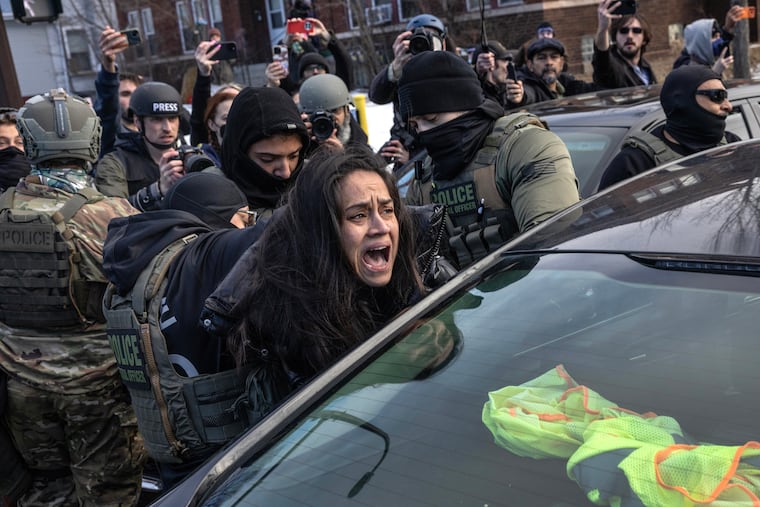
Earlier this month, a local activist, Grace Graybill, attempted to film a police stop of a contractor’s white pickup truck with several ladders strapped to the top. Even though Graybill was standing far back on a public stretch along Highway 15, Williams, the police sergeant, raced out and ordered her to stop videotaping.
“You’re interfering with our traffic stop! Go! … Stop following the police department around,” Williams says on the video that was shared with The Inquirer, adding that “you have no business being here.” The police sergeant told Graybill to “move, or you’re going to get yourself in trouble!” Courts have repeatedly ruled that Pennsylvania citizens have a right to film public traffic stops.
The only thing that’s clear about 287(g) in Carroll Township is that the program has already become a cash cow for the police department. Records obtained under the Right-to-Know requests show the federal government has paid out $137,225 to the township for new equipment, police training, and overtime, with the promise of much more.
At a meeting last Monday night, Wargo said that the department is invoking its close working relationship with ICE in seeking up to $500,000 under a new U.S. Department of Justice program called ANGEL (Assisting Neighborhoods and Governments with Enforcement of Law) grants that could pay for two new police cruisers and other equipment needs.
This is seen by the small, tight-knit community of local opponents to 287(g) as selling the soul of the township for a fistful of dollars.
“You’re getting money for bounty hunting, and it is literally changing the character, the nature of our police department,” township resident Deana Weaver told the township board meeting, before voicing her concern that liability for a bad arrest could ultimately cost taxpayers money.
“It is hurting our community. It is making people distrust our police officers.” She referenced the video of Sgt. Williams and said, “This is what the ICE program has done to him.”
“Better to not have a job than drive through Hellam”
But Carroll Township isn’t the only place in York County where enforcement is focused on highway stops targeting work trucks or vans. In Hellam Township, where busy Route 30 crosses the Susquehanna River on the county’s east side, police have logged 75 arrests under 287(g) — fourth-most in Pennsylvania, according to Thrasher’s analysis. Activists report seeing Black and brown motorists stopped on the four-lane expressway constantly.
Michelle Hines, a community activist with Solidarity Lancaster who’s called on her scientific background to analyze 287(g) arrests in south-central Pennsylvania, told me that many immigrants in Lancaster County must pass through Hellam on their way to immigration hearings or other government services in York. She begs them to somehow find a different route.
“It’s better to not have a job than to drive through Hellam,” she said. Hines said her analysis of an early batch of DHS records showed that 80% of the 287(g) arrestees in York County did not have a criminal record or pending charges.
Ironically, leaders in the city of York — the county seat and its biggest municipality with about 45,000 residents — have declared they have no interest in joining the 287(g) program and are considering passing a Trust Act that would not only codify that position but further restrict cops or its employees from working with ICE. The problem for the city’s sizable immigrant population involves passing through adjacent West York Borough, one of the earliest and most enthusiastic adopters of 287(g) in the state.
Unlike his counterparts in Carroll Township, the West York police chief, Matt Millsaps, will talk and talk to residents and to this columnist about the virtues of his department’s collaboration with ICE, which began last August. He insists it’s better for the community for local cops to deal with immigration issues than the large-scale ICE raids that generated so much controversy in Los Angeles, Chicago and elsewhere.
Describing ICE agents, he told me West York residents were worried “that these masked renegades from out-of-town — from Philadelphia, out your way — were going to show up and run rampant in the streets.” Still, Millsaps estimated that his officers have made at least 100 arrests (issues with the way DHS codes locations make it hard to get an exact count) in just over a year, with the majority from traffic stops but also some targeted apprehensions.
He also estimated the just-over-5,000-resident borough has received in the ballpark of $150,000-to-$200,000 in ICE reimbursements.
Millsaps tried to convince me that it’s possible to aggressively enforce immigration laws and still build trust. He said he’s helped several West York crime victims obtain a so-called “U visa” that protects them from immigration problems. He mentioned a female domestic-violence victim he’d recently helped in that way, after “it took several weeks for her to come forward because she was afraid she was getting deported.”
Still, that anecdote makes one wonder about the terrified immigrant crime victims that the West York police never find out about. Several residents I spoke with said that the fear of getting arrested by their local cops and being turned over to ICE is more frightening than the loud, public immigration raids that occurred in Minneapolis last winter.
“Why do they have their hands wrapped up behind their back?”
Initially, York’s Latino immigrants were seen as a prime focus of the 287(g) arrests. In late March, a woman in West York Borough took a video that she shared with local Indivisible activists as long as she could remain anonymous. The video and also a photograph show local officers arresting a Latino tree-service worker, than handing him off to an ICE agent who leads the handcuffed man down a long alley. The young daughter of the woman filming the video can be heard asking, “Why do they have their hands wrapped up behind their back?”
But things have changed since July 27, the date that the Trump regime’s revocation of TPS protection for more than 300,000 Haitian refugees — including thousands in the York area — took effect.
Marlene Rickert, who forged close ties with the island nation as a relief volunteer after the 2010 earthquake and before she retired to York a few years ago, said a covert network of local residents is working with as many as 50 Haitian families where the male breadwinner has been deported and women don’t have access to bank accounts or a seized car.
Rickert said “the Haitians themselves are not talking to anybody” and that “if they are going to work, they are only going to work, and this has been going on for months, that they will not leave their house … I have one Haitian friend, I invited her to a birthday party, and she asked, ‘Is it in a restaurant or a home? Because if it’s in a restaurant, I will not go.’”
The biggest source of immigrant detentions, she agreed, has been traffic stops. “Many of them had a minor problem, like one had a cover on a license plate, and they said it was too dark,” Rickert said. “Four people went for that.”
The crisis for the local Haitian community started getting attention on Aug. 24 when West York police stopped a popular youth soccer coach and IT specialist at a York charter school named Amson Charleston. His supporters told the York Daily Record the arrest was over a burned-out brake light, although Millsaps, the chief, said Charleston was driving with an expired registration and inspection and had an unpaid speeding ticket. He was turned over to ICE and sent to Moshannon Valley, where detainees complain of overcrowding and rancid food.
The issue exploded locally 11 days later when Augustave, who was a well-known figure both through his ministry and his work with We Are CASA, the most prominent immigrant-rights group in York, was stopped by West Manchester police. The department had just signed a 287(g) memo in late summer. The cops told Augustave he had a broken headlight as he made his evening DoorDash deliveries.
The West Manchester police chief, John Snyder, wouldn’t answer my question about Augustave’s claim of a rough arrest, insisting that any information about 287(g) activity must come from ICE.
The arrest of Augustave — who’d been ordered removed from the United States in 2020 but allowed to stay and obtain a work permit under TPS — triggered a madcap three weeks in which he was moved to Moshannon Valley, then Louisiana, then placed on a plane for Haiti with 89 others, only to be dramatically removed from the flight. Advocates had won a hearing for his green-card application, based on his marriage to Omara Nunez, a nurse and U.S. citizen who attended York’s William Penn Senior High School.
“I did not imagine it would happen to me”
“When Molis was detained I was heartbroken,” Nunez said at a September news conference, urging his release. “I have seen Molis help other people, including people with family members in detention. But I did not imagine it would happen to me.” Her pleas were to no avail. An immigration judge denied his application and Augustave was immediately put on a second flight to Haiti, where just this year alone more than 5,000 people have been killed or injured by gang violence.
There was something else striking about Nunez’s plea: As an American whose children are also citizens, she could speak out when so many others in York feel forced to keep quiet. That includes not just Haitians on the mass-deportation radar screen, but their local helpers who don’t want any attention from cops, or condemnation from their Trump-voting neighbors.
This shroud of civic silence, the “show-me-your-papers-please” checkpoints, the police-state level of secrecy, and the neighbors who are essentially hiding in their attics — none of what I saw or heard about in York County is an America I ever imagined living in.
But we have been here before — especially here in York, just eight miles north of the Mason-Dixon Line. Today, visitors on Philadelphia Street can tour the William C. Goodridge Freedom Center and Underground Railroad Museum, in the home where a freed African American businessman acted as a “stationmaster” to hide escaped Black people from the fugitive slave patrols of the 1850s.
In our new house divided, the conductors and stationmasters of York’s underground are nurses and retirees and college professors who work anonymously and tirelessly, and who will need to be memorialized in some future, better version of America.

Sign up for the Will Bunch Newsletter