Do French protests have a message for America? | Will Bunch Newsletter
Plus, why are Trump’s illegal acts getting even worse?
Baseball’s Curse of the Bambino barely lasted into the 21st century. But Philly fans have to be wondering these days if we’re living under the Curse of LeBron. When the 76ers signed the 41-year-old hoops legend to complete their construction of an NBA Dream Team, Philadelphia felt like the capital of the sports galaxy. Since then, the Phillies imploded, the Flyers got off to their worst start in franchise history, and the Eagles just suffered the most horrific loss I’ve seen in 60 years of NFL-watching. Thank God the Curse of LeBron has not reached Chester...yet.
If someone forwarded you this email, sign up for free here.
How come Gen Z protests crummy schools in France, but not the U.S.?
You had to figure it was just a matter of time before the kids protested the sorry state of their public schools.
In recent years, billions of dollars in badly needed maintenance has been postponed, resulting in classrooms with toxic hazards like asbestos and ancient lead paint, stale polluted air, inadequate heat in winter, and a lack of air conditioning in summer.
There’s a severe teacher shortage, meaning some classroom leaders have little experience, or aren’t skilled in the subject they’re teaching. Chronic state underfunding has meant a structural deficit of some $300 million a year.
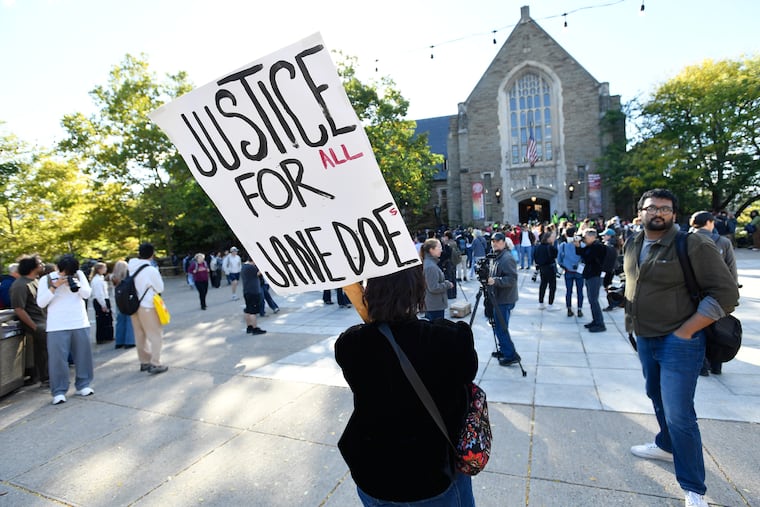
These, of course, are the K-12 conditions in the Philadelphia School District, and school squalor like this is something you see in a lot of large American cities, unfortunately. But while there’s the occasional one-off rally — like the kids who marched against overcrowding at Philly’s Girls High — we’ve seen nothing when it comes to protesting like what’s happening this month in France.
Vive la différence, indeed! Student protests have swept across France since mid-September after students in less-advantaged working-class suburbs of Paris, starting with one school in Créteil, walked out and formed barricades to protest clogged toilets and crammed classrooms that sweltered as climate change pushed temperatures above 100° F.
In less than two weeks, the demonstrations spread like wildfire — literally, as trash fires raged behind hastily erected blockades — from city to city and to more affluent schools, joined eventually by college students and some of France’s powerful labor unions.
The students’ youthful bravado and their colorful protest signs — some of them in English, like ones that read, “TOO YOUNG TO BE LISTENED TO/OLD ENOUGH TO BE TEAR-GASSED,” or that voice rage against the police or French president Emmanuel Macron — might look familiar to Americans who remember 2011’s Occupy movement. The same could be said about the repressive state response.
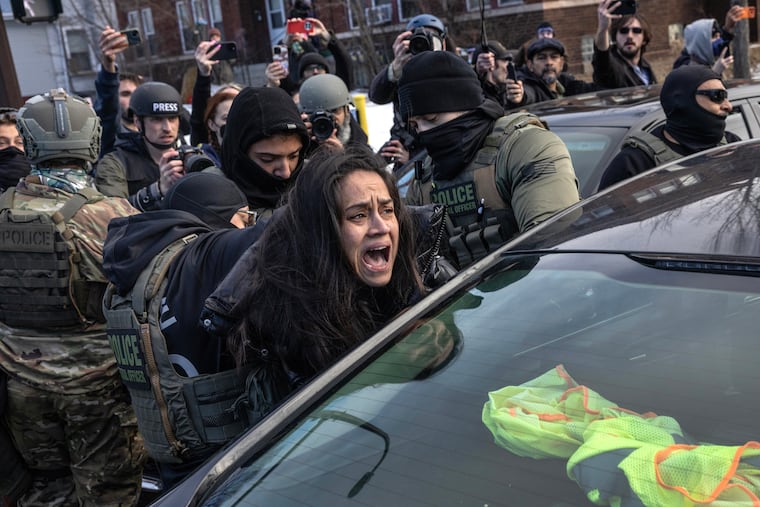
In surprising scenes that evoked the most militarized backlash to America’s 2020 George Floyd protests, French police donned riot gear and fired tear gas into the throngs. Amid outrage over violent incidents, like a 14-year-old whose jaw was broken by a tear-gas canister, police have arrested nearly 7,000 people, mostly minors.
The French student uprising is the most visible Gen Z protest movement right now, but it’s not the only one. A year after a series of organized-online youth protests rattled the Global South from Madagascar to Nepal, the world’s largest, albeit shaky, democracy in India has been rocked by the growth of the so-called Cockroach Janta Party. Its name is inspired by rage against a top judge who called Indian youth “cockroaches.”
This past weekend, India’s strongman prime minister Narenda Modi sent thousands of security officers into the streets of the capital New Delhi to make mass arrests of the protesters and their leaders, hoping to thwart a demonstration over a purge of voting rolls.
Unless you follow the big international news sites, the youth protests in France and India haven’t received extensive media coverage here in the U.S. You could argue that’s because we have plenty of our own problems on American soil, from a make-or-break federal legislative election just three weeks away to a president with the nuclear football who acts increasingly detached from reality. Not to mention the issues of massive school inequality and classroom censorship?
All of which brings back the question: Why isn’t America’s Gen Z manning the barricades?
I poked around and found that someone was asking the same question, but for the youth of the United Kingdom. In a guest essay for the Guardian, journalism grad student Kitty Sayers — born British but raised in France — said French students aren’t imbued with an American-style individualism as also happens in the U.K.
“The language of rights, citizenship and collective power is woven into French education,” Sayers wrote, explaining how students are taught extensively about the French Revolution, the electric youth-led protests of 1968, and their right to dissent.
“There’s definitely a much bigger culture of protest in France — it’s considered a rite of passage,” agreed Dana R. Fisher, the American University sociologist who specializes in studying contemporary U.S. protest movements but also saw the French way of dissent in person, during a mid-2000s sabbatical there.
Fisher told me Monday that one critical difference is that young people in France also form close relationships with labor unions, not only through their parents but through student associations. She saw that in 2005 when hundreds of thousands of French students took to the streets to oppose school reforms, and she suspects that such ties are still a factor.
Again, it’s community, and a collective spirit — as opposed to rugged individualism at best, or social atomization at worst.
Fisher also correctly noted that young people here are taking part in protests — most notably the 2023-24 campus unrest over U.S. support for Israel’s lethal assault on Gaza. While most have shunned the large-scale No Kings protests against the Donald Trump regime, they’ve walked out in some places over some aspects of the MAGA agenda, especially immigration raids near their schools.
I’d argue that America’s Gen Z was practically raised not to protest from birth. They were too busy drilling for their standardized tests to learn about civics, or their own role in a boisterous democracy. They’ve been told their lives won’t amount to much if they don’t get into the right college, so who wants to risk everything by getting arrested?
While French students are learning all about what happened at the Bastille in 1789, U.S. kids are getting warned they could face severe consequences for walking out of their high school or for demonstrating on the college green if the event is not in the time, place, and manner that is mandated by the administration. The sight of pro-Palestinian protesters getting arrested or serving lengthy school suspensions after 2024’s encampments has had the chilling effect that the authorities wanted.
Still, in spite of an American culture that works against collective action and the right of dissent in every possible way, U.S. history has shown us that everyday folks — especially young people fueled by idealism — do have a breaking point, and it’s rarely in the time, place or manner that the grown-ups see coming.
No one expected the 1964 Berkeley Free Speech Movement after the campus passivity of the 1950s, and Occupy Wall Street caught many people off-guard as well. Looming college debt and the societal and job-market disruptions of artificial intelligence have placed American students under stresses that are without precedent. Some day in a place you’d never predict, there will be a spark.
Yo, do this!
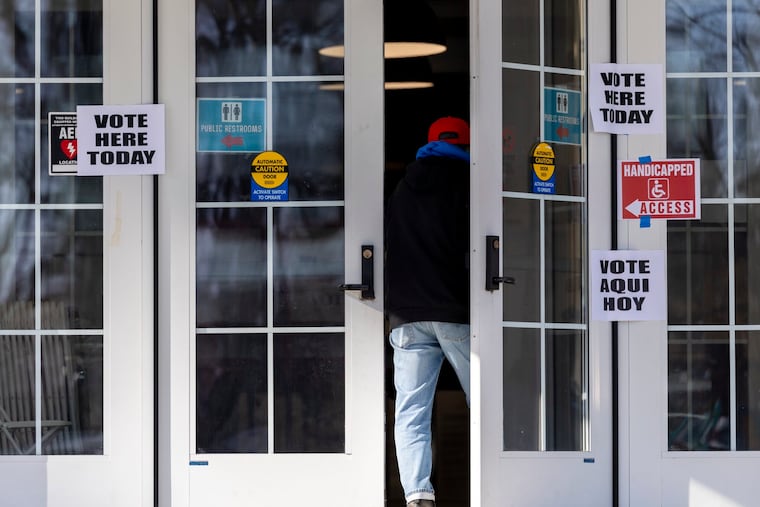
Speaking of American protests, the No Kings movement returns on Saturday with its first major day of action since last spring. The modern tradition has been large rallies in political off-years by the group that’s fallen out of power — think the Tea Party in 2009, or the Women’s March in 2017 — with a narrower focus on getting out the vote (GOTV) in election years. No Kings is seeking to have it both ways Saturday, with events that are both GOTV drives and rallies urging true election integrity in the face of the Trump regime’s threats. In Philadelphia, a 10 a.m. rally at City Hall is backed by groups such as PA Indivisible, Common Cause, the NAACP, the American Civil Liberties Union, and the League of Women Voters.
I may wait to stream it online — I’m either too old or too young to sit in a theater for 3 hours and 55 minutes — but Thursday will bring the long-awaited Musk documentary about the planet’s first (briefly) trillionaire to some multiplexes in the Philadelphia area. Acclaimed filmmaker Alex Gibney’s warts-and-all (and let’s face it, it’s all warts) look at Elon Musk comes as the Wharton grad is spending $276 million to try to buy the midterm election. Gibney’s how-we-got-here saga has a 97% rating on Rotten Tomatoes.
Ask me anything
Question: How worried are you that [Pennsylvania Democratic Sen. John] Fetterman declares himself an Independent and organizes with [Republicans] if he turns out to be the 50th or 51st D vote? — bob (@huntthesnark.bsky.social) via Bluesky
Answer: Bob, I am somewhat worried. The backstory, as many readers already know, is that Fetterman has broken away from other Democrats on major issues — support for arming Israel, the Iran War, and some key cabinet picks — since Donald Trump returned to the White House. Although Fetterman insists for now that he’s not leaving the Democrats and still votes with them a majority of the time, he finds himself (much like Trump) in a political corner. He’s too unpopular among the Democratic rank-and-file to win a primary in 2028 when he’s up for reelection. He’s better liked now by Republicans. If Democrats get to 50 or 51 seats in November’s election, the GOP could offer him a committee chairmanship and a ton of campaign cash to switch and help them stay in control. The only real solution is for Dems to reach 52 or more seats. I am optimistic on that front.
What you’re saying about...
Last week I asked you about cultural escapes to take your mind off the constant anxieties of the Trump era, and you responded with wonderfully diverse stuff, from all over the world. Bonnie Maky Rosen finds refuge in the public libraries of Cuyahoga County, Ohio and her favorite book, The Light Years by Elizabeth Jane Howard. Stephen LoRusso gets in the wayback machine to read the Marcus Aurelius Meditations(!). Weekly respondent Mary Ann Petro likes ghost-hunting shows, Murder She Wrote, old Hallmark Hall of Fame movies, and Ghosts on CBS (I’m sensing a theme). Tom Lees binge-watched Derry Girls on Netflix. From over in London, Inez Soman loves the Philly band The Menzingers and hangs out at Passyunk Avenue (I wonder if she saw my daughter, who was there eating a cheesesteak outdoors during the Eagles game on Sunday.)
📮 This week’s question: Every day, concern is rising that a cornered Donald Trump will somehow try to steal a November election that his party looks certain to lose at the ballot box, possibly by declaring a national emergency. How will you as a citizen respond, and how do you think Democrats or other major institutions should deal with this? Please email me your answer and put “Trump stolen election” in the subject line.
Backstory on the escalating threats from Trump
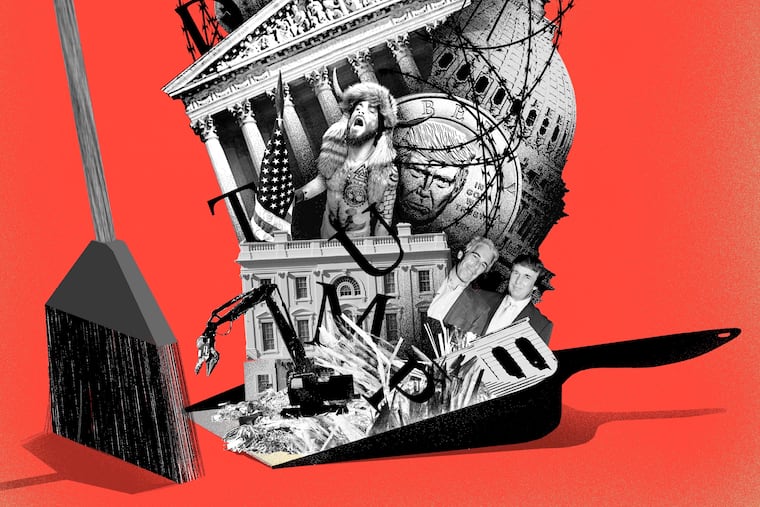
Opinion journalism looks deceptively easy in the Donald Trump era. Every day now, the man who insisted in his 2024 campaign that he would rule as a dictator only “on Day One” has extended that timeline with outrageous and increasingly illegal actions. Each would have been a year-long scandal for his 44 predecessors who, at least by comparison, have been boringly normal since 1789. I could write a 2,000-word essay five times a week that would merely consist of recapping the things the president had done that day before huffing, “This is an outrage!”
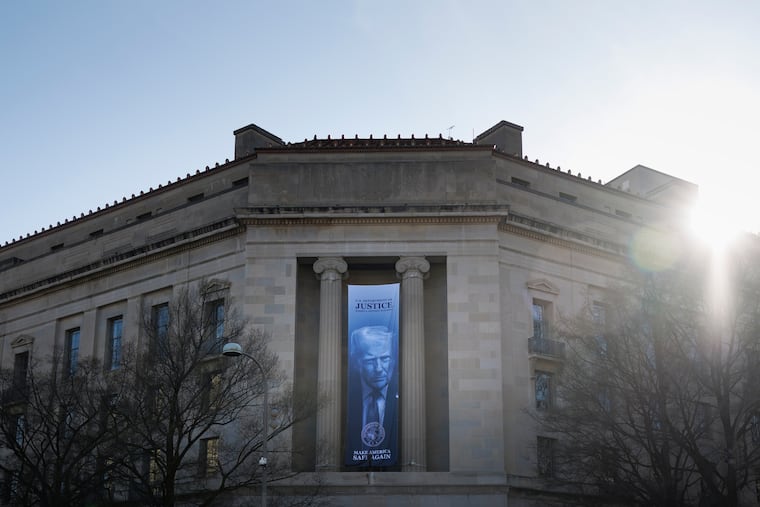
In recent days, the regime has made a mockery of the First Amendment’s free-speech guarantees with its so-called Justice Department launching an antitrust investigation into five major TV networks for denying Trump pool coverage after he’d banned one of the pool members, CNN, for coverage he didn’t like. His immigration agents that have already caused chaos with stepped-up enforcement are making plans to turn up the heat to an unprecedented 3,000 arrests a day. On Monday morning, Homeland Security agents were dispatched on totally specious grounds to raid the D.C. home of one of Trump’s political enemies, Minnesota U.S. Rep. Ilhan Omar, a leader of a Somali immigrant community that has been the target of repulsive, racist attacks from the Oval Office.
The Omar raid — ostensibly to learn whether her late father had lied on an immigration form more than three decades ago — reminded many online commenters of stories about life in East Germany under its secret police, the Stasi. But yet again the remains of a sober political establishment had no idea how to respond. Omar’s Minnesota colleague, Sen. Amy Klobuchar — favored to become the state’s next governor — said the raid and reports it was ordered by the White House “raise serious questions that should concern all Americans, regardless of political party.”
Ya think?
To be clear, the act of raiding a political opponent’s home just days before an election is indeed outrageous (there...there’s my “hot take”) but the display of ugly brute force — and the utter impotence of his foes who can do nothing more but “raise serious questions” — is arguably as big a part of this picture as the Omar investigation itself. Some called the raid the latest example of American democracy feeling like a frog in boiling water, as Trump turns up the dial of illegal and immoral actions degree by degree, until we’re cooked and there’s nothing we can do about it. Even if the Democrats retake Capitol Hill by storm in January, there is unlikely to ever be the 67 Senate votes to remove the president for his high crimes and misdemeanors. You could call the Justice Department and report a crime, except that their agents have been tasked with committing them.
Although we can’t ignore Trump’s tactics like the Omar raid or the war on White House press freedom, it’s important here to take a step back and look at a bigger strategy — the method behind the madness. The regime only really cares about one thing at this point: Self-preservation. By enriching himself, his family and his cronies to the tune of billions of dollars in the first two years of his second term, Trump has built a criminal enterprise that’s become too big to fail.
Every political norm and every tenet of the U.S. Constitution that the MAGA movement violates — and which goes unpunished — is setting a stage for the coup-like power play that would be required to overturn the election Republicans are losing next month. And that’s only half of the equation. When the regime steps up its immigration raids at the time when Politics 101 says they should be put on hold, and when federal agents shoot a man in New York City on a busy street in broad daylight, they are hoping to provoke an equally violent response. When Trump fantasizes about an enemy attack on Los Angeles or San Diego, he is dreaming of an excuse to send out the tanks and consolidate power.
I’ve mentioned here before the memorable-for-life words of my high school football coach Rob Pickert, who said the only way to play defensive end is to come “with reckless abandon, but under control.” Remember that oxymoron as we fight back in the perilous two months after Nov. 3.
What I wrote on this date in 2009
American presidents have a tortured history with the Nobel Peace Prize that predates Donald Trump’s ridiculous obsession with winning the Norwegian trophy (even after starting wars in Venezuela and Iran). For Barack Obama, winning a Nobel 17 years ago this month was more of a curse than a blessing. I wrote on Oct. 13, 2009 that the judges had likely rewarded Obama to send one final parting shot against Iraq War president George W. Bush, but that after only nine months in the White House it was far too soon. “And before the president works any magic — real or perceived — anywhere else on the globe, he needs to bring a little peace, love and understanding right here on the homefront,” I wrote. Read the rest: “Here’s where you can put that Nobel Prize of yours, Mr. President.”
Recommended Inquirer reading
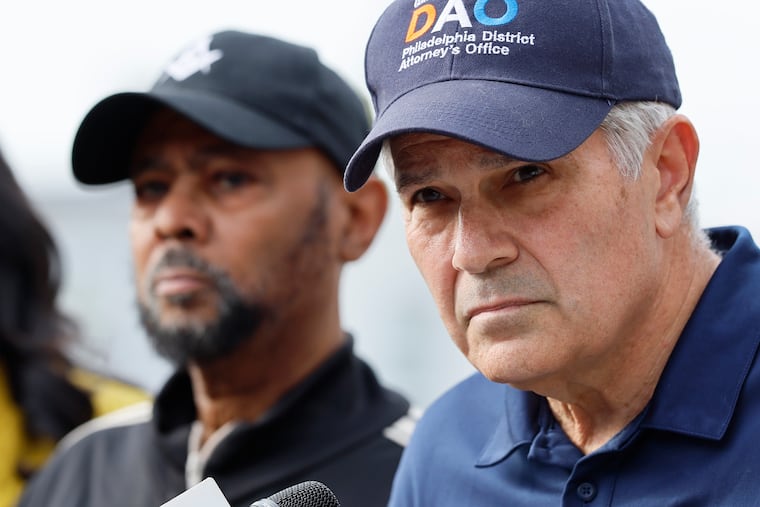
Only one piece from me this week but it was a biggie: My lengthy investigation into the aggressive local police cooperation with U.S. Immigration and Customs Enforcement (ICE) in York County in south-central Pennsylvania, where nearly a third of the state’s immigrant arrests under the controversial 287(g) program are taking place. I detailed how a crackdown by cops in municipalities like West York and Carroll Township led to some 500 immigrant arrests in a matter of months — as many as 80% had no criminal record — and terrorized a large Haitian refugee community there. Pennsylvania could follow the lead of our neighboring states and outlaw a program that is causing so much pain, but we’ll need to elect a lot of new folks in November for that to happen.
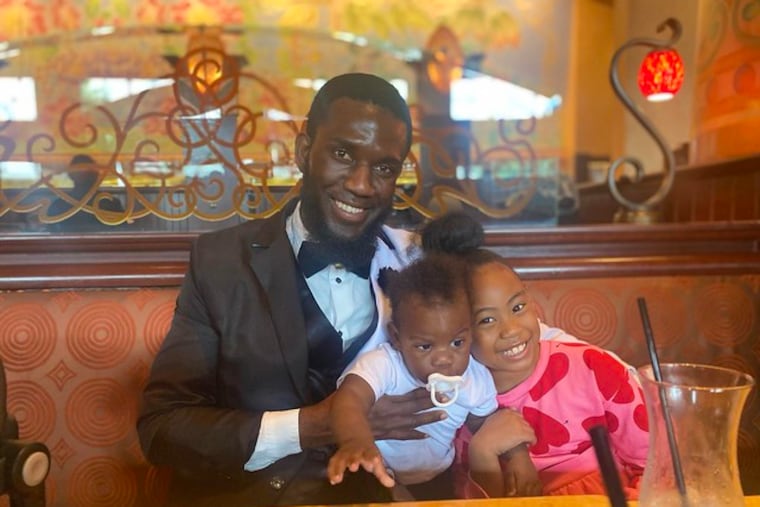
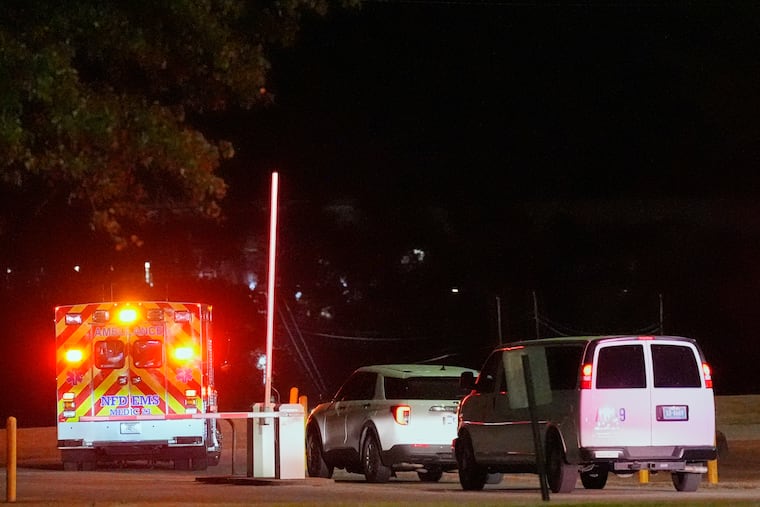
There was tragic news in Philadelphia this weekend. In the post-midnight darkness of early Saturday morning, a front-porch confrontation between a West Philadelphia man and two city police officers who were working a neighborhood crime investigation turned deadly when the man — identified as 35-year-old Eric Lewis — took out a gun and shot both officers multiple times. One of them — not yet identified by city officials — survived but in critical condition after taking 12 bullets. His partner — 40-year-old Shane Seiber, a married father of two — was killed. Amid the grief, there are many questions about both how Lewis avoided a 2023 murder rap that would have taken him off the streets, and how someone with a criminal past was able to land a job at Philadelphia’s city water department. The Inquirer’s ace team of crime and justice reporters — Jillian Kramer, Ellie Rushing, Chris Palmer, and Jesse Bunch, joined by others — sacrificed their weekend to cover a big story from every possible angle. Their work was a reminder of how a robust newsroom makes sure a city gets factual information, while digging into the difficult follow-up questions. You help keep those traditions alive when you subscribe to The Inquirer.
By submitting your written, visual, and/or audio contributions, you agree to The Inquirer’s Terms of Use, including the grant of rights in Section 10.

Sign up for the Will Bunch Newsletter