Tepid response on Tunisia costs U.S. goodwill
Paul Delaney is completing a memoir on his years as a writer and editor with the New York Times The coup, indeed, was bloodless, a marvel to behold in our modern age of violence. It was easy evicting a sick, old revolutionary in a declining mental state, in the Arab world, no less.
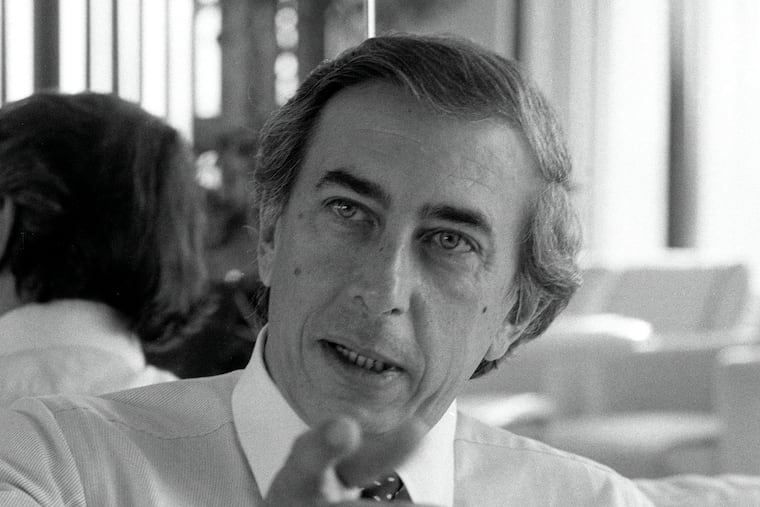
Paul Delaney
is completing a memoir on his years as a writer and editor with the New York Times
The coup, indeed, was bloodless, a marvel to behold in our modern age of violence. It was easy evicting a sick, old revolutionary in a declining mental state, in the Arab world, no less.
But, the mild-tempered Tunisians did it, accepting the surprise, quiet action. I was impressed - the world was impressed - by the events. A young, albeit untested, military man, Gen. Zine el-Abidine Ben Ali, had made deposing President Habib Bourguiba appear a mere act of mercy, the transporting of an old, infirm relative to a nursing home. Tunisians accepted the change with resignation, fully aware that Bourguiba was losing it.
The November 1987 coup was my first visit to Tunisia as Madrid bureau chief for the New York Times. The territory included Spain, Portugal, and all of North Africa, the most volatile part of the beat, by far. Tunisia is the smallest country in North Africa; on a map showing the internal body, it would be the appendix compared with other large, major organs.
Tunisians' ho-hum attitude toward the coup was reinforced by the rhetoric of Ben Ali, who aided his cause by making all the right moves. He said the media were free to criticize the government. He promised to make the constitution more democratic, for example, ridding it of the title "president for life" assumed by Bourguiba, and to open elections to opposition parties. He freed Islamic fundamentalists from jail and allowed others to return from exile (as is occurring now, again). He allowed the theological school at the University of Tunisia to reclaim its old name, Zitouna. Held under house arrest, Bourguiba's son, who was later released, met with and became a supporter of Ben Ali.
In other words, Ben Ali called for sweeping changes that led Tunisians to believe he was a different kind of leader, a dash of democratic hope, fresh political air in a region of despots, dictators, and kings who, to put it mildly, shunned such notions as democracy. It was all a lie. He turned out to be no different from other dictators, maybe worse than some as he unabashedly divvied up state resources among his family and friends.
Which meant, similarly to all other leaders in the region, Ben Ali ignored the real problem that was evident at the time of his takeover and that continued to expand and deepen with time: the youthful majority population that was smart, ambitious, educated, and anxious, but above all, restive and restless because they had no jobs and no futures.
I was shocked by the numbers of young people whose aspirations far exceeded the possibilities. I talked to them in their homes, at coffee shops and restaurants, and on the streets, from Laayoune in the western Sahara and Casablanca in Morocco to Algiers and Tunis, and their situations were the same. I could only smile when young men trying to overthrow the government in Algeria told me they were in such dire straits that they had degrees but still lived at home and could not have proper dates with girls because they had neither the money nor any place to take them. The rioting in Algeria left hundreds dead.
There were pockets of plenty, or appearances of plenty. The ritzy suburb of Corniche, outside Casablanca, and the homes in the hills above Algiers and some neighborhoods of Tunis can leave the impression of widespread luxury. Many of the youngsters I interviewed resembled typical American youths, in their rip-off of American designers, jeans, sweaters, sneakers, fostering a misimpression that maybe those kids were doing OK. But the North Africans were much poorer than their American counterparts.
The misimpressions went beyond dress. The anti-American sentiment, I found, was directed at American government policies that always favored repressive North African regimes. I was told many times - truly, I did not have to be reminded - that people sporting Western dress, gulping down American food, and loving American culture did not hate American people and culture, but did hate administrations that overlooked their plight and supported their despotic governments.
Even today, not only are Tunisians perplexed by the U.S. government's mild response to this month's overthrow of the 74-year-old Ben Ali, but many Americans are also concerned. Many regard our government's reaction to events in North Africa as token bows to democratic principles, mostly rhetoric. Ben Ali might have been a despot and suppressed his people (as is the case around the world), but he was our despot. And when despots and kings, or whoever, claim they're with us on terrorism, welcome to the club, boys.
Where to now? Another Ben Ali? No one knows at this point. Certainly not the "experts" who are usually wrong in their analyses of North African events. Is Tunisia the start of something big and transformative? The revolt has had an impact on surrounding nations as well as afar, as a few people have emulated the self-immolation that ignited Tunisia, and some have taken to the streets in various Arab states. But nothing on the scale of Tunisia's uprising.
And where is our government as democracy is banging on the door in an unexpected place? I, for one, am not an optimist.