$90 for your vote? Trump's Medicare giveaway is too little, too late
Older Americans deserve dependable healthcare coverage and protection against catastrophic medical expenses — not a temporary rebate accompanied by a presidential sales pitch.
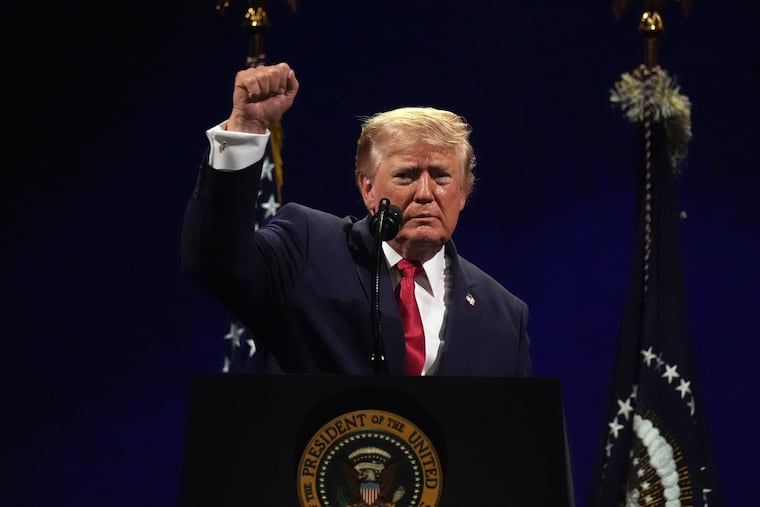
On October 8, 2026, I received an email from Medicare containing a letter personally signed by President Donald Trump, informing me that I would receive a one-time $90 payment to offset part of my October Medicare premium. Lo and behold, That very afternoon I received the payment.
How generous.
The president assured me that he was fighting to lower healthcare costs, reduce prescription drug prices, and put patients first.
What a remarkable coincidence that this unexpected presidential generosity arrives less than a month before the November midterm elections.
In my opinion, this is an extraordinarily transparent attempt to influence older American voters by placing $90 in their pockets shortly before they cast their ballots.
And perhaps most insulting is the apparent assumption that seniors will overlook the administration’s healthcare record in exchange for a payment that doesn’t even cover half of one month’s standard Medicare Part B premium.
Let’s examine the numbers.
The $2 billion being distributed comes from the Medicare Improvement Fund, established by Congress in 2008 — not from some new presidential initiative. Approximately 20.8 million beneficiaries will receive payments, but tens of millions of Medicare recipients, including those enrolled in Medicare Advantage, are excluded.
In 2024, the standard monthly Medicare Part B premium was $174.70. In 2026, it is $202.90.
That’s an increase of $338.40 annually.
The annual Part B deductible has also increased, from $240 to $283.
Together, those increases total $381.40 annually, before accounting for supplemental insurance, prescription drugs, hospital expenses, or other out-of-pocket costs.
Trump’s $90 payment offsets less than one-quarter of that increase.
To be fair, Medicare premiums are determined through statutory formulas reflecting healthcare spending. Not every increase can be attributed directly to Trump. But that doesn’t change the reality that seniors are paying substantially more.
Meanwhile, the administration has supported far more consequential reductions in federal healthcare spending.
In July 2025, Trump signed the One Big Beautiful Bill Act, which the Congressional Budget Office projected would reduce federal Medicaid spending by approximately $911 billion over 10 years.
Medicaid isn’t simply a program for younger Americans. Millions of seniors depend on it for nursing home care, home-based assistance, and help paying Medicare premiums.
Reduced federal funding could force states to restrict services, reduce provider payments, or find additional revenue. For older Americans requiring long-term care, the consequences could be devastating.
Americans ages 50 to 64 face additional challenges. New Medicaid work and reporting requirements threaten coverage for millions, while the expiration of enhanced Affordable Care Act premium subsidies has made insurance substantially more expensive for many people approaching retirement.
A $90 payment does nothing to address those problems.
The president’s prescription drug claims deserve equal scrutiny.
In his letter, Trump claims to be the first president in history to reduce Americans’ prescription drug prices.
That assertion ignores President Joe Biden’s Inflation Reduction Act of 2022, which authorized Medicare to negotiate prescription drug prices, capped covered insulin at $35 monthly for Medicare beneficiaries, and established limits on annual out-of-pocket prescription drug spending.
The first negotiated prices took effect in January 2026.
Trump deserves credit for independently verifiable savings achieved by his administration. But he cannot legitimately claim credit for policies enacted by his predecessor.
Nor should Americans forget his first administration’s repeated attempts to repeal the Affordable Care Act, including support for litigation seeking to invalidate the law.
But perhaps the most troubling aspect is the timing and presentation of this payment.
The administration announced the program Oct. 2, just weeks before a national election.
Medicare beneficiaries received a personalized presidential letter praising Trump’s healthcare accomplishments and promoting his policies. The communication reads more like a political advertisement than a routine government benefit notification.
Whether it violates federal restrictions on taxpayer-funded political activity requires legal examination. But Congress should investigate whether Medicare’s official communication system is being used for partisan political promotion.
Government benefits should never become campaign props.
And let’s remember: This money doesn’t come from Donald Trump’s personal bank account. It comes from federal funds authorized by Congress.
Americans should accept the $90 if eligible. But accepting a government benefit doesn’t require accepting the president’s preferred political narrative.
Older Americans deserve affordable premiums, meaningful prescription drug savings, dependable healthcare coverage, and protection against catastrophic medical expenses — not a temporary rebate accompanied by a presidential sales pitch.
In my opinion, this payment is too little, too late, and far too conveniently timed to be dismissed as innocent presidential generosity.
Mr. President, thank you for the $90.
But if you believe that’s enough to make Americans forget your healthcare record, you’re seriously underestimating the intelligence of the people receiving your letter.
Michael A. Gottesman is the founder of the New Jersey Public Education Coalition and author of Speaking Truth to Power.