Our military leaders should mark the lesson of Nixon’s final days in office
If Trump unlawfully declares an emergency to invalidate election results, the chair of the Joint Chiefs of Staff and other military leaders must be prepared to say the military will not follow him.
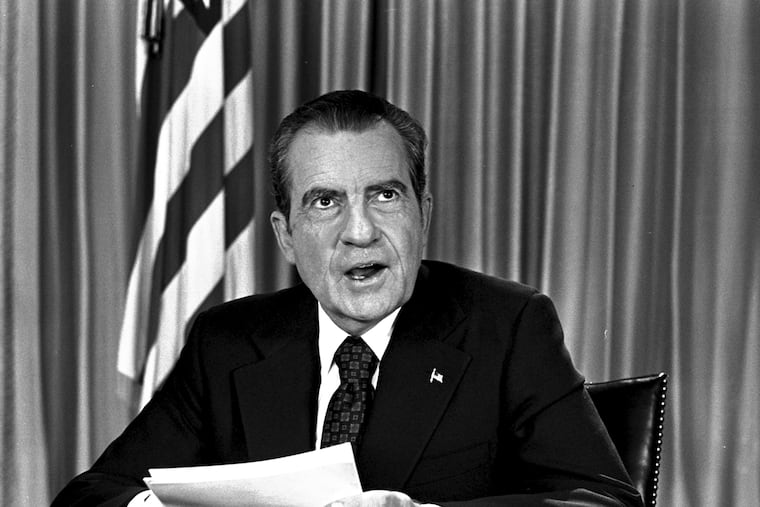
The final days of Richard Nixon’s presidency offer an enduring lesson for America’s military.
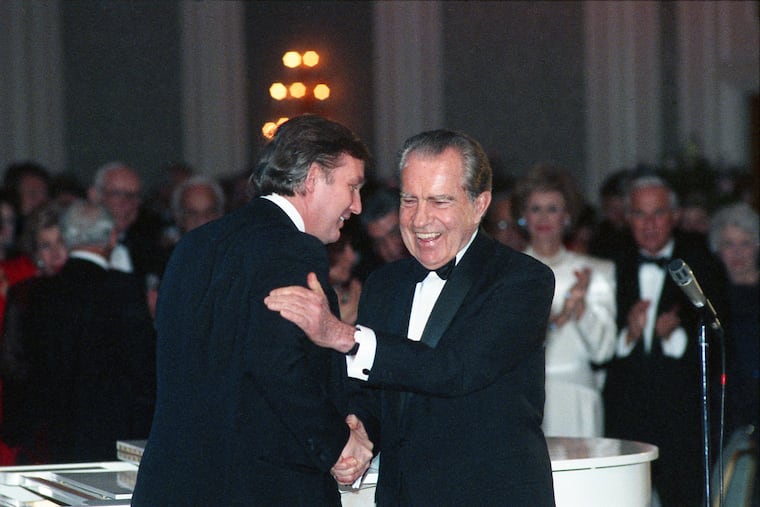
In July 1974, the U.S. Supreme Court unanimously ordered that President Nixon produce the tapes of his Oval Office conversations relating to campaign operatives who had been caught burglarizing the Watergate Democratic headquarters. Nixon knew the tapes would show he had authorized a cover-up and obstruction of justice to protect senior administration officials.
Facing both impeachment and potential criminal prosecution, he was volatile. Would he defy the court, refuse to produce the tapes, and order the military into the streets?
James Schlesinger, who was the secretary of defense, and Gen. George S. Brown, the chairman of the Joint Chiefs of Staff, were reportedly concerned about this precise hypothetical and tightened their control of the military.
Nixon ultimately did not defy the Supreme Court. With the tapes documenting his criminality and his conviction in the Senate on impeachment certain, he resigned on Aug. 9, 1974.
The roles of Schlesinger, the chair of the Joint Chiefs, and Gen. Alexander Haig in Nixon’s resignation were likely to have been pivotal.
A new crisis confronts Americans.
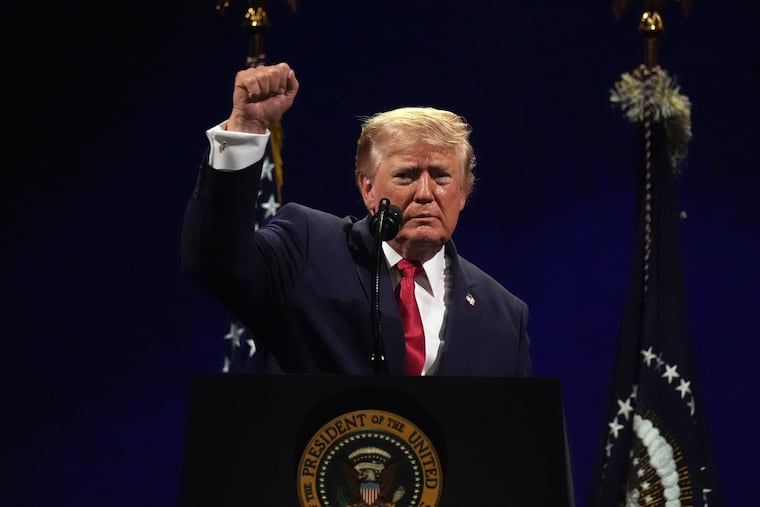
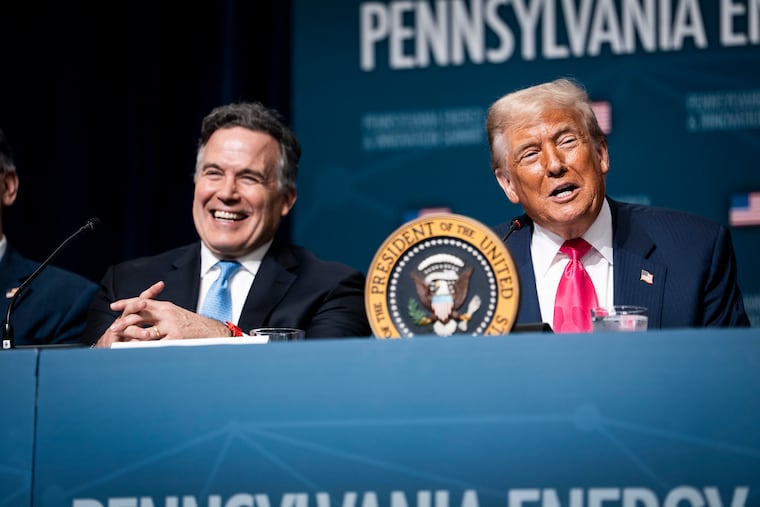
President Donald Trump constantly attacks election results that are unfavorable to him as fraudulent despite the lack of evidence of significant fraud.
The president delegitimizes the courts that have found no significant electoral fraud, or that otherwise rule against him.
He claims the 2020 presidential election was stolen when his then-U.S. Department of Justice found otherwise and some 60 court cases failed to prove it.
The president claims one need only look at the long vote count in California to deduce fraud, but he has not read or ignores the applicable sections of the California Elections Code and the convenient summary on the website of the California Secretary of State that explains the process. That process, in similar form, has been around for years, but the president and his party have never proven any significant fraud, which they surely could have if it were there.
The delegitimization of a fair democratic electoral process, if tolerated and successful, can lead to the creation of a Russian-like electoral rubber-stamp dictatorship.
The president’s June 7 interview on Meet the Press underscores that for him, if he or his party loses a critical election, it’s because of fraud. Those who challenge his claims are “crooked.” Huge banners of his glowering face on the Department of Justice building and other agencies reflect his self-aggrandizement.
The Constitution’s separation of powers was designed to protect the nation when an enlightened statesman was not at the presidential helm, but the current congressional majority supports or is indifferent to the president’s conduct.
» READ MORE: Trump’s fixation on Nixon is also a warning | Will Bunch Newsletter
For its part, the Supreme Court shockingly ruled that presidents cannot be criminally prosecuted for official acts that are crimes.
The people, by their vote, remain a check on tyranny, but this president has declared without material evidence that pivotal elections in which he or his party loses are — or will be — fraudulent. He has set the stage for trying to throw out legitimate election results.
The military is the guardian of the Constitution and the American people. The military’s oath is to preserve and protect the Constitution. Today, our secretary of defense, Pete Hegseth, is not a Schlesinger. The current secretary has purged qualified senior military officers. It remains to be seen how this could affect the military’s guardian role.
That role may soon be essential to preserve our democratic republic.
The concern with Nixon was that he might try to use the military to prevent his lawful removal from office.
That a president might try to use the military unlawfully to maintain himself and his party in power by illegally rejecting an election loss presents the same concern.
The hypothetical scenarios for the upcoming midterms, and, indeed, for any national election, are alarming.
The lesson from Nixon’s final days in office?
That whenever any president, Democrat, Republican, or other, threatens unlawfully to declare an emergency, invoke the Insurrection Act, and put troops in the streets to try to prevent or deny election results that are unfavorable to him, the chair of the Joint Chiefs of Staff and other military leaders must be prepared — like the advisers to President Nixon seemingly were — to tell the president that the military will not follow him.
Daniel O. Jamison is a retired attorney. He is the author of the forthcoming book, “The Birth of Jim Crow: Racism, Reconstruction and the Pivotal Supreme Court Cases of 1857-1908.”