Why Democrats’ priorities shifted from abortion to affordability in Bucks County’s key midterm races
Democrats in Bucks County are fine-tuning their message ahead of must-win races in November. Reproductive rights had once been center stage in recent campaigns.
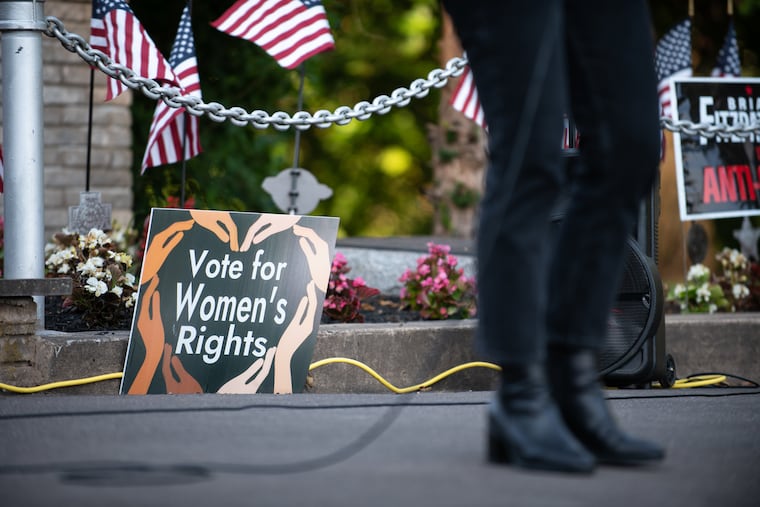
In what might have been unheard of just two years ago, the Democrat in Bucks County’s key congressional race does not mention abortion or reproductive rights by name on his campaign website.
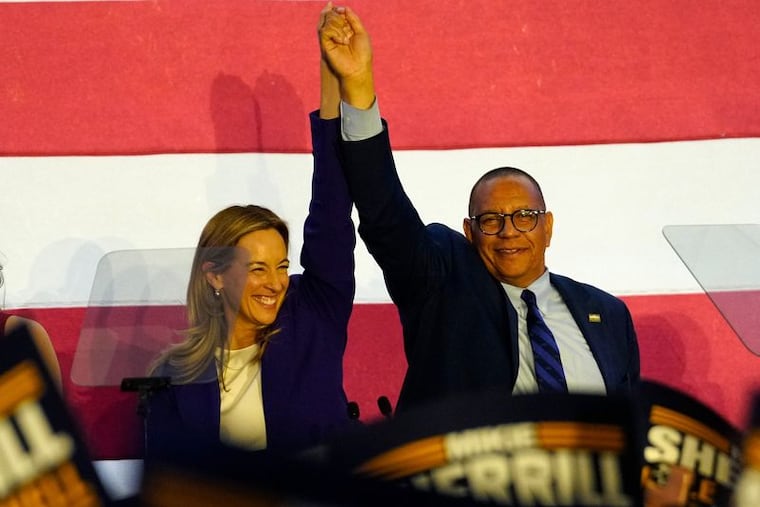
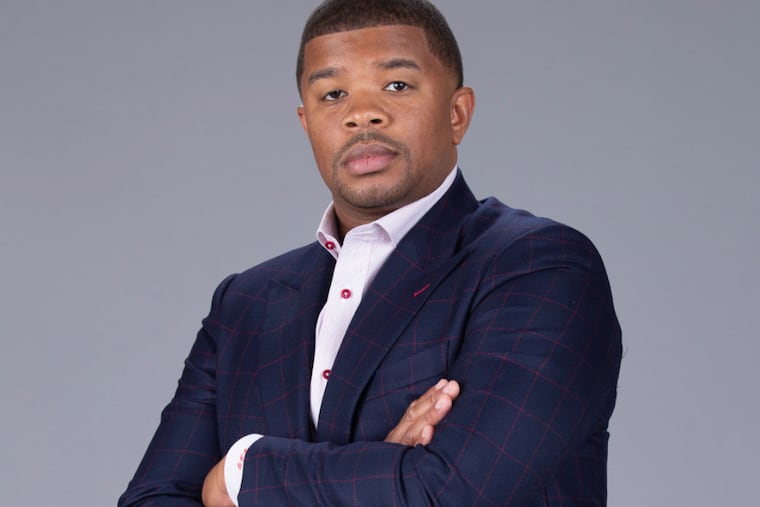
Instead, Bob Harvie, the county commissioner challenging U.S. Rep. Brian Fitzpatrick (R., Bucks) in the crucial 1st Congressional District race, largely highlights affordability issues, like tax cuts for the middle class and raising the minimum wage, on his list of 12 priorities.
It’s not that Harvie is suddenly against abortion — he has been vocal about his support for reproductive rights — but it exemplifies a broader shift in how Democrats are fine-tuning their message for must-win races in the county this fall.
Once a top-line issue for Democratic candidates in Bucks — one of the swingiest counties in Pennsylvania — discussion of abortion and reproductive rights has faded into the background in local political campaigns in favor of issues related to the economy and the cost of living.
“People [are] feeling that right now they’re living in an America that’s not fair for them,” Harvie said.
The issue has also been so far been absent from Fitzpatrick’s campaign and his website. The Republican currently holds a moderate view on abortion, though he has previously voted for restrictions.
For Harvie, discussions surrounding access to affordable healthcare — which is his No. 1 listed campaign priority — includes abortion. All of these issues reflect a broader struggle, he argued.
“They’re losing their rights, they’re losing their power over their own futures, they’re losing the American dream, all of that is combined,” Harvie said.
It’s a noticeable shift from Fitzpatrick’s last challenger Ashley Ehasz’s strategy in 2022 and 2024 when abortion and reproductive rights served as the focal point in both of her campaigns, which followed the backlash to the U.S. Supreme Court’s decision to strike down Roe v. Wade in 2022.
She lost to Fitzpatrick in both elections, the second time by a wider margin than the first.
“Folks are pretty pragmatic when it comes to the politics here, and if something isn’t working, we’re not going to just keep doing it over and over again,” said Kierstyn Zolfo, co-leader of the progressive group Indivisible Bucks County, which supported Ehasz and is now backing Harvie.
Pennsylvania voters’ overwhelming disapproval of President Donald Trump and his handling of economic-related issues, as highlighted in a recent Inquirer/New York Times/Siena University poll, offers Democrats an opportunity as they target key state Senate seats in addition to the congressional contest.
“The point is to move the needle with the voters,” Zolfo said.
How abortion became a ‘dormant’ issue in the midterms
The League of Women Voters of Pennsylvania has thousands of volunteers and members talking to voters across the state ahead of the midterm elections.
And leaders of the nonpartisan organization are hearing very little about reproductive rights. Instead, they’re getting feedback on crucial cost-of-living issues and concerns about democracy.
Abortion has become a “dormant” issue, said Amy Widestrom, executive director of the League of Women Voters of Pennsylvania.
“Nobody’s coming to us saying I need talking points on reproductive health in Pennsylvania,” Widestrom said.
The shift reflects a national trend, with ads related to abortion drastically receding amid Democrats’ focus on bread-and-butter issues, NOTUS reported.
The midterms are mainly about serving as a “referendum” on Trump’s economic agenda and foreign policy, said State Sen. Steve Santarsiero, chair of the Bucks County Democrats, though reproductive rights “must always be a central plank” of the party and its candidates, noting that majority of the country support a woman’s right to choose.
“Affordability is really the key issue, so you would expect candidates to talk about that, and then you know they’re obviously going to talk about other issues as well, and abortion rights would be one of those,” said Santarsiero, who is also up for reelection this year.
In The Inquirer/New York Times/Siena poll, Pennsylvania’s likely voters in November’s gubernatorial election between Shapiro and Republican challenger Stacy Garrity indicated that the economy and the cost of living were the two most important issues.
Abortion was ranked fourth.
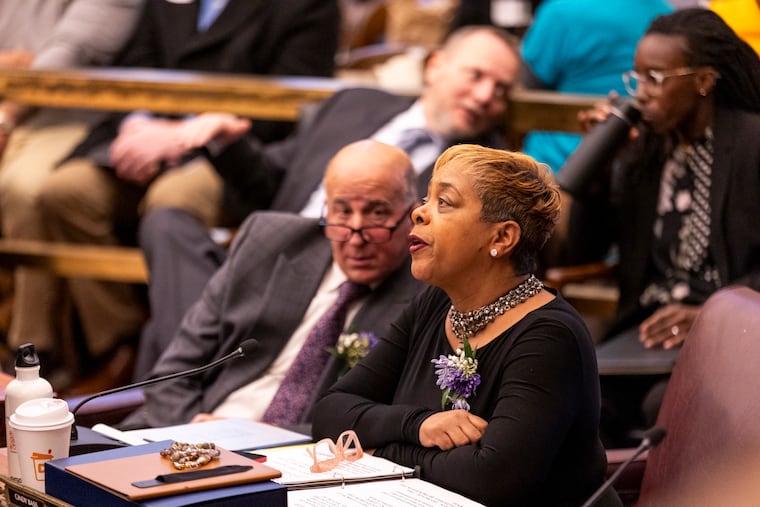
Democrat Eileen Hartnett Albillar, a social worker and the county’s clerk of courts who is running to unseat state Sen. Frank Farry in the 6th state Senate district, said she doesn’t see abortion and the economy as “competing issues,” though conversations with voters have primarily focused on making ends meet. People, she said, will engage in discussion over protecting abortion rights and related topics if she raises the issue.
“They want to protect reproductive freedom,” Hartnett Albillar said. “But you know, the cost of living is just so incredibly crushing for so many people. Just because they’re quiet about it, doesn’t mean it’s not important.”
Reproductive rights took center stage in the 2022 election after several GOP-led states enacted restrictions on abortion following the Supreme Court’s decision to overturn Roe v. Wade.
In Pennsylvania, the issue helped motivate voters to turn out for Democrats Josh Shapiro and John Fetterman in the contests for governor and Senate. But as the procedure remains protected in the state under Shapiro, the topic has faded from focus.
Lehigh County Controller Mark Pinsley, a Democrat who is challenging GOP State Sen. Jarrett Coleman in the 16th district straddling Bucks and Lehigh Counties, still believes reproductive rights can motivate voters. But while he thinks his party doesn’t talk about abortion enough, he acknowledged the dynamic is different now than it was then.
“I think you could win on that issue by itself,” Pinsley said. “I don’t think that’s true in the moment.”
Brianna Twofoot, vice president of organizing, elections and campaigns at Planned Parenthood Votes, said abortion and reproductive rights still matter to voters even if it’s not taking center stage this year.
“We’re not asking for anyone to make abortion or reproductive healthcare the number one issue, but we do think that voters want to hear about it,” Twofoot said. “And we do think that elected officials should be standing publicly on the issue.”
But any discussion of abortion will come amid what’s shaping up to be an apparent rebrand of the topic, folded into conversations about access to basic needs.
Signe Espinoza, executive director at Planned Parenthood Pennsylvania Advocates, said it’s key to look at reproductive rights through the lens of affordability, especially if health centers are defunded or closed.
“If Planned Parenthood doors close, where are you going to get your healthcare?” said Espinoza, whose organization is planning some days-of-action in Bucks. “It’s going to become more expensive. Everything’s going up.”
How is the issue playing out in Harvie vs. Fitzpatrick?
Past elections in the Bucks County swing district have shown the abortion argument does not work against Fitzpatrick, who has been known to survive blue wave after blue wave.
Harvie, a twice-elected county commissioner backed by groups like Reproductive Freedom For All and Planned Parenthood Action Fund, said voters in the district already know where he and Fitzpatrick stand on abortion. The Democrat criticized Fitzpatrick and the Republican Party for supporting “pretty extreme restrictions on abortion.”
“I think that’s the reason why you’re not hearing it very much because everybody knows the positions and knows who’s on what side,” Harvie said.
Heather Roberts, a spokesperson for Fitzpatrick, said the Bucks County Republican has long supported “full reproductive freedom” for the first five to six months of pregnancy, as is outlined by Pennsylvania law.
“We also note that the Congressman’s position is the position held by the overwhelming majority of PA-1 residents,” Roberts said.
His campaign also noted Fitzpatrick’s backing of legislation in recent years that aimed to protect the right to cross state lines for an abortion as well as bills that protect access to contraception and in vitro fertilization and support of pregnant workers and women’s rights.
But he has also voted for abortion restrictions, including a 20-week abortion ban in 2017 and twice against the Women’s Health Protection Act, which would have codified protections to access abortion into law.
The issue is absent from Fitzpatrick’s campaign website, which does not reference abortion in sections about healthcare or empowering women.
Widestrom, the executive director of Pennsylvania’s League of Women Voters, said Fitzpatrick has found a way to “neutralize” issues related to his position on abortion by continuing to win races where his opponents wage such arguments and refraining from touting a “hardcore pro-life” agenda.
“By not staking a claim, by not talking about it, it loses saliency in voters’ minds,” Widestrom said.