Affordability takes center stage as Shapiro and Garrity craft their economic pitch for Pennsylvania voters
Exhausted by high gas prices and stagnant wages, voters most want the candidates to address cost-of-living concerns, according to a recent poll.
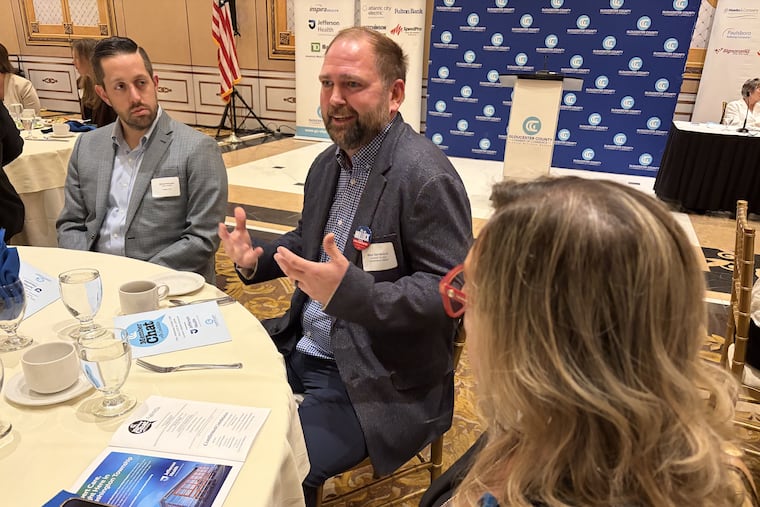
Ben Hummer would like to own a house one day in Pittsburgh. He dreams of a two-bedroom, one-bathroom town house where he can live near his job.
But for now, Hummer, 29, rents his 500-square-foot, one-bedroom apartment, and his monthly rate since he moved in has continued to increase by $50 each year, making the goal seem further out of reach.
“Anything that could increase the supply and affordability of housing in the Pittsburgh area would be massive,” said Hummer, who works in human resources.
Like most voters in Pennsylvania, according to a recent poll from The Philadelphia Inquirer, the New York Times, and Siena University, the economy and cost-of-living concerns are the most important issues deciding Hummer’s vote in the 2026 governor’s race between incumbent Democratic Gov. Josh Shapiro and his Republican challenger, state Treasurer Stacy Garrity.
And as Election Day draws nearer, both campaigns are focusing their messaging on these kitchen table issues.
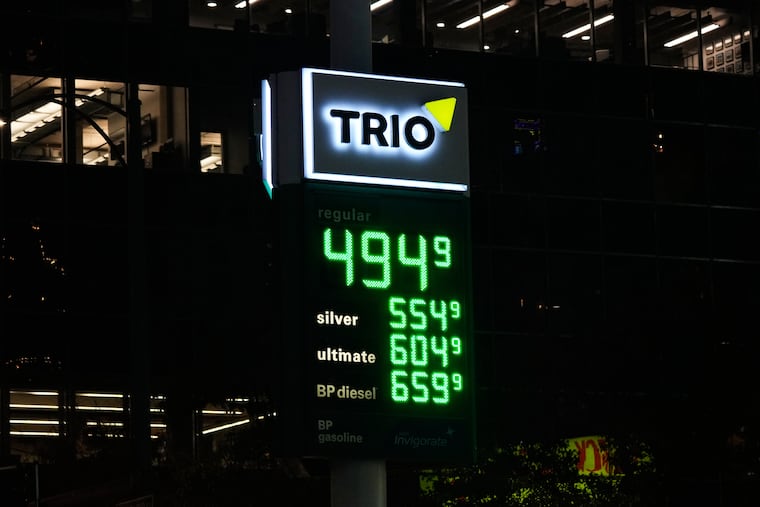
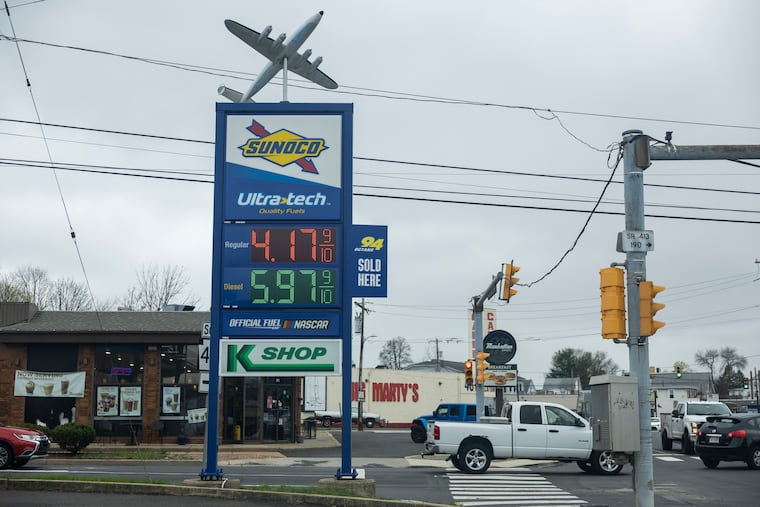
Two years ago, it was the cost of eggs, gas, and groceries that were top priorities among the electorate in Pennsylvania and elsewhere. Voters’ trust in President Donald Trump’s ability to bring down high prices propelled him back to the White House, sending Democrats scrambling to hone an affordability pitch that could land in time for the high-stakes 2026 midterm elections. But in that same time, prices have continued to climb; gas prices have topped $4 per gallon; and tariffs instituted by Trump — who called affordability “a hoax” at a Pennsylvania rally last year — have driven up the cost of every day life. Now both parties are latching on to a focus on affordability.
As he mounts a reelection campaign, Shapiro — who holds a commanding lead in polls — is highlighting his accomplishments during his first term that his campaign says has given Pennsylvanians more money back through tax cuts and wage increases for childcare workers.
Meanwhile, Garrity has recently shared her own plan, called “Turnaround PA,” to make living more affordable with an outline of how she’d lower prescription drug costs, reduce property taxes, and aim to cut energy bills to get there. But she’s also closely aligned with Trump, who has endorsed her in the race and has dismal markings from voters on two of their top priorities: the economy and cost of living.
That puts her in a difficult spot to challenge Shapiro, said Mark Zandi, the chief economist at Moody’s Analytics.
There’s no easy answer for Republicans to win on economic issues in the midterms, but Zandi said his best advice is to focus on what is in the governor’s control and draft ideas that mitigate the fallout from Trump’s policies.
Hummer, a Democrat who plans to vote for Shapiro this fall, said he trusts the governor to handle the economy and cost of living issues better. More than half of likely Pennsylvania voters in the Inquirer/New York Times/Siena poll agree.
Fifty-five percent said Shapiro would do a better job of handling the state’s economy, and 56% said they think Josh Shapiro would do a better job of handling cost-of-living issues.
“I’m well aware he’s limited in his options to do things, but I would say he’s kept a steady hand on the wheel of the Pennsylvania economy — to the extent that he can,” he said.
Garrity pitches affordability as Republicans seek to overcome Trump’s ratings
Among other proposals, Garrity has pitched a “first-time homebuyer assistance initiative,” which could help house seekers like Hummer and would provide qualified buyers 3% mortgage interest rate support from the state.
She also has proposed cutting taxes by seeking a constitutional amendment that exempts Pennsylvania seniors from paying school property taxes and gives voters the final say over whether to increase property taxes. Her plan would also “reprioritize state spending for property tax relief.”
But there’s no free money, Zandi said. “If you’re giving tax cuts over here,” he said, “you’ve got to figure out how to pay for it … and that means you’re cutting spending.”
Garrity’s plan also would address rural healthcare, and she would “aggressively pursue available federal funding to strengthen rural healthcare.”
But there’s little money left in the pot after Trump cut government spending in last year’s federal budget. His One Big, Beautiful Bill Act directed a reduction in Medicaid spending by $1 trillion over 10 years, starting after the midterm elections, and rural hospitals and nursing homes are more dependent on federal funds. Additional dollars would likely need to come from Harrisburg.
For Pennsylvanians like Caitlyn Needham, 28, the consequences of an unexpected medical bill on top of a limited income meant she went without substantial meals for weeks.
“I have a rabbit, and she had a medical emergency [in November],” she said. “So for two months, the only thing I could afford to eat while paying off those bills was peanut butter and jelly sandwiches for breakfast, lunch, and dinner.”
Needham, a cake decorator in Pittsburgh, said she’s always been frugal and saved a little bit of money from each paycheck, but increasing expenses are pushing her budget to the limit. She said she plans to vote for Shapiro this November.
“Pennsylvanians need a relief valve before things get worse,” she said. “So many people are one bad week away from not being able to keep their housing, or losing their medical coverage, or losing their job because their car broke down and they can’t afford to get service. It’s like everyone is just one accident away from not being able to live.”
Garrity has remained politically loyal to Trump, even as his popularity has sunk among Pennsylvania voters. She has endorsed Trump’s tariffs and supported the war in Iran. That support has remained even as gas prices in July spiked to more than $4 per gallon, up more than $1 since the beginning of the year — and a point Shapiro has repeatedly emphasized.
“If you’re trying to infer I’m out of line with the president, I don’t think I am,” she said last month during a news conference she held on data centers.
» READ MORE: Will Donald Trump and national Republicans help Stacy Garrity’s campaign from falling flat against Josh Shapiro?
In a statement, she blasted Shapiro’s handling of the economy, saying he has put a tax burden on families and tied businesses up with unnecessary regulations.
“Josh Shapiro’s Pennsylvania is simply unaffordable for the commonwealth’s hardworking families,” Garrity said. “He allowed utility and energy costs to skyrocket due to his unwillingness to expand generation capacity and instituting policies that benefit our neighboring states instead of us.”
Shapiro emphasizes his record is separate from national picture
Shapiro, the incumbent, is leaning on his record on economic policy.
According to his campaign, his administration created more than 25,000 jobs during his first term and brought in $41 billion in private-sector investment.
“Governor Shapiro is fighting for all Pennsylvanians — and he has a track record of creating jobs and economic opportunity, putting money back in Pennsylvanians’ pockets, and standing up to Washington’s reckless, cost-raising policies,” said Samantha Reposa, a spokesperson for the campaign. Garrity, she said, “fully supports the failed economic policies that are raising costs and hurting working families across the commonwealth.”
His campaign released a Spanish-language digital ad focused on benefits of the Working Pennsylvanians Tax Credit and the Property Tax/Rent Rebate Program, which is targeted toward seniors and people with disabilities.
“If you’re working, you get to keep more of your money. Up to $800 more, more money in your pocket. And right now, every little bit helps,” a woman in the commercial said in Spanish.
Ultimately, Zandi said, “it’s very difficult for lawmakers at any level of government to change the picture on affordability, at least any time quickly,” because those issues are due to broader national and international forces.
There’s also no one-size-fits-all approach for a governor to tackle the costs of education, housing, energy, childcare, elder care, healthcare, and groceries.
“Each issue that makes up the affordability crisis requires its own set of solutions and efforts, so it feels like a laundry list of policy steps, and it is,” he said. “But that actually is probably the only way to make a difference.”
For many Pennsylvanians, paychecks feel like simply treading water: By the time all expenses are covered, there’s little money left to save and build toward the future.
“It just seems that money doesn’t go as far as it used to,” said Thomas Schank, 49, of Scranton. “I’ve gotten raises at work over the last two years, but everything else went up also, so really, no net gain.”

The New York Times/Philadelphia Inquirer/Siena University poll of Pennsylvania was funded by a grant from The Lenfest Institute for Journalism. The poll was designed and conducted independently from the institute.
- Most of Pa.’s likely voters disapprove of Donald Trump and his policies, new poll shows
- Josh Shapiro has a 16-point lead in the governor’s race — and most Pa. Democrats would support him for president
- Pa. Democrats say John Fetterman is siding with Donald Trump too much, new poll shows
-
6 in 10 Pennsylvania voters oppose data center development, new poll finds
-
Pope Leo XIV is popular with Pa. Democrats after feud with Trump. But Republicans are split.
-
Young Pa. voters are frustrated with Trump as they grapple with ‘the cost of continuing to exist’
-
Pa. voters are more critical of Trump’s handling of the economy than they were a month ago
-
John Fetterman’s favorability dips as voters see him more as a Republican than a Democrat
-
1 in 4 Pa. GOP voters don’t know who Stacy Garrity is as Josh Shapiro widens lead in governor’s race
-
New poll shows RFK Jr. is unpopular among Pa. voters amid feud with Shapiro over measles
-
Pa. Democrats have mostly positive view of socialism as progressive candidates secure wins