Why labor unions are sticking with two Pa. Republicans, even as control of the U.S. House hangs in the balance
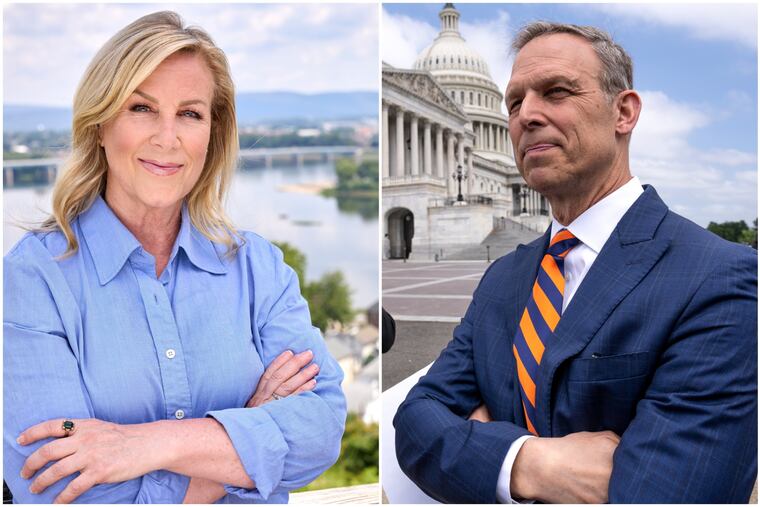
Republican U.S. Reps. Brian Fitzpatrick and Rob Bresnahan have scored an unusual amount of organized labor support. Could it help them appeal to swing district voters in November?

Early on in his tenure, U.S. Rep. Brian Fitzpatrick proved himself to the largest federal employees union in the United States.
In 2017, President Donald Trump signed a law to improve whistleblower protections and set guidelines for employee misconduct at the Department of Veterans Affairs. But the American Federation of Government Employees began noticing some adverse effects.
As Phil Glover, a national vice president for AFGE, tells it, veterans, including those with disabilities, and lower-level employees were being targeted instead.
AFGE officials went to Fitzpatrick with their concerns, and the Bucks County Republican introduced his own bill repealing and adjusting certain provisions.
That move, Glover said, was an inflection point in solidifying a long-lasting partnership with Fitzpatrick — one that gives the union a rare ally in the Republican caucus and Fitzpatrick a consistent endorsement from a powerful organization as he has repeatedly won reelection in a narrowly divided district.
“He’s carried a lot of water for us within the Republican Party, within the caucus, whether they were in the minority or majority,” said Glover, whose jurisdiction includes Pennsylvania.
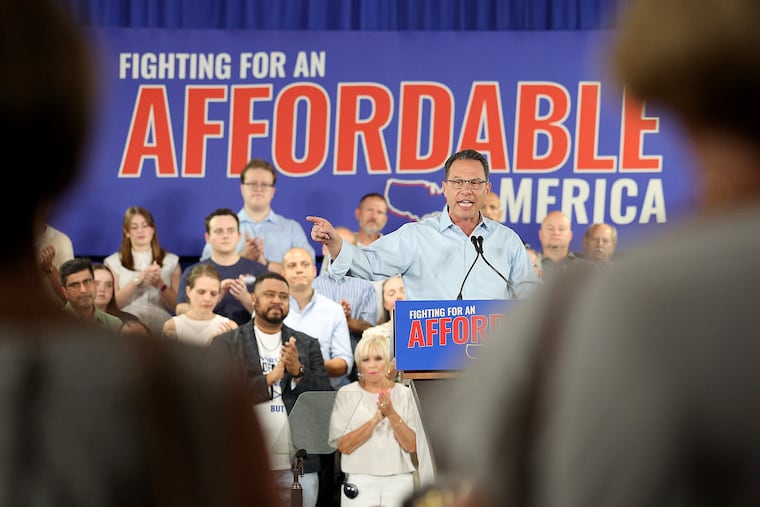
In the high-stakes midterm elections this year, union endorsements behind Fitzpatrick and U.S. Rep. Rob Bresnahan, a freshman Republican trying to hold onto his seat in Northeastern Pennsylvania, are shaping up to be a potentially critical factor in these two swing districts that could help determine which party controls the U.S. House.
“They all reached out. I didn’t even have to call them. They reached out to me right away and said we are 10,000% with you,” Fitzpatrick said, describing his relationship with the unions as “beyond advocacy” and “like family.”
Organized labor has traditionally backed Democratic candidates in the state — and that remains mostly true this year.
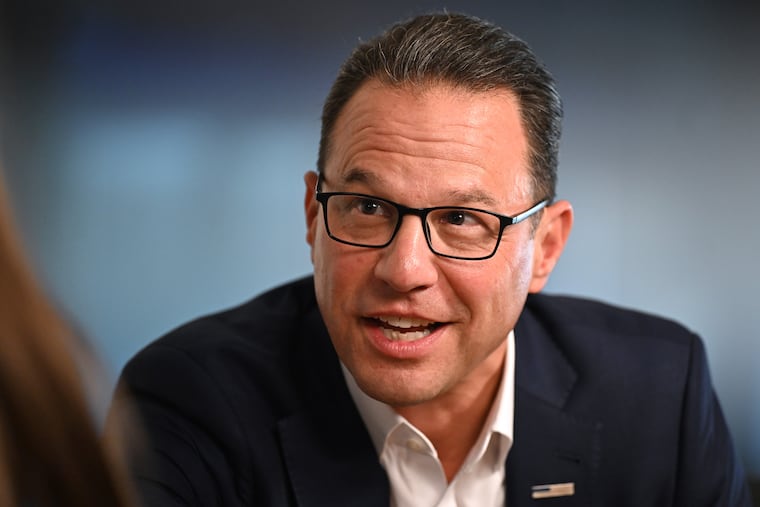
Fitzpatrick was the only Republican congressional candidate to get an endorsement Wednesday from the Pennsylvania AFL-CIO, which is also backing popular Pennsylvania Democratic Gov. Josh Shapiro.
In two other swing-seat districts centered on Harrisburg and the Lehigh Valley, unions have coalesced behind the Democratic nominees, including by spending big to help union leader Bob Brooks win his primary in May.
But the splintering of their endorsements in both Fitzpatrick’s Bucks County-based 1st Congressional District and Bresnahan’s Scranton-based 8th Congressional District seat has been a striking departure — underscoring some unions’ willingness to reward incumbents’ loyalty to give labor a voice in a Republican caucus that may not always work in their interests.
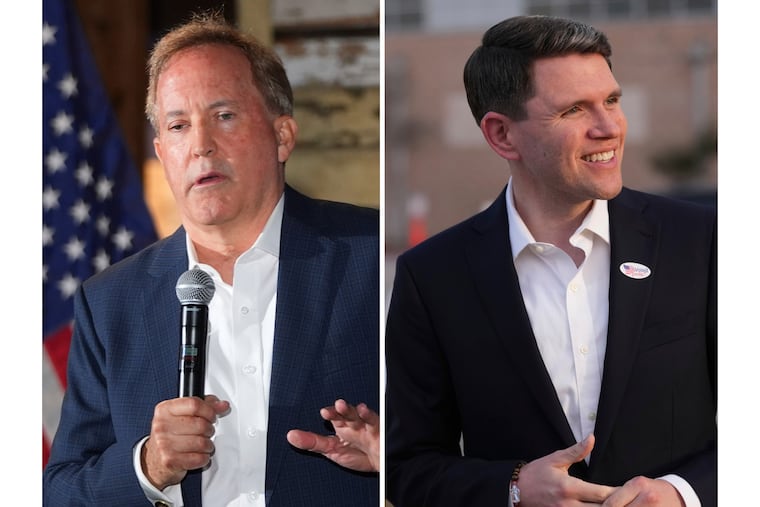
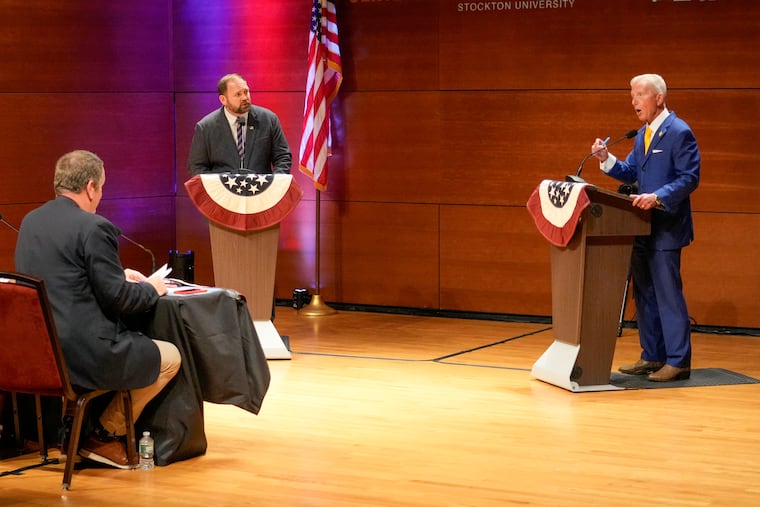
The disparity has become particularly pronounced in Fitzpatrick’s race against Democratic Bucks County Commissioner Bob Harvie. Though he is widely considered to be his party’s best shot at defeating the Republican in years, Harvie has lagged in fundraising and watched as Fitzpatrick received more than three dozen labor endorsements.
Last week, the Pennsylvania State Education Association — the largest union for teachers or any other labor organization in the state — backed Fitzpatrick even though Harvie, a former social studies teacher at Bucks County Technical High School, was previously a member.
How those endorsements move the needle in the election is still an open question.
But in a district with independent-minded voters who have shown a willingness to cross party lines, some observers say, the labor endorsements could make a difference — both in the get-out-the-vote and fundraising support that unions sometimes provide, and in appealing to swing voters.
“It suggests to an independent voter or even a moderate Democratic voter that this candidate isn’t a far-right candidate, that this candidate is somebody who will work with workers and work with unions,” said Paul Frymer, a politics professor at Princeton University who studies organized labor.
‘We consider them our friends’
With Trump in office and Republicans in control of Congress, Fitzpatrick and Bresnahan have won some union support by backing policies their own party leadership opposes.
In December, they were among 20 Republicans to join 211 Democrats to force a successful vote on the Protect America’s Workforce Act, which aimed to reverse a Trump executive order to strip collective bargaining rights from federal workers. In June, they were again among 20 Republicans — and the only ones from Pennsylvania — to vote for the Faster Labor Contracts Act, an effort to speed up bargaining negotiations.
Glover, of AFGE, has commended Fitzpatrick’s various legislative priorities on labor, even as Trump unleashed multipronged attacks against the federal workforce.
And Bresnahan’s decision-making, as a freshman going against the White House, “had some guts to it,” Glover said. He said his group “didn’t entertain” endorsing Democrat Paige Cognetti, the Scranton mayor running against Bresnahan, or Harvie in the Bucks County race.
Angela Ferrito, president of the 700,000-member Pennsylvania AFL-CIO, which endorsed Fitzpatrick on Wednesday, said that while he has not always sided with labor, he has become the kind of Republican who will “sometimes almost put their neck out.”
Still, the union’s own public scorecard shows Fitzpatrick has aligned with its priorities far less often than Democrats — about 46% of the time in the current session of Congress. Bresnahan, who did not secure the union’s endorsement Wednesday, voted with the AFL-CIO just once — on the Protect America’s Workforce Act — to give him an 8% score.
Ferrito said the organization supports candidates who “support us and stand up when it matters.”
“Pennsylvania has always been unique in that way, where we do have moderate Republicans who will support unions and the rights of union workers. And so in those circumstances that we consider them, we consider them our friends,” she said.
State of play
As both of their districts draw national attention, Fitzpatrick has touted more than 40 labor-centered recommendations or formal shows of support and Bresnahan has highlighted about a dozen.
Fitzpatrick’s labor endorsements have ranged from local building trade affiliates — such as the Boilermakers Local 13 and the deep-pocketed International Brotherhood of Electrical Workers Local 98 — to national labor organizations, like the Transport Workers Union of America and the National Air Traffic Controllers Association.
The SEIU Pennsylvania State Council, which represents employees in public services, healthcare, and property services, backed him for the first time after a decade of either endorsing against him or staying neutral. But the council’s perspective changed after Fitzpatrick publicly supported reforms for U.S. Immigration and Customs Enforcement and was only one of two Republicans to vote against his party’s cuts to Medicaid in the One Big Beautiful Bill Act.
“For us, that means something,” said Matt Yarnell, president of SEIU Healthcare Pennsylvania and the state council, “if someone’s down to both organize and fight and stand up and speak out against your own party.”
Fitzpatrick said his “unique” role as a labor-friendly Republican has made him a “pivotal voice” in Congress — largely because of the hyperpartisan nature of politics that he has railed against, he said.
“That’s unfortunate,” Fitzpatrick said. “If we did away with the political parties and we just had people form coalitions around ideas, you would see so much support, so much more support for commonsense measures, like supporting labor.”
Bresnahan said he made it a personal mission to cultivate strong relationships with organized labor when he entered Congress last year after having had collective bargaining agreements as the CEO of his family’s electrical contracting business.
As a freshman Republican, he said, he had to prove himself. He got up to speed on the roughly 10,000 federal jobs in his district and made visits to a high-security federal prison with “serious staffing shortages” at the same time as Trump was laying off thousands of federal workers.
“I absolutely encourage my Republican colleagues to take another look at this and find a way to support the people that support us each and every day,” said Bresnahan, who narrowly defeated six-term Democratic U.S. Rep. Matt Cartwright in 2024.
Harvie, the Democrat challenging Fitzpatrick, grew up in a union household and has received the backing of two unions: the American Federation of Teachers Pennsylvania and Transport Workers Union Local 234, which represents SEPTA employees. His campaign said conversations are ongoing with labor and believes more support is in the works.
Harvie said Fitzpatrick’s endorsements have in some ways been a “reward for doing the bare minimum” while his own track record as a former Falls Township supervisor and as a twice-elected county commissioner proves he would be a steadfast supporter of labor in Congress.
He said he was “anxious to get the support of the rank-and-file workers,” who are bearing the brunt of cost-of-living issues.
“They’re the ones who are really going through all the pain right now with higher gas prices, higher grocery prices, higher energy prices, concerns about their healthcare,” Harvie said.
Cognetti, meanwhile, has credited her endorsements from nearly a dozen local labor unions to her record in Scranton, including increasing the number of jobs and wages for public workers. Endorsements from AFSCME, which represents municipal employees, and others that she announced this month underscore that support, she said.
She also said she would support more labor priorities than Bresnahan, including the PRO Act — a major effort to expand workers rights that Bresnahan has not endorsed — and repealing parts of the One Big Beautiful Bill Act, which Bresnahan voted for.
“It’s very important that you look at the whole picture of someone’s votes. It’s very easy to sign on to a letter and try to make yourself a hero,” Cognetti said.
In one unusual instance, Cognetti appeared to receive the endorsement of the Pennsylvania Conference of Teamsters with a voice vote during an April meeting, but the organization released a statement endorsing Bresnahan in June. But conference president Bill Hamilton, who had called for the vote at the April meeting, said in the June statement that Bresnahan “has always had our backs,” including through his vote for the Faster Labor Relations Act.
Bresnahan, in an interview, also referenced that bill and stressed his relationship with Sean O’Brien, the national Teamsters leader whose podcast Bresnahan appeared on in January.
The state and national Teamsters organizations did not respond to multiple requests for comment about the situation.
“Democrats just can’t take unions for granted anymore,” Bresnahan said.
‘Stick with them no matter what’
The union endorsements in the 1st and 8th Congressional Districts have been a sharp contrast to other swing-seat districts that have arguably already shown the power of labor as a political force.
In the Lehigh Valley district where Brooks, a statewide union leader and retired firefighter, is running against freshman Republican U.S. Rep. Ryan Mackenzie, high-profile Democrats recruited and rallied around the Democrat largely because of his union bona fides. And when opponents unleashed a last-minute ad campaign against him in the May primary, another political action committee padded with organized labor donations spent nearly $1.8 million to push back and help give Brooks the win.
It is not yet clear whether unions will similarly spend heavily to elect Fitzpatrick or Bresnahan — especially as they mostly look to elect Democrats elsewhere in Pennsylvania and across the country.
TJ Lepera, political director of IBEW Local 98, said he believed a Democratic blue wave would be highly favorable to labor interests. But his union has also backed Fitzpatrick, who “knows our issues, and that could be helpful in trying to calm down a lot of the crazy rhetoric that comes out of the Republican side, sometimes, on the attacks of labor,” Lepera said.
“If somebody has a great voting record with us and has been loyal to Local 98 and the way that we see legislation, we typically stick with them no matter what,” Lepera said.
That emphasis on loyalty was echoed by other unions, even if their political calculus led them to go the other direction.
“We were not going to support anything that would possibly turn the House or the Senate red,” said Joe Coccio, secretary-treasurer and political coordinator from TWU Local 234, which has endorsed Harvie. “If they were a good candidate by us … once we endorse a candidate, unless they break the law or do wrong by us, we continue to endorse them until they move up or move on.”
Coccio said Harvie had proved his appreciation for SEPTA employees when he served on the transit agency’s board. He is also accessible and pro-union, and has valuable experience as a teacher and county commissioner during the COVID-19 pandemic, Coccio said.
AFT Pennsylvania, which is backing Harvie, did not respond to multiple interview requests.
As November inches closer, unions backing both Fitzpatrick and Harvie are planning out their financial and ground-game support.
“For us, is it strategic? Yeah, it’s very strategic,” said Lepera, whose Local 98 has a long history as a political power broker in Philadelphia and statewide. “We want to have a voice on the other side of the aisle.”