Tucker Carlson, who broke with Trump, plans to ‘help build a third party’
The influential conservative media commentator said in an interview that he had no interest in running for office himself.
Tucker Carlson, the influential conservative media commentator, said in an interview that he planned to help start a new political party after leaving the Republican Party but that he had no interest in running for office.
Carlson, a former close ally of President Donald Trump who has broken with the Republican Party over the war with Iran, told the Columbia Journalism Review that he was “going to help build a third party.”
“There should be a good-faith effort to figure out what benefits the country,” Carlson said in an interview with the Columbia Journalism Review published Wednesday.
He outlined his plans at a moment of upheaval for both parties: The insurgent left appears ascendant in the Democratic Party as the base has grown angry over the party leadership’s stance on Israel since the war in the Gaza Strip. The Republican Party has been fractured by Trump’s handling of the war with Iran.
Carlson, a popular podcaster and former Fox News host, said last month that he was leaving the Republican Party. He described himself on a podcast episode as a “consistent defender” of the party for 35 years, but said that he believed the party had lost touch with “America First” principles under Trump.
In the Columbia Journalism Review interview, he described some of the policies that might animate his new party, saying he supports “ending all immigration.” A longtime nativist and immigration hard-liner prone to conspiratorial views, Carlson said immigration drives unemployment. (Many economists say it does not.)
He also argued that the two parties did not offer a sufficient contrast on “war and finance.”
“That’s not a democracy,” Carlson told the Columbia Journalism Review. “That’s a one-party state posing as a democracy, and it needs to be broken, and there’s going to be a third party, and I’m going to do everything I can to bring that about.”
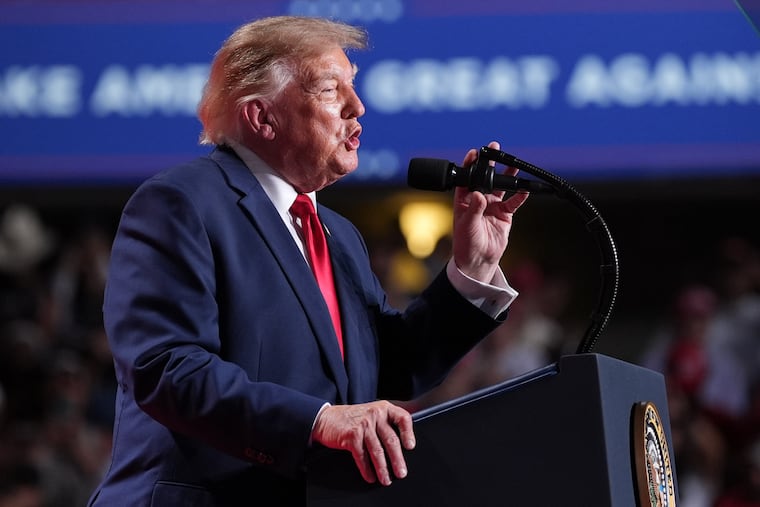
Carlson was often at Trump’s side during his 2024 presidential campaign and pushed Trump to select JD Vance, then a senator from Ohio, as his running mate.
But he broke sharply with the president after the United States started the war with Iran in late February, declaring Trump was violating a core campaign promise to avoid foreign conflicts. By April, Carlson said he was “tormented” by his past support for the president.
He told the Columbia Journalism Review that he had not spoken to Trump since the start of the war, which has been largely paused by a fragile ceasefire.
“I’m not interested in talking to him,” Carlson told the publication.
In the past, Carlson’s relationship with Trump has been revived after rocky stretches. In a text surfaced by a defamation lawsuit filed by Dominion Voting Systems, Carlson wrote of Trump, “I hate him passionately.” (Carlson was fired by Fox News after it agreed to pay $787.5 million to resolve the case, which centered on the network’s promotion of 2020 election misinformation.)
But Carlson’s frequent, forceful public criticism of Trump since the war began has led to some speculation that he might be angling for his own run for office.
Carlson told the Columbia Journalism Review that he was not entertaining the idea, and he insisted he did not see himself as a competitor to Trump.
“I’m not a politician, that’s for sure,” Carlson told the publication. “I’m not a rival to Trump for power. I have no power. I’m someone who knows Trump, and I know him well, and I’ve known him for a long time.”
This article originally appeared in the New York Times.