Mikie Sherrill warns New Jersey ports to turn away Russian fuel
It is unclear if any Russian fuel is headed toward New Jersey, but Sherrill’s position could put the state on a collision course with President Donald Trump.
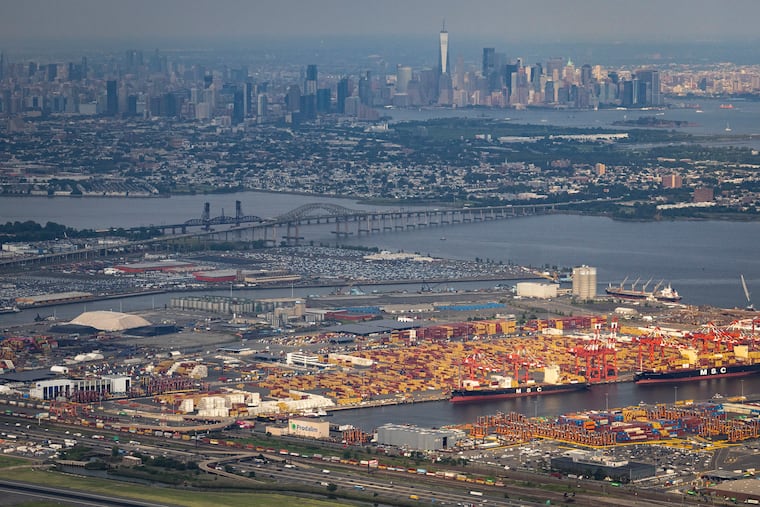
Gov. Mikie Sherrill sent letters on Monday to a dozen port and terminal operators in New Jersey, warning them to “turn away” any tanker carrying Russian diesel or face what she called harsh penalties.
Sherrill, a Democrat, said that accepting the fuel would violate federal law and that she was prepared to use “every available legal and regulatory tool” to block any tanker from offloading Russian fuel in New Jersey.
It is unclear if any Russian fuel is headed toward New Jersey, but Sherrill’s position could put the state on a collision course with President Donald Trump, who last month lifted a ban on the import of Russian diesel as part of his efforts to bring down the cost of the fuel. Gasoline and diesel prices have risen since the United States and Israel attacked Iran at the end of February.
A Russian official has said that three tankers carrying diesel were en route to the United States, but it is not clear how many vessels are actually involved, or where they might be headed.
The owners of the diesel-importing facilities, some of which belong to large oil companies, would be forced to choose sides. Sen. Richard Blumenthal of Connecticut, a Democratic member of the Senate Armed Services Committee, has also demanded that two shipping companies recall tankers “carrying illegal Russian diesel.”
A White House spokesperson did not immediately respond to a request for comment on Sherrill’s warning.
Sherrill, who graduated from the U.S. Naval Academy and is a frequent critic of Trump’s, said port operators would be in violation of federal law if they allowed the vessels to dock or unload in New Jersey, an East Coast energy hub.
“In purchasing oil from Russia, a known supplier and financial supporter of Iran, Donald Trump is providing funding for a country that is engaged in hostilities with America, up to and including killing American soldiers,” she wrote, adding: “Any effort to profit from the illegal trade in Russian fuel will be met with harsh penalties.”
Among the recipients of Sherrill’s letter were IMTT, Kinder Morgan and Phillips 66, energy companies that have facilities in New Jersey. “As of now, we have not been notified of any shipment of Russian diesel to our terminal,” said Melissa Ruiz, a spokesperson for Kinder Morgan.
David LaPlante, a representative for IMTT, acknowledged receipt of the letter but declined to comment on it.
The terminal operators receiving the letter are not within the port system that is part of the Port Authority of New York and New Jersey, an agency run by a board selected by governors of each state.
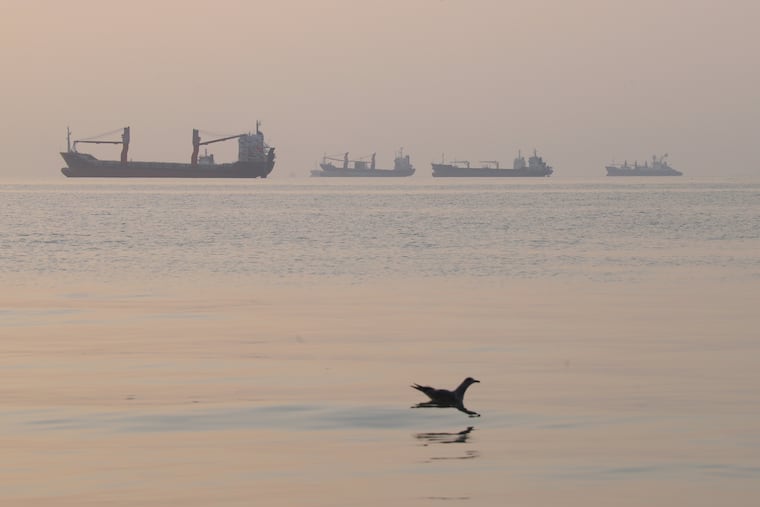
Among shipping analysts, there is some agreement that one tanker, the Agioi Fanendes, is transporting the diesel. It was scheduled to arrive in the United States on Nov. 7, after leaving Primorsk, Russia, on Oct. 23, according to Kpler and TankerTrackers.com, two ship-tracking firms.
But the ship recently changed its destination from New York to “for orders,” meaning it did not have instructions on where to discharge, according to the tracking firms. It is currently in the North Atlantic.
According to Kpler, the Agioi Fanendes is owned by Eastern Mediterranean Maritime, an Athens-based tanker operator. The company did not respond to requests for comment.
The national average diesel price is $6.29 a gallon, up nearly 70% since the start of the war with Iran. The increase has weighed on businesses that use the fuel in trucks, vans and machinery. Though the United States produces more diesel than it consumes, the cost of the fuel is set on world markets. As a result, a global diesel shortage caused by the war with Iran has raised prices even for American consumers.
U.S. companies, fearing public outcry or legal action, may be unwilling to buy Russian diesel. The Russian government appears to have given financial backing to the diesel shipments. Last month, a Russian vice prime minister, Aleksandr Novak, said that the three tankers bound for the United States had the “significant support” of a Russian government-run investment fund.
In her warning letter to the terminal operators, Sherrill cited a federal law passed in 2022 that banned Russian energy products.
“You could be subject to millions of dollars in penalties long after Trump has left office,” Sherrill wrote.
The Treasury Department, which oversees sanctions policy, said on the social platform X last month that Trump’s waiver for diesel was “in compliance with all applicable laws.”
But Sherrill wrote that the 2022 law “does not grant the president or Treasury Department blanket authority to waive these sanctions.”
This article originally appeared in The New York Times.