Developer sues Upper Merion again over King of Prussia data center rejection
“There is a lot of money involved, an incredible amount,” said an attorney for developer Brian O’Neill, who is suing for unspecified damages in his latest legal effort.
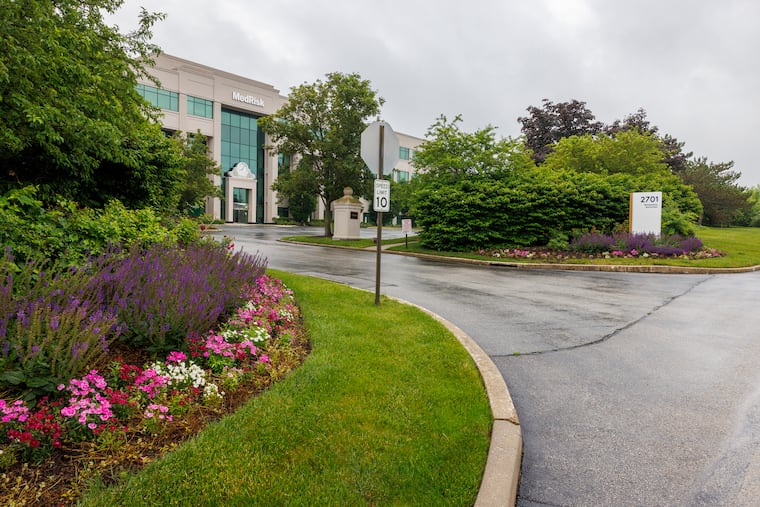
Developer Brian O’Neill has taken Upper Merion Township officials to court again over their rejection of his plans for a nearly 5-million-square-foot data center campus in King of Prussia.
This time, O’Neill is not only asking a Montgomery County Court of Common Pleas judge to approve his plans for the controversial cloud-storage and computing facilities that power artificial intelligence tools. O’Neill is also seeking unspecified monetary damages stemming from what his attorneys call an unfair rejection influenced by public pushback.
“Brian’s got deals to go forward, and he’s going to lose them,” said Marc Kaplin, an attorney for O’Neill, who declined to elaborate on the agreements or discuss potential tenants. “There is a lot of money involved, an incredible amount.”
Attorneys for Bryemere Holding, one of O’Neill’s many business entities, filed the lawsuit Friday against Upper Merion Township and its board of supervisors, who in August unanimously denied the developer’s five data-center proposals, saying they lacked specificity. O’Neill’s attorneys say the details that the officials requested are not required for a preliminary land development plan.
Upper Merion Township Manager Anthony Hamaday declined to comment Monday, saying officials were in the process of reviewing the filing. At the contentious meeting in which the board of supervisors rejected the proposals, vice chair William Jenaway accused O’Neill of “intimidation, coercion, and bullying.”
O’Neill’s lawsuit filed Friday was in regard to the rejection of his plan to build a 300,000-square-foot complex at 3200 Horizon Dr., currently occupied by an office building owned by Bryemere. In the next week, O’Neill’s attorneys expect to file four similar lawsuits, one for each of his properties on which he proposed a data center, on the same legal grounds, Kaplin said.
» READ MORE: What’s it like living in the shadow of an AI data center? These Vineland residents know.
The lawsuits come two months after O’Neill’s team filed land-use appeals against Upper Merion Township and its board of supervisors in Montgomery County Court of Common Pleas and weeks after they withdrew specific township zoning appeals, which led to the cancellation of a public meeting and unsubstantiated rumors that O’Neill was giving up his fight in Upper Merion.
To Kaplin, the lawsuit filed Friday “paints a picture of the township just going off the ranch,” he said. “They completely folded to public pressure.”
O’Neill, a longtime developer who helped revitalize Conshohocken in the early 2000s, has proposed several data centers in the area surrounding the Montgomery County borough. He wants to build a 2-million-square-foot one on a closed steel mill in neighboring Plymouth Township, less than a mile from downtown Conshohocken.
In September, he submitted plans to construct another data center across the Schuylkill River on vacant land he owns in West Conshohocken.
» READ MORE: Amid ongoing data center fight in King of Prussia, this developer is eyeing another Montco town
Along with the Upper Merion lawsuits, O’Neill has filed a legal challenge to the Plymouth Township zoning ordinance, which prompted township leaders to accuse O’Neill of “throwing a tantrum.” O’Neill called their statements “a bald-faced lie.”
In both Plymouth and Upper Merion Townships, O’Neill has faced fierce pushback from residents who have expressed concerns about pollution, light, noise, electricity prices, property values, and quality of life.
The opponents have packed township meetings and displayed lawn signs opposing the data centers. More than 18,000 people had signed a Change.org petition against the Upper Merion data centers as of Monday.
O’Neill has declined to specify who would operate the facilities, though he indicated the centers would fuel AI-powered biotech to complement his existing life-sciences complex, Discovery Labs.
O’Neill has said his data centers would emit little light and noise, operate on a closed-loop system that requires no outside water, provide their own power, and bring jobs and tax revenue to the area.
The next zoning hearing board meeting on his Plymouth Township proposal is scheduled for Nov. 19.