Democrats won control in Harrisburg. Here’s what Pennsylvania businesses should watch | Expert Opinion
Pennsylvania could see new laws around minimum wage, employee protections, and recreational cannabis.
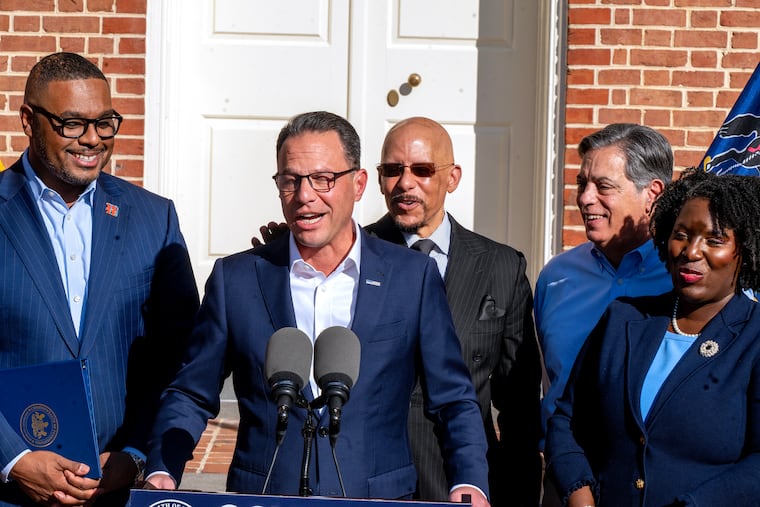
The midterm elections are over, and Pennsylvania Democrats have achieved a “trifecta” — control over the state House and Senate, as well as the governor’s office.
For Pennsylvania businesses, some significant changes could be coming in the next year. Here are a few things to watch.
Minimum wage
Pennsylvania Gov. Josh Shapiro has said he plans to increase the state’s minimum wage, which is currently at $7.25 per hour. The higher hourly amount hasn’t been disclosed, but Shapiro in the past has pushed for $15.
Restaurant and retail businesses would likely be most affected by this change. But all businesses must consider that an increase in the state’s hourly minimum wage will increase overall compensation expenses as it will re-set wage scales and put upward pressure on wages.
It’s likely that any wage increase will be phased in so the initial impact can be absorbed. But businesses will need to budget for higher wages and should consider calculating payroll under several possible wage floors, including associated payroll taxes and adjustments for employees already earning slightly above those rates.
Paid family and medical leave
Although Shapiro’s minimum wage comments have received most of the media’s attention, other Democratic bills pending in the state legislature were previously unable to move past the Republican-controlled Senate to reach the governor’s desk for signing. These bills are likely to get a fresh look.
There’s the Paid Family and Medical Leave Bill (HB 200), which was introduced in 2025 and would require employers to provide eligible workers with up to 12 weeks of partial wage replacement for family and medical leave.
Under the current proposal, companies with 50 or more employees would bear the full cost of this measure, while those with less than 50 workers may be eligible for grants to help offset this expense. The bill had bipartisan support and passed the House in 2026 but is stalled in the Senate while alternative funding options are considered.
If this bill becomes law, most employers will have to change their paid time-off benefits, prepare to financially accommodate employees seeking longer leave for family or medical reasons, and consider alternative staffing while employees are absent.
Equal pay
An expansion of the state’s current equal-pay law, HB 630, which passed the House by a narrow margin in 2025 takes aim at equal pay protections.
The bill expands equal pay protections based on gender to include race and ethnicity. It applies a “comparable work” standard, meaning employees must receive equal pay for performing jobs that require comparable levels of skill, effort, and responsibility under similar working conditions, even if the job titles or exact tasks are not identical. It also protects employees’ rights to discuss their compensation by legally barring employers from stopping, punishing, or retaliating against workers who talk about their pay, and limits an employer’s reliance on an applicant’s prior wage history.
If passed, the bill would require more scrutiny by employers over their hiring and salary-setting practices, as well as the kinds of interview questions they use. More documentation supporting an employee’s compensation will likely be needed as well as explanations when an employee is not receiving comparable pay.
Cannabis legalization
Currently 24 states allow the recreational use of cannabis. Pennsylvania allows its use for medical purposes only.
But if HB 1200 passes, recreational use of cannabis would be legalized for adults and a system of state-operated retail stores (similar to the state’s current liquor store system) would be introduced.
The bill could have mixed results. Existing medical-marijuana dispensaries would see more competition from state-operated stores, but a larger market. Entrepreneurs looking to grow, process, distribute, or potentially sell cannabis products could have more opportunities.
Public transit
Shapiro has talked about finding more money for SEPTA and other public transit systems. This may come in the form of new legislation, or it could come from a reallocation of sales tax revenues, according to one bill (HB 1364), which passed the House in 2025 and has idled in the Senate since then. The same bill includes investments for roads and bridges.
Reallocating state sales tax revenues could negatively affect existing projects and funding programs. However, the money could be used for new construction and maintenance projects, which could mean more jobs and opportunities for firms doing business with the state.
Also, a more expanded, reliable and less expensive public transit system could help employers with recruitment and make it easier for their existing workers to get to their jobs on time, while also potentially reducing traffic burdens.
LGBTQ protections
More protections for LGBTQ workers have long been a priority for many Democratic legislators. The trifecta may be an opportunity to see the Fairness Act (HB 300) actually become law.
The act is sponsored by Philadelphia-based Rep. Malcolm Kenyatta and would explicitly address sexual orientation and gender identity in the state’s employment, housing and public accommodation protections. Its passage will ensure that employers have policies to address any potential discrimination against these groups.
Pennsylvania’s Human Relations Commission already interprets and enforces sex-discrimination protections to include sexual orientation and gender identity and explicitly addresses these categories. The Fairness Act would put express protections into statutory language. Employers should not wait for this law to be passed to adopt nondiscrimination policies. The act, which originally passed the House in 2023, was reintroduced in 2025 and remains up for a vote.
A new Pennsylvania legislature will convene Jan. 5 and, in my opinion, it won’t be long before the above changes become reality. It’s important now for business owners to work closely with their advisers — labor attorneys, payroll companies, HR consultants — to ensure that they’re prepared and in compliance.