Pa. Supreme Court says SEPTA special prosecutor is constitutional, another blow to Krasner
A unanimous Supreme Court rejected District Attorney Larry Krasner's argument that the SEPTA special prosecutor law is unconstitutional because it strips away the authority of an elected DA.
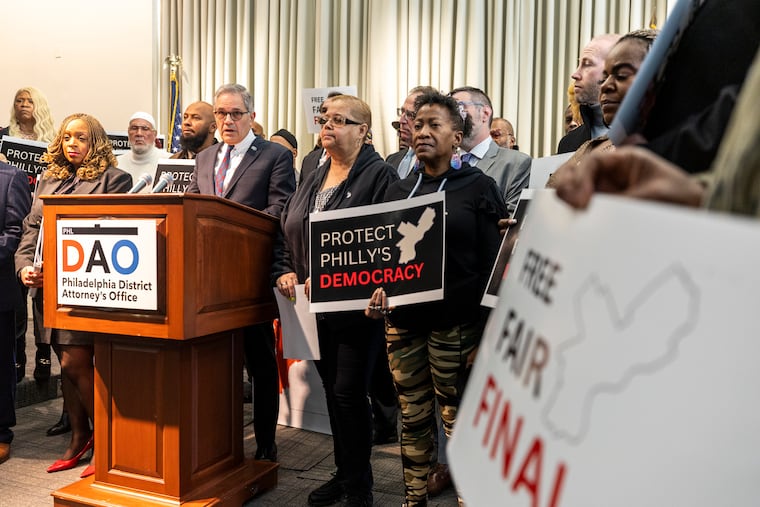
A 2023 Pennsylvania law creating a special prosecutor to pursue crimes on SEPTA is constitutional, a unanimous state Supreme Court ruled Thursday.
All seven justices rejected District Attorney Larry Krasner’s argument that the law unconstitutionally strips the authority of an elected district attorney by granting jurisdictions to crime “within” SEPTA to a special prosecutor appointed by the Pennsylvania attorney general. But they didn’t unanimously agree on the reason.
The special prosecutor can investigate crimes in all counties in which SEPTA operates, but can take over cases unilaterally only in Philadelphia.
Chief Justice Debora Todd wrote in the majority opinion that the part of the special prosecutor law specific to Philadelphia serves a “legitimate state interest: promoting public safety through the protection of SEPTA employees and riders by supporting the prosecution of crimes within SEPTA, and specifically, SEPTA-related crimes in Philadelphia.”
The law responds to “public safety concerns regarding increased SEPTA-related crime in Philadelphia, and the belief that such crimes were not being sufficiently prosecuted,” Todd wrote.
State Attorney General Dave Sunday, who is authorized to appoint the special prosecutor, said the law “has paid great dividends in holding violent offenders accountable” for crimes on SEPTA.
“Our mass transit prosecutor will continue to prosecute criminals who have killed and assaulted other individuals, perpetrated acts of gun violence, and stolen SEPTA property,” Sunday said in a statement.
A spokesperson for the district attorney’s office did not return a request for comment.
The special prosecutor’s office has become more active in the past year after a slow start. The office initially hired a sole attorney and did not prosecute a case until 2025, two years after its creation. The office has since taken on a portfolio of around two dozen cases, a spokesperson for the attorney general said. Serious crime on SEPTA has trended downward, according to the agency, falling around 20% in mid-2026 compared to the same period the previous year.
» READ MORE: Pa. Attorney General Dave Sunday talks Supreme Court’s Krasner ruling, abortion appeal
Earlier this year, the special prosecutor, Michael Untermeyer, took on an assault case involving a woman accused of pepper spraying and punching a conservative influencer during a viral confrontation on a SEPTA bus. And a representative for Sunday’s office said the prosecutor was preparing for a homicide trial in November, and the office was recently referred a case involving an assault on a SEPTA bus driver.
The ruling is the latest in which the Supreme Court has shown willingness to take away from Krasner functions that county prosecutors traditionally have had sole discretion over. The justices in June found that Philadelphia prosecutors engaged in a pattern of misleading judges when seeking to overturn murder convictions, and instructed judges to notify the state attorney general so it can review cases when Krasner’s office makes such requests going forward.
But the ruling on the SEPTA special prosecutor might be short-lived.
The law that authorized the role is set to expire at the end of the year, and while Harrisburg lawmakers set aside $1.2 million for the special prosecutor’s operations next year, they haven’t yet agreed on extending the measure.
Krasner filed a lawsuit in January 2024 attempting to quash the Republican-sponsored state law that gives a special prosecutor authority over crimes around SEPTA properties in Philadelphia. Gov. Josh Shapiro had signed the bill into law as part of a state budget deal in December 2023.
Krasner’s lawsuit called the law an “unconstitutional, radical, and unprecedented measure” amounting to a “shocking usurpation of power.”
In June, Commonwealth Court issued a 4-3 decision against Krasner, finding the law constitutional. In the majority opinion, Judge Anne E. Covey said the act “does not clearly, palpably, and plainly violate the Pennsylvania Constitution.”
In a Thursday concurring opinion, Justice David Wecht emphasized the ways the special prosecutor law was tailored to Krasner specifically.
The law disqualifies anyone who worked at the Philadelphia district attorney’s office as of roughly the beginning of Krasner’s tenure from serving as special prosecutor, the justice noted. And the measure was set to expire a year after Krasner’s second term ended (he has since won a third, which began in January).
The special prosecutor law is “tailored to hamstring Philadelphia’s thrice-elected and sitting District Attorney’s customary prerogatives relative to crime within the jurisdiction that office serves,” Wecht wrote.
“But none of that matters,” he said, because since 1951 the Pennsylvania constitution has allowed for laws ”regulating the affairs of the City of Philadelphia."