Two new studies show a solution to CTE might not be far off. What does this mean for football and the men who play it?
Doctors will eventually be able to detect the deadly brain disease through a blood test. "It's just going to be more knowledge," the Eagles' Zach Ertz said. It could be much more.
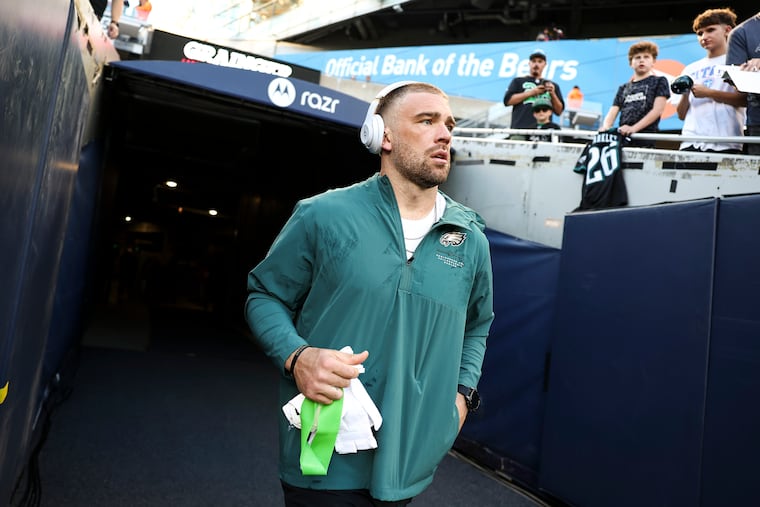
Officially, Zach Ertz has had three concussions in his 14-year NFL career. Is that a good number, a decent ratio considering how long he has played and how brutal his position, tight end, can be? Is there such a thing as a good number when it comes to head trauma in pro football, in any kind of football, in any sport?
The questions never go away. And their implications and possible answers were cast in stark relief again this month, with the publication of two studies that suggest science might not be so far from solving the deadly problem intrinsic to football: that it ravages the brains of those who play it.
Combined, the studies, one from Boston University and Banner Health, the other from the Washington University School of Medicine in St. Louis, fostered hope that doctors might soon be capable of diagnosing CTE — chronic traumatic encephalopathy, the infamous disease caused by repeated blows to the head — with a blood test. Right now, CTE can be detected only posthumously. Michael Alosco, the co-director of clinical research at Boston University’s CTE Center, called the BU-Banner study “a game changer. … If future studies validate these findings, this blood test will allow us to detect CTE with a high level of accuracy and open the doors to clinical trials and treatment.”
» READ MORE: DeVonta Smith set to return for Eagles on Sunday, but Dontayvion Wicks to remain out vs. Steelers
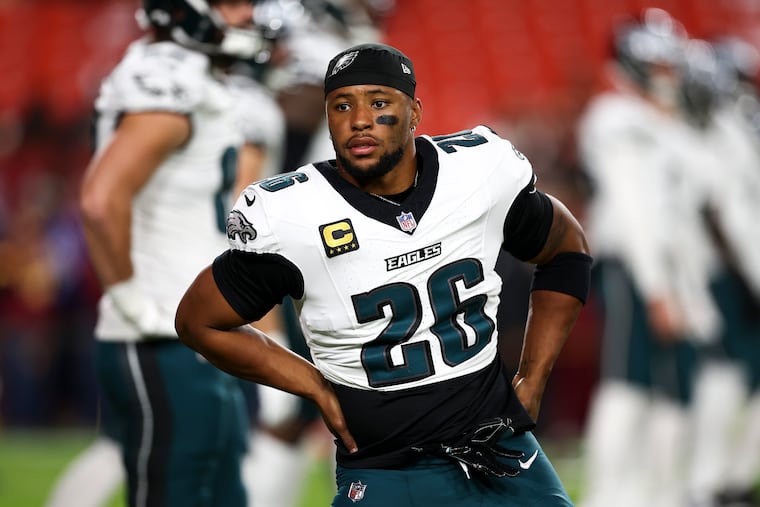
Sitting at his locker Friday inside the Jefferson Health Training Complex, Ertz grinned a sheepish grin when someone mentioned the studies to him, as if he knew someone would. He has played longer and been through more than anyone else on the Eagles’ roster — a Stanford University alumnus, a Super Bowl champion, a husband, a father of three boys under the age of 5, a man more than equipped to think through the ramifications of this research breakthrough.
What if — 15 years from now, 10 years from now, five — an NFL player gets a blood test that shows he already is developing a mild case of CTE? Will he retire on the spot? Would he keep playing, figuring that his die is already cast? Would a Heisman candidate leave his team in the middle of a season? How many parents would allow their sons to play high school or even Pop Warner football?
Ertz began playing football in seventh grade, then stopped playing in eighth grade because “I hated it so much,” he said. He picked the sport back up again in high school, and here is now, at 36, eight catches away from becoming the Eagles’ all-time leader in receptions, still weighing the ways football has benefited him against CTE and the sport’s other dangers.
“I can’t say I can’t worry about it, because I don’t know what the rest of my life is going to look like,” he said. “I pray every day it doesn’t affect me. People who played back in the ‘70s and ‘80s, I have relationships with some of those guys, and they live a very normal life besides the aches and pains. They function cognitively. And I’ve met some people who aren’t necessarily all there. The game impacts people differently, just like everyday life impacts people differently. It’s hard to put a blanket over everything and say, ‘This is the way it should go.’ …
“Playing this game, you understand the risks of it. You understand that everyone’s situation is different. The way it impacts people is different. So you can’t just look under some broad thing, in my opinion. Everyone’s got to come up with whether it’s worth it or not worth it. If they are able to find CTE in living people, it’s just going to be more knowledge and people will be able to make more educated decisions about what they want their careers and lives to look like. For me, I love this game. It’s given me more than I could have ever imagined.”
» READ MORE: Saquon Barkley heralds Eagles’ hire of offensive consultant T.J. Paganetti, back for third tour with team
But it takes from the men who play it, too, and they know that. Ask them about that tradeoff, and pretty much all of them will say what Ertz said: that they just want the most accurate, up-to-date information to allow them to make up their own minds about their present and their future.
“It’s in the back of everybody’s mind,” said Grant Calcaterra, another Eagles tight end. “But me personally, I have a little more optimistic approach. Just like these universities [will be] able to find ways to diagnose it before somebody dies, I also think there will be technologies developed to maybe help with dealing with the effects or reversing some of the damage. Just as the science is improving to help diagnose these things, I also think it’s improving to deal with the effects and heal some parts of your brain.
“I’ve stayed pretty healthy. I definitely think about it every now and then. But if you think about it all the time, it’s almost more dangerous. You don’t want to go out there timid. You’ve got to be violent. That’s when you get hurt, when you’re not being the one initiating the contact. So, yes and no. I think about it, and I don’t think about it.”
This discussion is about more than any individual player, though. It’s about the country’s most popular sport and whether it can survive as science keeps uncovering facts and truths that for the moment remain unseen and unknown. Zach Ertz loves football, and he pointed to the progress within it and the progress yet to come, and he lives with its stubborn contradictions: “There will be adjustments. I mean, we don’t do double days anymore. Everyone said it was horrible. The way those guys’ bodies were beat up over and over — they had a six-week training camp. Football is very different today than it was 20 years ago, and that’s a positive.” Still, he said none of his sons will play it before they enter high school. He didn’t have to say why.

Now that the Eagles are back from the bye, how will they approach the rest of the season? There are still eight games to go, but at 2-7, the team is facing long playoff odds. The possibility of securing a prime spot in the draft becomes more of a reality with every loss. In the face of crippling injuries and a personnel shakeup, will Nick Sirianni be able to keep the Eagles together? What factors could determine whether the head coach, his staff, and players stay or go? The Inquirer’s Jeff McLane and Jeff Neiburg answer these questions and address other big picture issues as the Eagles get back to work following a week off. Listen here.
Listen to all episodes here or wherever you get your podcasts.