A Canadian leader’s advice on surviving Trump and rebuilding an alliance of democracies
Former Canadian Deputy Prime Minister Chrystia Freeland has stood up to POTUS’s threats. He calls her “totally toxic.”

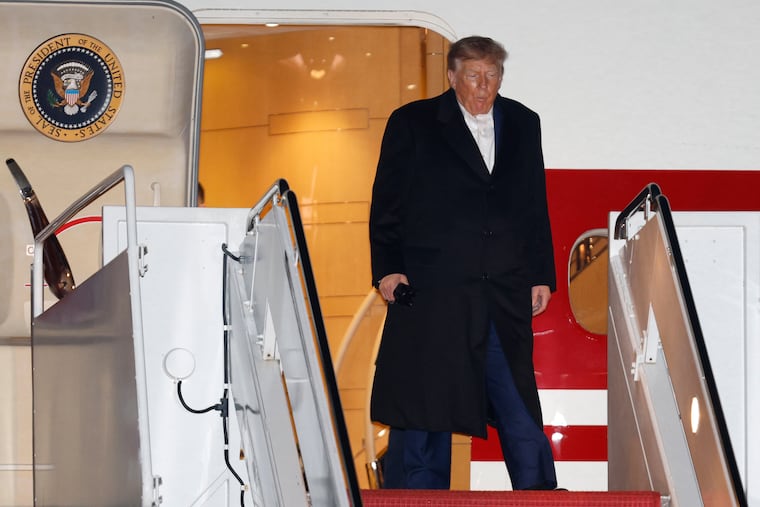
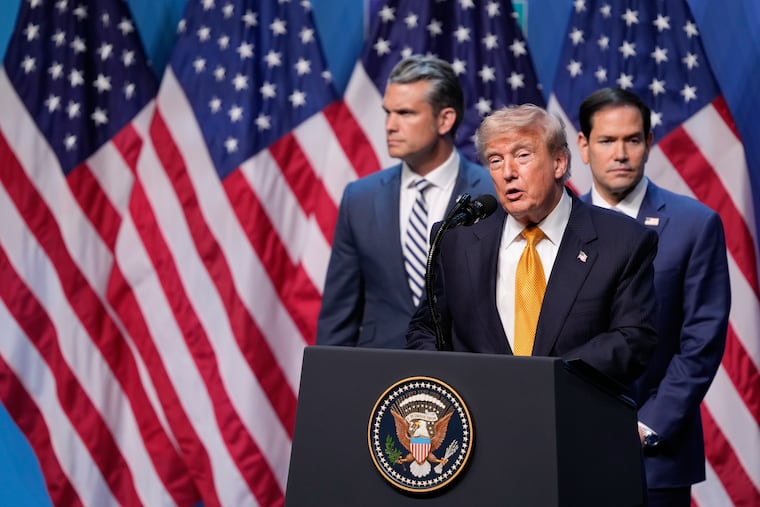
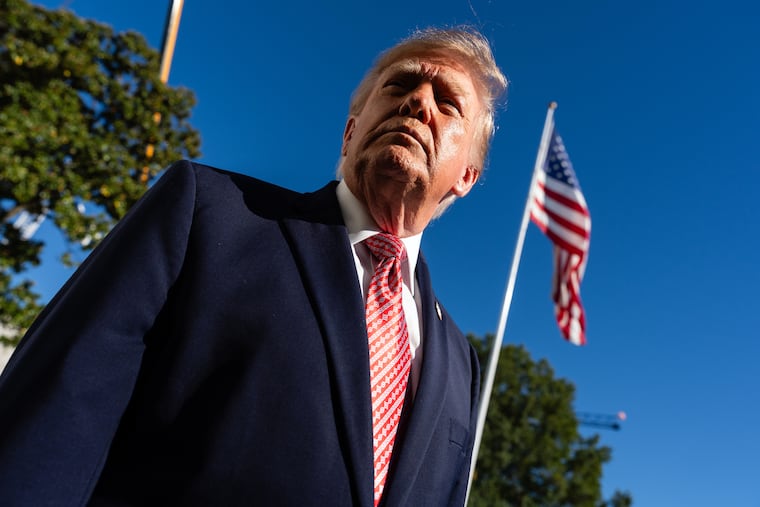
President Donald Trump has told voters in swing states to act as if he is on the ballot. So, let’s take him at his word.
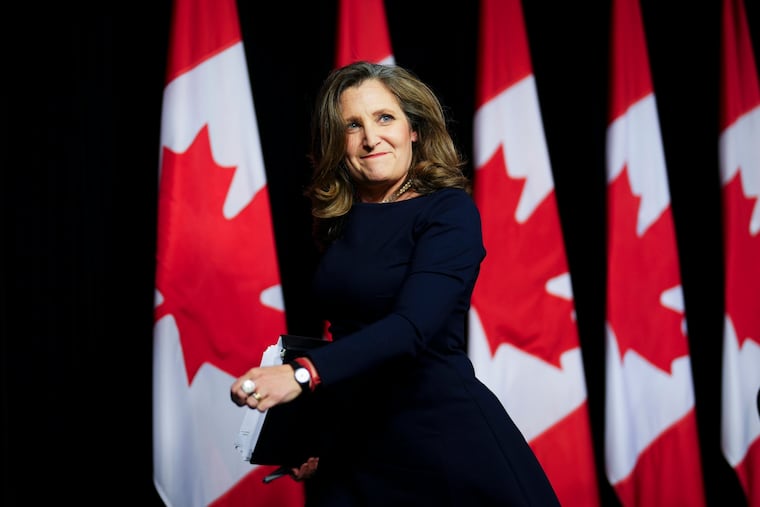
To understand how voting for candidates who support the president’s policies will affect America’s relationship with our (former) close allies — including Canada — I turned to the extraordinary journalist-turned-Canadian politician, Chrystia Freeland, who served as her country’s deputy prime minister, foreign minister, and minister of finance after spending years as the Financial Times’ Moscow correspondent.
She has just written a highly relevant and very readable book entitled The Unreliable Boyfriend: An Insider’s View of Dealing with a Chaotic Superpower, Plutocrats, and Other Complicated People. It lays out her personal experience with the deterioration of U.S.-Canada trade relations — she was a key negotiator of the United States-Mexico-Canada Agreement negotiated during Trump’s first term — and the demotion of allies into adversaries and adversaries into allies.
From her Russia experience, she also makes important comparisons between the rise and demise of Russian oligarchs under Vladimir Putin and the risky rise to political power under POTUS of U.S. billionaire oligarchs like Elon Musk.
For those of you holding your breath until the midterms, Freeland also has some smart (yet probably overly optimistic) ideas about how this damage might begin to be remedied by a shift of political power on Election Day.
I couldn’t resist asking whether “the unreliable boyfriend” has become the abusive ex-boyfriend.
“You could be both,” Freeland replied. “It’s possible to be both at the same time. The anguish at the heart of my book — and I’m very aware of the imperfections of the postwar era and the Pax Americana — is that I am also aware of what was really great about that era.
“People were being lifted out of poverty in some of the poorest countries, as well as a real boom for the middle class in Western democracies.
“What I also saw was probably the greatest moment in America’s leadership of the free world, the way that American patience and determination contributed to the liberation of the people who had lived behind the Iron Curtain.”
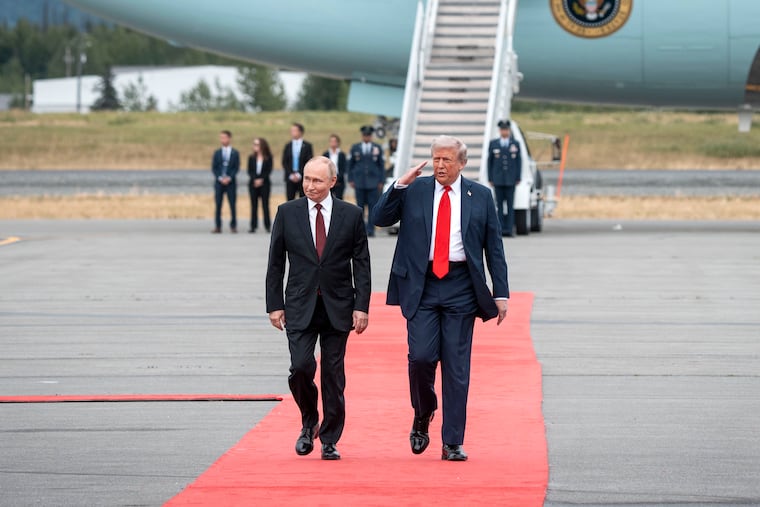
Too many Americans have no memory or knowledge of that peaceful political miracle; one which Trump is trying to help Putin reverse by helping the Russian leader put Ukraine and other former Soviet republics back under Kremlin control.
Freeland, who is of Ukrainian descent, rightly noted that “brave people themselves” made a huge contribution to their liberation from Soviet imperialism. However, as she restated, “America played a really big role.”
It is this historic memory that makes it so personally painful for Freeland to watch the U.S. president explicitly siding with Russia against Ukraine (not to mention Canada and Europe).
» READ MORE: Trump looks to plunge us deeper into a misconceived Iran war after the midterms | Trudy Rubin
“It is a betrayal of Ukraine, of the world’s democracies, and America’s NATO allies. And it’s a betrayal of America’s highest ideals and an act that harms America’s national interest,” she told me.
Freeland believes Ukraine could end the war by Christmas with European backing if the White House would “just give a little bit of support” and use leverage against China’s substantial aid to Russia. It’s also “flabbergasting,” she added, that America is actually helping Russia, which is helping Iran kill American troops.
Along with that betrayal, it’s the U.S. administration’s sellout of America’s democratic allies that upsets her as a political leader and a would-be American friend.
She is especially proud of Canadian Prime Minister Mark Carney’s strong public stand against Trump’s threats.
“It’s really important for us and America’s traditional allies to say to our American friends that this is what you are doing. Because if we’re not clear about it, if you guys don’t really face up to it, that makes it harder for you to change course.
“I think this administration has quite explicitly run a protection racket, saying, ‘Do what we say on tariffs,’ for example. And saying to the Europeans, ‘Kowtow to us, or we will not support you on Ukraine,’ or to the Asians, ‘We won’t support you on China.’”
There are two reasons Canada has stood so firm, she said. The first is that there is bipartisan support against Trump’s open threat to Canadian sovereignty, with his insistence that the country should become the 51st state and his imposition of prohibitive tariffs when Carney refused.
And Canadians already had some experience taking a tough stance against Trump, she said, referring to trade negotiations during his first term. “What I like the most about what happened before is that we got a positive outcome,” she said.
» READ MORE: Trump’s open alliance with Putin betrays the United States and helps Russia kill Ukrainians | Trudy Rubin
Indeed, led by Freeland, Canada was able to negotiate a reasonable deal — the USMCA trade agreement — because it showed U.S. border states and a then-more receptive Congress that the U.S. and Canadian economies were so intertwined that it damaged American industries, including car manufacturers, to impose punishing tariffs.
Now, Trump has essentially thrown that deal in the toilet, but his administration pretends that there isn’t a trade war. The USMCA “is still in force, but it is being violated by the U.S. at a massive scale,” Freeland said.
Meanwhile, Trump’s efforts to bludgeon Canada with new tariffs may lose the GOP Senate seats over damage to industries in border states that need Canadian auto parts, timber, aluminum, and electricity.
Are Canadians permanently alienated from the United States? I asked.
“The consensus view is that it can never be the same again. But what I will say, what has encouraged me about this book tour, is the very warm reception of Canada by ordinary Americans,” she said. That reception gives her hope that a new president would reset the relationship, she said, “but I have to caution you that most Canadians think that is an overly optimistic view.”
Freeland warns that Trump’s trade wars are playing into China’s hands. His threats to Canada’s sovereignty and the sovereignty of Denmark over Greenland also weaken NATO and any trust in security alliances with the U.S.
That is why it is necessary for European and Asian democracies to pursue closer ties without America, she said. She advocates “friendshoring,” meaning democracies worldwide should pursue closer trade ties to stand up to Trump — and to Chinese economic pressures. But she advises them “to always have an architecture which is open to the United States” if the U.S. political leadership changes.
Freeland refuses to give up on the United States as a democracy. And she has some advice for Democrats as they try to retake control of Congress and look ahead to 2028.
First, she has a word of warning to the American billionaires who now think they can run the country. Russian oligarchs thought the same in the 1990s, when they helped install Putin in power but were crushed by the former KGB colonel once he had taken full control of the Kremlin. The billionaire tech bros who now surround and fund Trump should beware of supporting would-be dictators, she cautioned.
Second, just as the extreme right prepared for a government takeover for years before 2024, she advises the U.S. political opposition to “work on what things would look like after [the 2028] election.”
“And, I think, the world’s democracies need to start building a road map of what the world could look like in 2029 if there is a different American administration and a different approach.”
“We should have some clear ideas on what a renewed democratic alliance would look like,” she said.
“I hope that there are some Americans thinking about that, too.”
About our columnists
In contrast to news reporters, who operate within an independent, nonpartisan framework, columnists are charged with including their perspectives, opinions, and viewpoints when presenting their reporting. Inquirer columnists include Jenice Armstrong, Will Bunch, Luis F. Carrasco, Paul Davies, Daniel Pearson, Trudy Rubin, and Sabrina Vourvoulias.