Saif Manna’s dorm-room cookie company rises into a bakery-cafe in Kensington
After building a following for his Levantine and Palestinian pastries at farmers markets, Saif Manna has found a home. He also has a tip for home bakers out there.
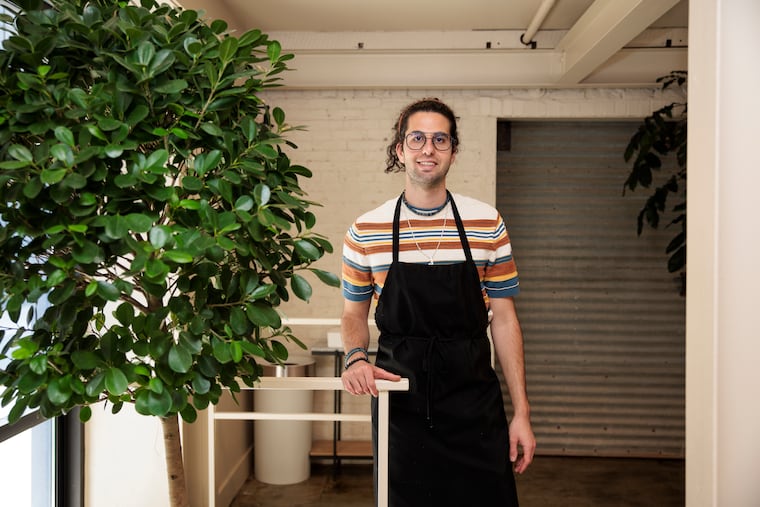
Before it became one of Philadelphia’s busiest bakery pop-ups, Manna Bakery operated out of a Temple University dorm room.
Now, after five years of overnight baking sessions, sold-out farmers markets, and long lines for Levantine and Palestinian pastries, chef-owner Saif Manna is opening his first brick-and-mortar bakery in Kensington — a mile and a half from campus.
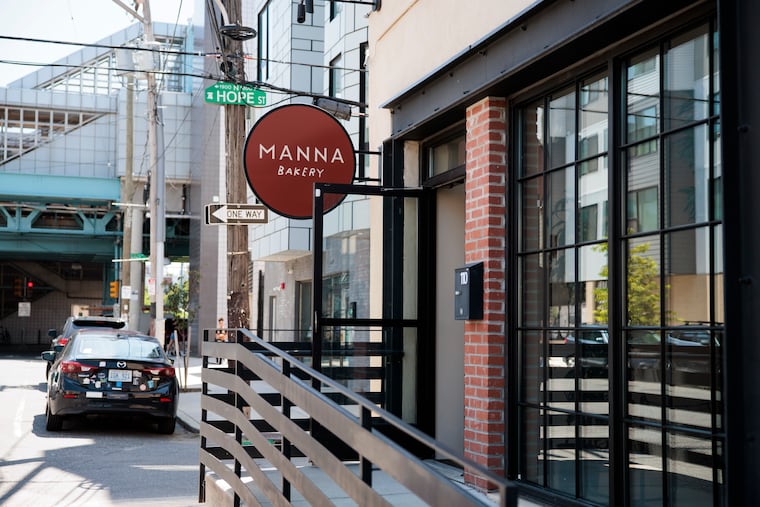
Manna Bakery opens Thursday at 110 W. Berks St., the former Essen Bakery. This caps a whirlwind year for Manna, 27, who married his college girlfriend, Stefaniya Surikova, earlier this year. They’re expecting their first child.
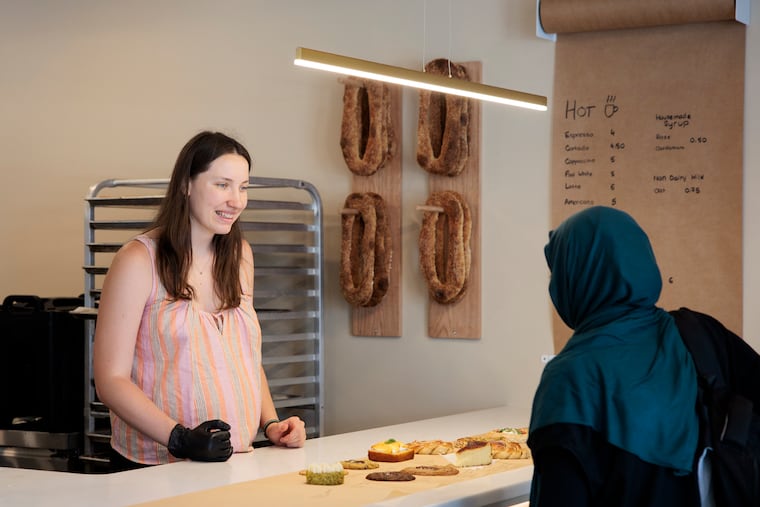
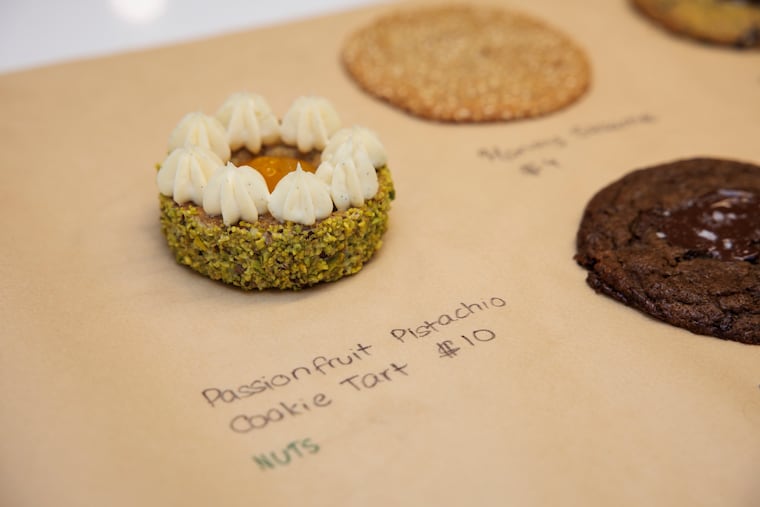
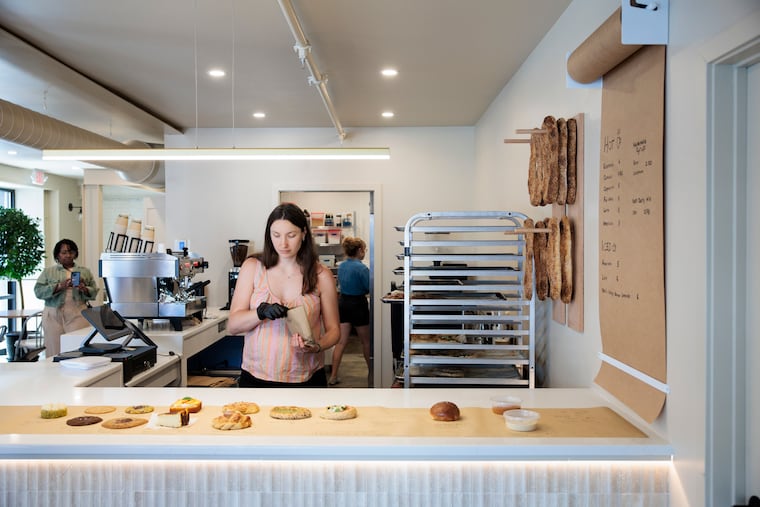
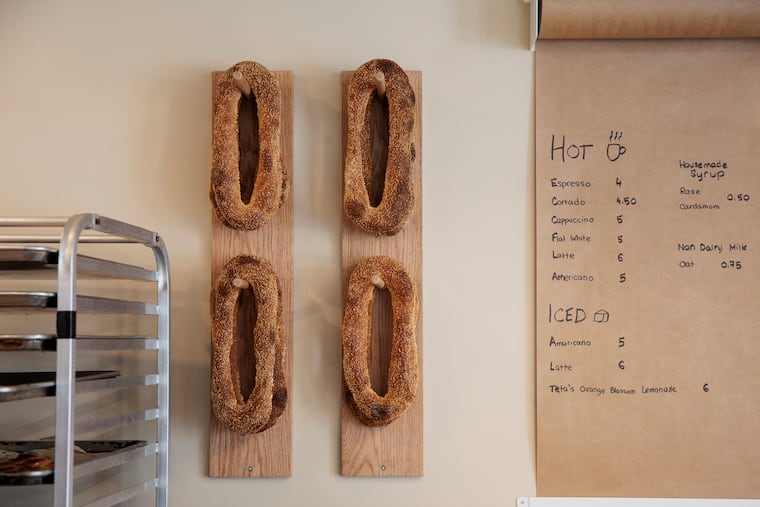
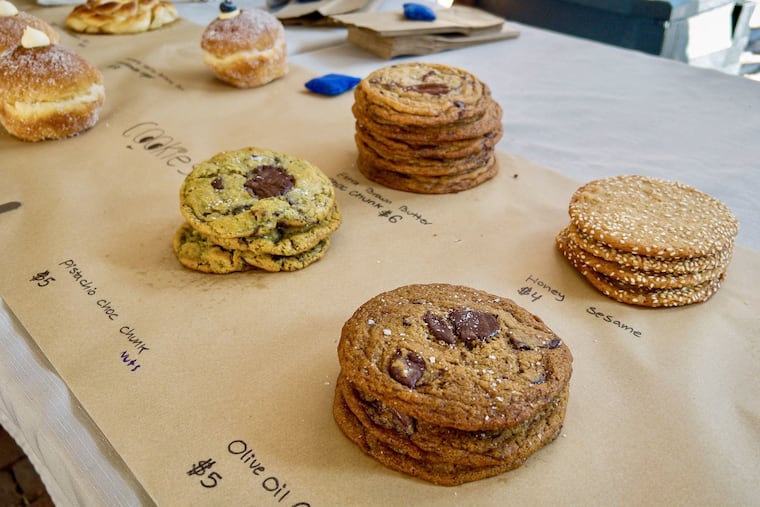
Manna’s rise has the familiar outline of a pandemic success story, although the traditions reach back generations. He said his grandfather’s family lived in Yafa (also known as Jaffa) but left in 1948 after their house was bombed during the Nakba, the mass displacement of Palestinians in the Arab-Israeli war, when hundreds of thousands fled or were expelled from areas that became part of Israel.
His grandfather headed first to Cyprus and then to Lebanon, studied medicine in England, and made his way to Kuwait to practice.
Manna was born in California and raised in Dubai before moving to the United States to attend Texas A&M University on a Division I tennis scholarship. After transferring to Temple, he began baking cookies during the pandemic while living in a dorm. Encouraged by Surikova — also on Temple’s tennis team — in 2021, he started selling them online before expanding into pop-ups and the Rittenhouse, Headhouse and Clark Park farmers markets.
As demand grew, Manna baked overnight at nearby Char Pizza before outgrowing the space.
Since Manna never lived in the Levant, he describes his business as a third-culture bakery. He said his shop’s logo, a dandelion flower, is a nod to a belief popular in China that equates Palestinians with dandelion seeds that can thrive anywhere they land.
Manna has followed a path blazed by the recent crop of independent bakeries such as Kouklet, Second Daughter, Machine Shop, Copihue, and Majdal, growing from home kitchens, pop-ups, and farmers markets into storefronts. Manna said he would keep his farmers market stops.
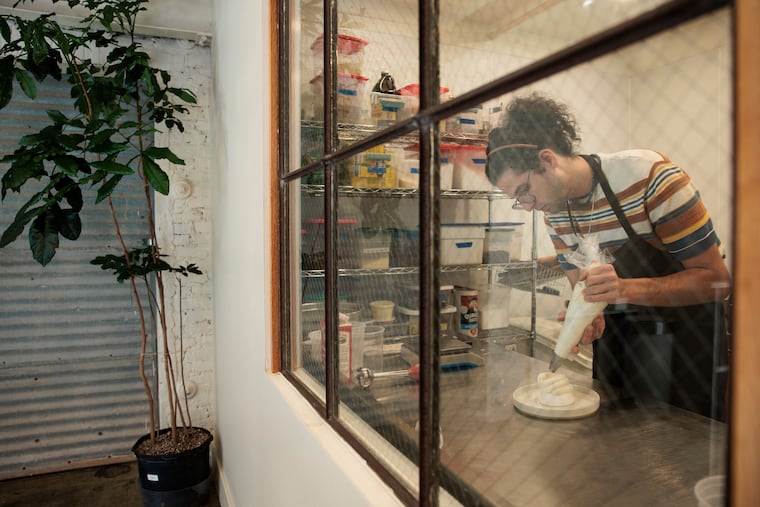
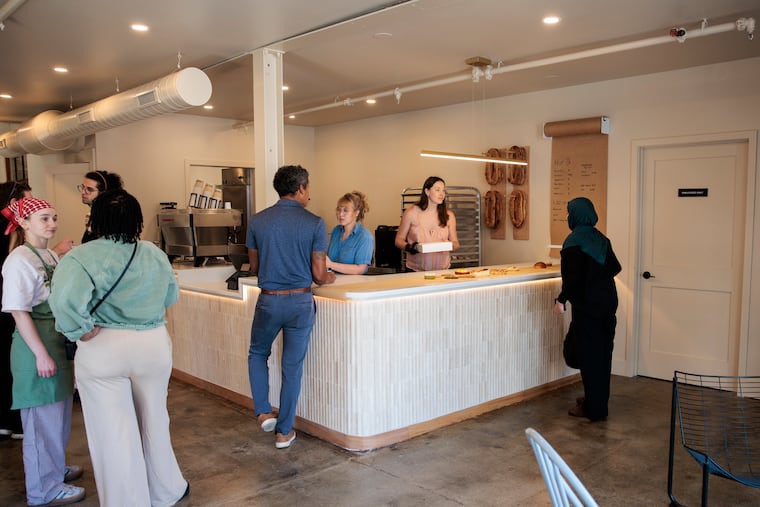
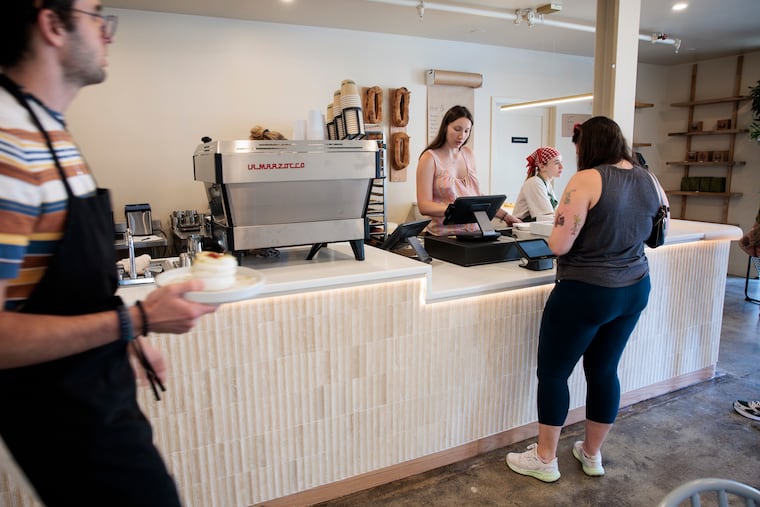
His new bakery’s roomy kitchen includes a window where customers can watch the bakers. Manna is still awaiting his chairs and tables for the 60-seat cafe.
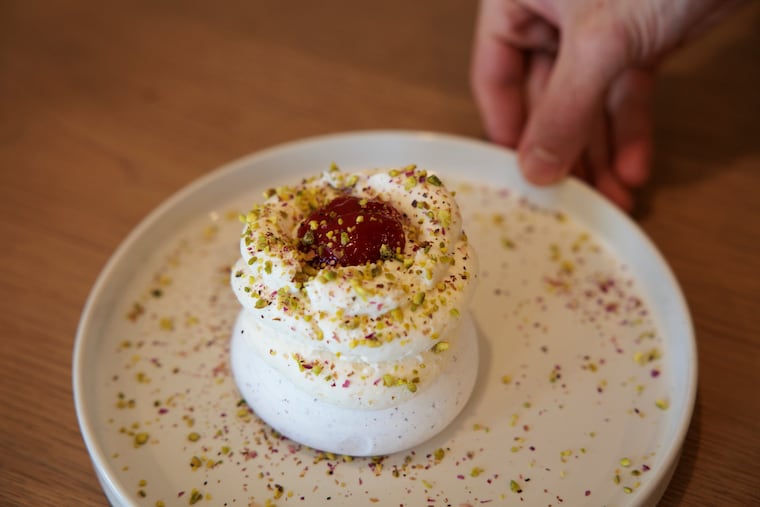
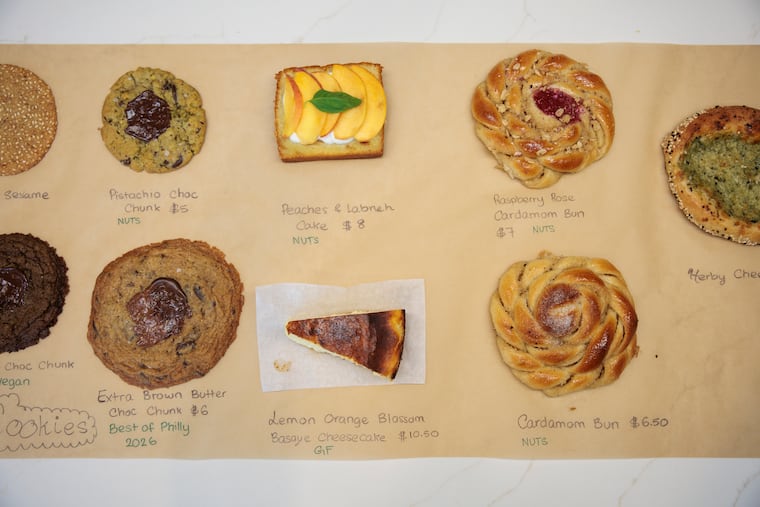
Weekday fare will feature many of Manna’s signatures, including manakeesh, chicken sumac buns, fatayer, cardamom buns, Basque cheesecake, seasonal cakes, and his pistachio chocolate chunk and extra-brown butter chocolate chunk cookies. Weekends will bring an even broader selection.
The coffee program, featuring beans from Seekers Coffee in Princeton, includes drinks flavored with rose, cardamom, tahini, dates and saffron, along with Manna’s grandmother’s orange blossom lemonade.
The shop has been redesigned with warm stone finishes, a small souk stocked with Levantine spices and pantry goods, and a rear room intended for future baking workshops, classes and private events.
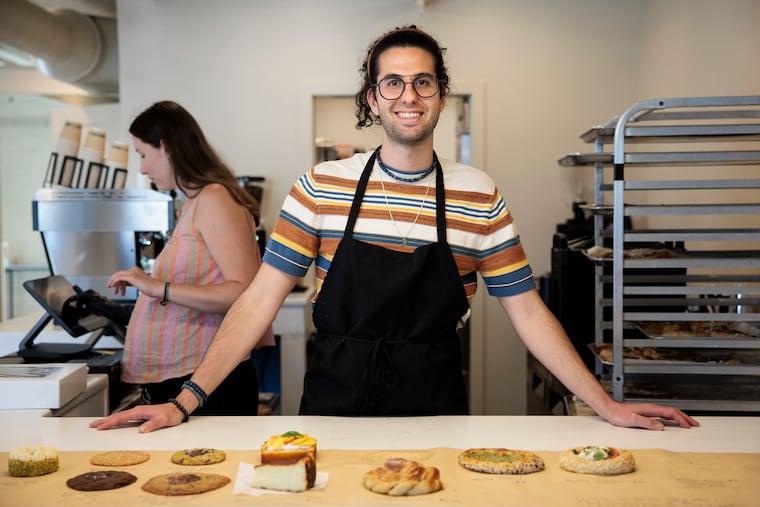
For a soft opening last week, Manna and Surikova recreated their farmers market display, laying pastries across sheets of craft paper.
» READ MORE: How to have a perfect Philly day, according to Saif Manna
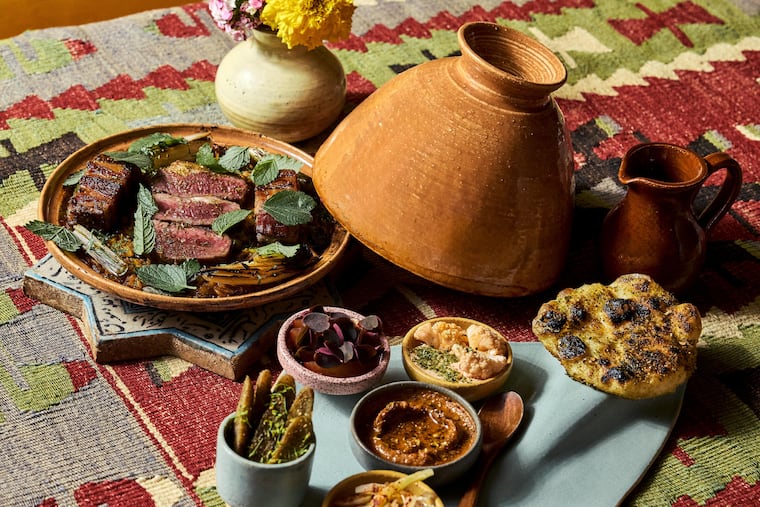
Among them were savory offerings such as the open-faced herby cheese fatayer and the banadoura manakish — a tomato-topped Levantine flatbread. Ka’ak al-Quds, the oblong, sesame-seeded Jerusalem bagels, hung from hooks behind the counter.
A smaller version of those bagels will eventually become Manna’s egg, cheese and za’atar breakfast sandwich. “That’s something I grew up eating,” Manna said. “My mom used to make me that before school.”
Dillon Assfalg, a line cook at Char who watched Manna’s overnight baking sessions firsthand, said the quality of his pastries stood out from the beginning. He describes himself as a cheesecake fan and ranks Manna’s lemon-and-orange-blossom Basque cheesecake among his favorites.
“Whenever he’d leave fillings at Char after his middle-of-the-night baking sessions, I’d eat them all the time,” Assfalg said. “They were always super good.”
Manna isn’t rushing to turn it into a full-service café. He hopes to add options such as slow-roasted lamb sandwiches for brunch, followed by baking workshops, cooking classes and supper clubs before introducing several nights of dinner featuring the Palestinian dishes he grew up with. But those plans can wait until the bakery is firmly established.
“Long term, I definitely have aspirations. I love cooking as much as baking, so I think people will see more of that from me,” Manna said. “Would I like to have a restaurant one day? Absolutely. But right now my focus is making this bakery the best it can be and continuing to deliver the quality people expect. We’ll go from there.”
Manna Bakery, 110 W. Berks St. Hours: 7 a.m. to 3 p.m. Thursday to Sunday.
Manna’s tip for home bread bakers
Saif Manna shared one of his favorite tips for home bread bakers: use an autolyse. The technique calls for mixing only the flour and water for about a minute, then letting the shaggy dough rest for an hour or two before adding the remaining ingredients.
“When you come back, it’ll almost look like someone kneaded it for you,” he said. “It’s like magic. During that rest, the flour hydrates and the gluten begins to develop naturally.”
Only then does he add the salt, yeast, sugar and, if needed, oil before kneading. “You’ll end up with a much smoother, more beautiful dough, and you’ll never want to skip that step again,” he said.
The method also reduces mixing time. “People ask, ‘Why do you do it if you have these beautiful mixers?’” Manna said. “If you mix dough too long in a machine, you can overwork it. Bakers sometimes call it ‘bleaching’ the dough. We let it rest through the autolyse, then add the rest of the ingredients and finish the mixing in the machine. Because the gluten has already started developing, we can reduce the machine mixing time and preserve more of the flavor.”
Inquirer Food Festival
Get your ticket to Philly’s ultimate food party! Join top Philly chefs and bakers for one unforgettable day of food.