A Penn psychiatrist is helping shape the field’s guide to diagnosing mental disorders. Here’s what could change.
Led by Penn psychiatrist Maria Oquendo, the committee planning the next DSM update has proposed creating a “living DSM,” changing the manual’s name, and making diagnoses more “person-centered."
Psychiatry’s leading guide to diagnosing mental health conditions is due for a major update — and a University of Pennsylvania psychiatrist is heading the effort.
Called the Diagnostic and Statistical Manual of Mental Disorders, the DSM was first published in 1952 and has historically been updated every 10 to 20 years.
The American Psychiatric Association released the last major update, the DSM-5, in 2013. (A text revision came out in 2022.) There is currently no estimated date of publication for the next edition, given the scale of the project.
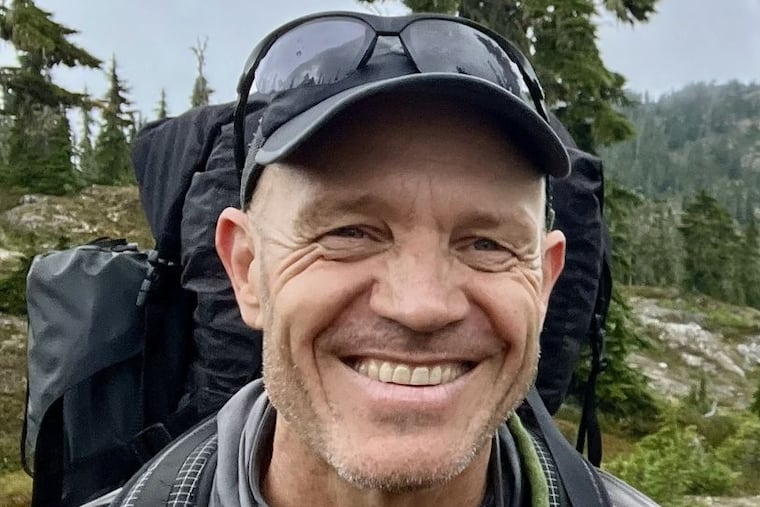
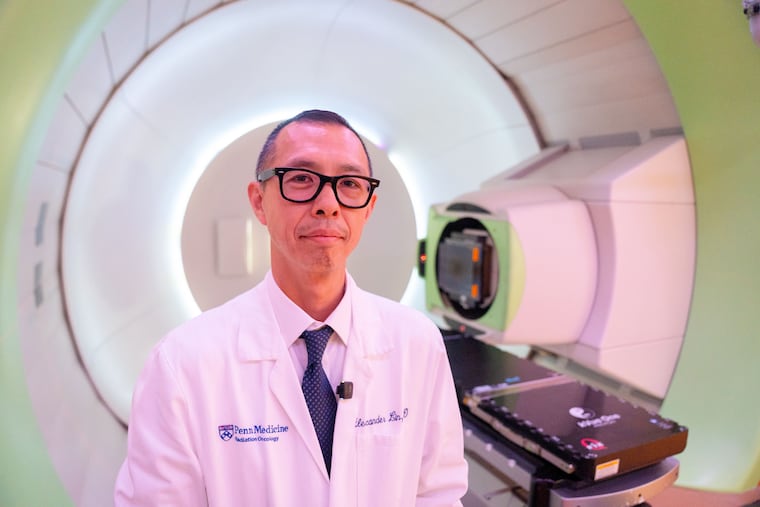
Maria Oquendo, who chairs Penn’s department of psychiatry, was tapped to lead the strategic committee for the sixth edition. That will entail developing a road map for the future of the DSM, based on more than a decade of advances in research and patient care.
“I am very honored and also very daunted,” Oquendo said.
The group has proposed creating a “living DSM,” changing the manual’s name, and making diagnoses more “person-centered.”
There are subcommittees focused on the socio-economic, cultural, and environmental determinants of health, the biological factors behind mental health conditions, symptoms spanning multiple conditions, and functioning and quality of life.
Past DSM updates have similarly introduced sweeping changes — including changing how autism is diagnosed and adding “prolonged grief disorder” as a condition.
The manual is commonly used by mental health professionals, researchers, insurance companies, and the legal system.
The committee wants to make sure a small change doesn’t cause drastic ripple effects for the public, such as disqualifying people from insurance coverage or altering “the standard for deeming someone not criminally responsible,” Oquendo said.
“If it has a big impact, then the rationale has to be extremely robust,” she emphasized.
The Inquirer spoke with Oquendo about what changes could be coming in the next edition of the DSM in a conversation lightly edited for length and clarity.
What is the DSM?
The DSM is a clinical manual intended to help clinicians make diagnoses.
It provides not only a list of all of the diagnoses but also descriptions that include some background information like family history. Importantly, it makes sure that when I, as a clinician, am talking about obsessive compulsive disorder, the person who’s listening to me knows exactly what I’m talking about.
The reach of this book is quite global, and in many places such as Western countries, it’s used as the primary diagnostic tool.
What changes are you hoping to make with the new edition?
There are people who refer to the DSM as the Bible. It’s not the Bible. At best, it’s a dictionary. And what we want to do is increase focus on contextual factors that are important for making a diagnosis. Ideally a person-centered explanation is about not only what the disorder is, but what’s contributing to it. We know that socio-economic, cultural, and environmental factors are super important for mental health.
If you’re assessing someone, knowing about that can be really helpful to understanding that person and where they are coming from.
As an example, if somebody comes from a culture like my culture (Puerto Rico), where people have very strong connections with the deceased, sometimes they experience the deceased person’s presence or hear them talk, especially at night. That could be construed to be hallucinations, and yet in the context of not only my culture but many cultures, that would be completely normative.
What other changes are being considered?
We are very focused on making sure that functioning and quality of life get the attention that they deserve. There are some people who have lots and lots of symptoms, and they’re happy as a clam. The amount of distress that a person feels can vary quite significantly, and it’s very relevant in terms of not only diagnosis but treatment planning. What are the best interventions to help that person get better?
We also have a section on biomarkers and biological factors. That’s really important because, to date, the DSM has been kind of agnostic about what the contributors to mental disorders are. But we know that there are biological contributors, and we also know that the environment is extremely important, and it’s the interaction of those two things that is critical in terms of whether an individual manifests a mental disorder or not.
What do you mean by biological factors?
I don’t necessarily only mean things like genetics and predisposition. Experiences like trauma can change our biology. We know that the stress response system in the brain can change very dramatically after trauma. That’s another biological contributor to a mental disorder that is not innate.
Another proposed change is to encourage broader diagnoses. Can you elaborate on that?
Historically, the DSM has encouraged precise diagnosis to the extent that it’s possible. But we think that in most first encounters, it’s very common not to be sure what the diagnosis is. You may know that a person has a mood disorder of some type, but you may not be sure if they really have bipolar disorder or major depression, as an example. Sometimes it takes time for that to become clarified. You need to get collateral information from loved ones to confirm what’s happening in the environment, or it may take time because you just need the symptoms to evolve.
We’ve looked at data from insurers, and found that people are using more general diagnoses. What we want to do is provide a platform so that people can start from that, and as they get to know the patient better, refine their diagnosis with more data and more information.
What about the proposal to change the DSM’s name?
It’s called the Diagnostic and Statistical Manual because, when it was first developed, the goal was to be able to develop estimates of the frequency of diagnosis, so public services could be planned. But now that’s not what it’s used for at all. We actually are planning to change the name to Diagnostic and Scientific Manual because we want to strongly communicate that this is based on science.
How could this next update make the manual a “living DSM”?
The American Psychiatric Association really wants to make sure that this next DSM can stay as up to date as possible. The idea is that there would be a book version, but also an electronic version that would be updated on a periodic basis.
One of the things that’s really tricky about that is that you want to keep things current — we don’t have to wait 13 years for things to be updated. But if you change things too much, you drive people in the field crazy.