Jefferson County coroner says a ‘probable’ case of measles led to a woman’s death
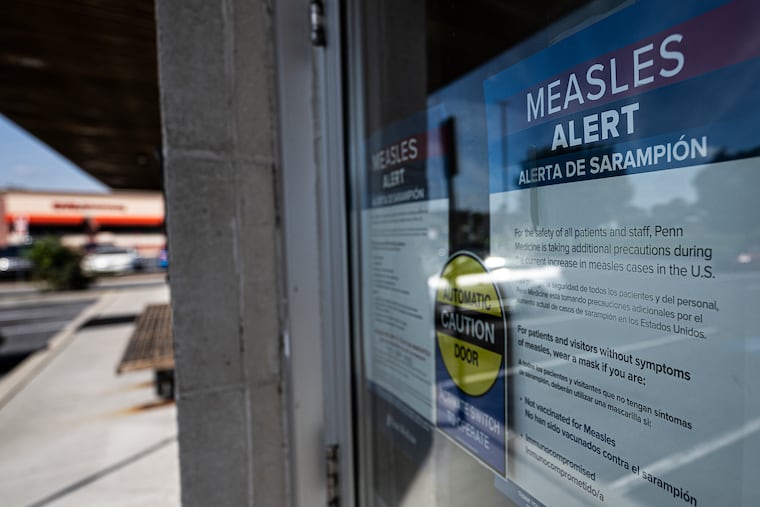
The report comes amid a major measles outbreak in Pennsylvania that has sickened nearly 700 people.
Jefferson County’s coroner is updating a death certificate to note that a “probable” case of measles led to the death of a 40-year-old woman over the weekend.
The woman’s death certificate initially had stated that she died of respiratory failure due to a “suspected” case of measles and other underlying conditions. She also had clinical signs of measles, including a rash and fever, coroner Greg Furlong said Monday.
Furlong said he had paperwork confirming that the woman had been exposed to a person who had a positive lab test for measles and subsequently decided to change the death certificate.
The woman’s death marks the third reported amid an ongoing measles outbreak in Pennsylvania that has sickened nearly 700 people. State officials announced last month two other measles-related deaths and say they’re investigating the death reported in Jefferson County.
Here’s what to know about the case and the ongoing outbreak.
What are the details of the death in Jefferson County?
Jefferson County’s coroner reported Sunday the death of a 40-year-old woman in the county.
The woman, who died Saturday, was unvaccinated and had serious respiratory issues, requiring her to use supplemental oxygen 24 hours a day, Furlong said.
Her death certificate initially listed her cause of death as “acute on chronic hypoxemic and hypercapnic respiratory failure” due to “suspected measles,” chronic obstructive pulmonary disease, and asthma, Furlong told The Inquirer, though he is updating the death certificate to read “probable measles.”
The certificate also lists “supplemental oxygen dependence” as a “significant condition contributing to death but not resulting in the underlying cause.”
The woman also had hypertension and high cholesterol, Furlong said.
Furlong said the woman had declined a measles test while she was alive, but his office tested her for measles after her death and was waiting on results on Monday.
Can respiratory issues put you at higher risk for death from measles?
Yes, measles is especially risky for people with respiratory conditions, says Paul Offit, a physician and vaccine expert who heads the Children’s Hospital of Philadelphia’s Vaccine Education Center.
“This person was particularly compromised, with chronic obstructive pulmonary disease and asthma,” he said on Sunday. “That’s a person who could well die from this virus.”
Children under five, people older than 20, pregnant women, and people with weakened immune systems are more likely to have complications from measles, according to the Centers for Disease Control and Prevention.
In young children, complications from pneumonia, or infection of the lungs, are the most common cause of death from measles, the CDC says.
How are state officials responding to the case?
Officials at the state health department are aware of the coroner’s report and conducting a “thorough review” of the case, they said in a statement Sunday.
According to the health department’s measles outbreak website, Pennsylvania defines a “measles-associated death” as one that occurs within 30 days of symptom onset in a person with clinical evidence of infection and a positive laboratory test.
The state also considers additional information on a case, including a person’s medical records and whether they were exposed to measles before their death.
Deaths without lab evidence of infection, deaths of people who have fully recovered from measles before death, and deaths from unrelated causes, like a car crash, are not counted as measles-associated.
How are federal officials responding to the case?
Since last month, state and federal officials have clashed over whether two other deaths reported in Pennsylvania were tied to the state’s measles outbreak.
In its latest update Friday, the CDC still had not listed two deaths reported by the state on its website highlighting data on ongoing measles outbreaks around the country.
In announcing the two deaths, Democratic Gov. Josh Shapiro criticized President Donald Trump’s Health and Human Services Secretary, Robert F. Kennedy Jr., for spreading misinformation about vaccine safety through his longtime anti-vaccine activism. Kennedy then accused the state of “fabricating” the deaths, although he later acknowledged one had been caused by measles.
Lancaster County’s coroner has said he investigated one death caused by measles, in an infant with a severe genetic disorder, and another in an infant who contracted measles before birth and died shortly after.
The coroner, an elected Republican, has said he does not believe measles caused that child’s death, but rather a lacerated spleen. Yet prominent physicians have noted measles can weaken a person’s spleen, putting it at risk of rupture.
CDC director Erica Schwartz said in a statement Monday that state officials had not notified the agency about the death in Jefferson County.
“Despite repeated offers of assistance, Pennsylvania has not requested a CDC Epi-Aid, which would deploy epidemiologists and provide on-the-ground measles outbreak support,” she said.
Several other states including Texas and South Carolina, requested such assistance when dealing with large outbreaks over the last year and a half, she said, adding that the CDC will respond with Epi-Aid support if the state officially requests it.
State officials did not immediately return a request for comment on Schwartz’s statement.
Earlier this month, they said the department meets regularly with CDC staff and has discussed the details of the two previously reported measles-associated deaths with them.
They added that the CDC requested records about the cases that contained identifiable information, which the state did not share, a decision in line with past practices.
State officials have maintained that privacy laws keep the department from releasing more information on the cases. Earlier this month, they said the CDC had not provided them with a case report form that would allow them to share de-identified information about the deaths with the agency.
Can you get measles if you’ve been vaccinated?
Nearly all of the 693 measles cases reported so far this year in Pennsylvania have been among people who were not fully vaccinated against the disease.
But last week the state identified four people — three adults and a child — who were “appropriately vaccinated for their age” and still contracted measles. These “breakthrough cases” are rare, accounting for less than 1% of the cases reported in Pennsylvania, and typically result in milder symptoms and less risk of spreading the disease.
People born before 1957, before the first measles vaccines became available, are generally considered protected against measles through natural immunity — because the disease was once prevalent in children.
Between 1968 and 1989, most children in the United States received one dose of the MMR vaccine, which is about 93% effective against the virus.
In 1989, measles cases among vaccinated schoolchildren prompted health officials to recommend children receive two doses of the vaccine, which together are 97% effective against the virus, a change that also prompted some older children to get a second shot.
How do you get a measles vaccine and who is eligible?
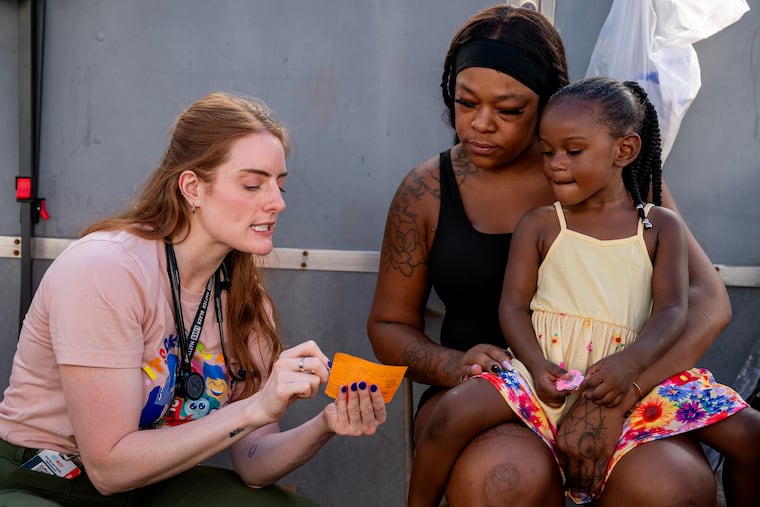
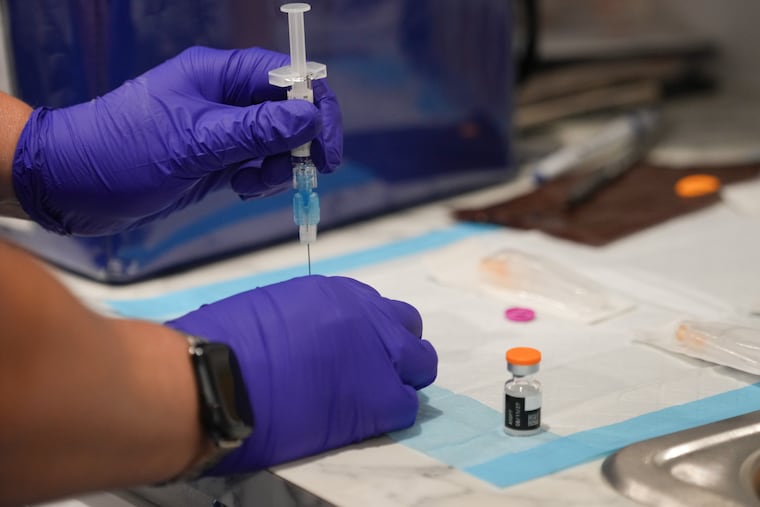
The measles, mumps, and rubella vaccine is available at many doctor’s offices, urgent care centers, pharmacies, federally funded health centers, local health departments, and health centers run by the state health department. The state has also hosted pop-up clinics in affected areas during the outbreak.
People interested in getting a vaccine for themselves or their children should call ahead to providers to check availability, the state says.
Typically, the MMR vaccine is given in two doses, one at around a year old, and one between 4 and 6 years old. Amid the measles outbreak, state health officials are now recommending that parents in affected areas vaccinate children early to protect them against the highly contagious disease, which can infect up to 90% of unvaccinated people exposed to it.
Babies between six and 11 months who live in, or will travel to, affected areas, can get an early dose of the MMR vaccine, then a second dose at 12 to 15 months and a third at 4 to 6 years old, the state says.
Children over a year old who haven’t received any MMR shots should get one dose now, and a second at least 28 days later. Children with one dose of the MMR vaccine should get a second dose now, provided it’s been 28 days since their first shot.
Adults and teenagers who have never had measles or a measles vaccine should get two doses at least 28 days apart.
Infants younger than six months cannot receive the vaccine. People with severely weakened immune systems, those with a history of severe allergic reactions to the MMR vaccine or a vaccine component, and pregnant women should talk to their doctors about their options, the state says.