A 20-year-old Amish woman with leukemia got measles and died in Pa.’s largest outbreak in three decades
After measles swept through her household, the young woman wanted to get vaccinated. Her doctor said she couldn't because she had leukemia and the treatments had weakened her immune system.
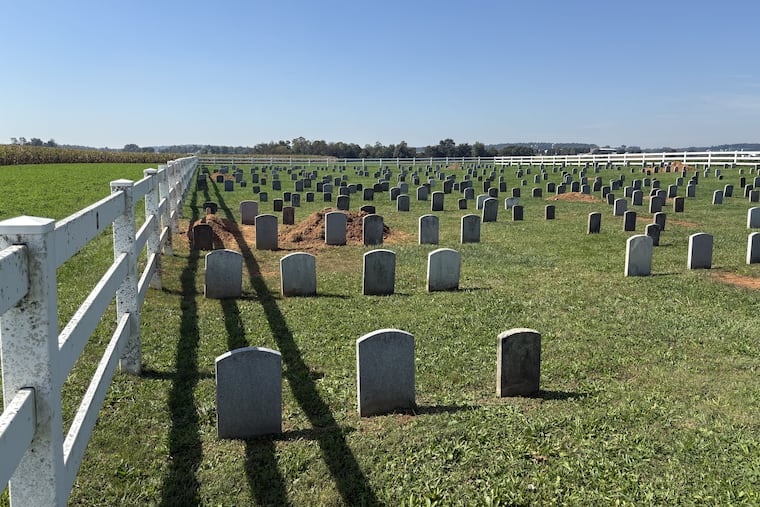
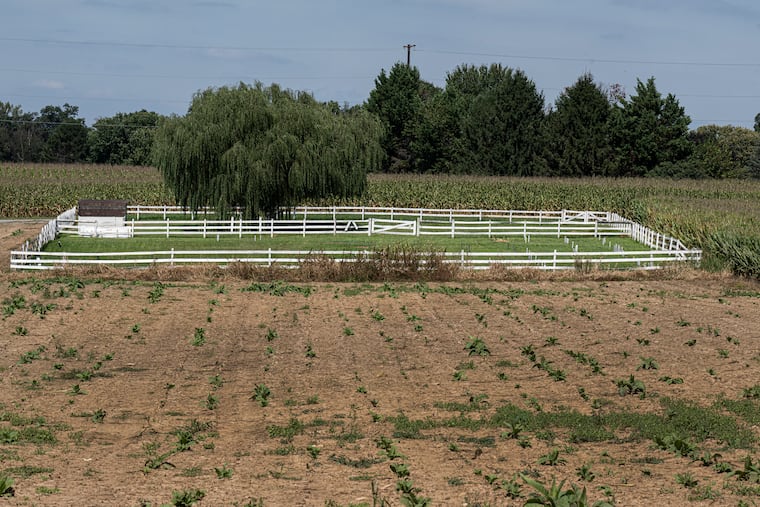
The headstone had not yet been placed Thursday on the freshly dug grave where a 20-year-old Amish woman was buried this week amid the rolling clover fields and dairy farms at the edge of suburban Philadelphia.
Newly wed, and receiving treatment for blood cancer, she was the last of nine siblings sickened when measles swept through her unvaccinated family’s home on a one-lane road in Lancaster County.
At first, the home remedies that eased their symptoms seemed to help her, too: Soothing the fever with bath soaks. Calming the rash with coconut or olive oil. Cloistering in a dark room to ease light sensitivity.
Then her fever spiked. She struggled to breathe and had to sleep sitting up in a recliner in the living room, her maternal grandmother recalled.
Her family does not operate cars, in keeping with Amish beliefs, so they hired a driver to take her to the emergency department at Hershey Medical Center about an hour away. She died about two weeks later in the intensive care unit there, her grandmother said.
Speaking on the porch of her stone farmhouse, the grandmother described the family’s experience with Pennsylvania’s largest measles outbreak in three decades, now the nation’s largest. At her request, The Inquirer withheld her name and that of her deceased granddaughter to protect the family’s privacy.
She said her granddaughter ultimately developed double pneumonia and died after the family decided to discontinue use of a ventilator.
The cancer made her especially vulnerable to a virus as contagious as measles, which will infect 9 in 10 unvaccinated people who are exposed.
“Her immune system wasn’t built up,” the grandmother said. “She just couldn’t take it with the measles.”
Pennsylvania reported on Wednesday its fifth measles-related death, revealing only that the latest fatality was an unvaccinated Lancaster County resident. Health officials did not provide further details, citing privacy laws.
But it appears from the grandmother’s account, along with other records and news reports, that three of the five deaths occurred in adults with measles. Other reported deaths included an 18-year-old Amish woman from Mifflin County and a 40-year-old from Jefferson County with severe respiratory conditions. Two Amish infants in Lancaster County who had confirmed measles cases also died. All five cases involved people who were unvaccinated, either by choice or because they were too young to receive vaccines.
The number of deaths in adults is striking, said Paul Offit, who heads the Vaccine Education Center at the Children’s Hospital of Philadelphia. Widespread childhood vaccinations had eradicated the disease in the United States, leaving mostly children too young to be vaccinated at high risk in recent decades. Now multiple generations of unvaccinated children are adults, exposing wider vulnerabilities across the state, Offit said.
“We’re aging out a population that was never vaccinated,” he said.
After learning the details of the 20-year-old’s death from The Inquirer, Offit explained that measles commonly leads to pneumonia.
“The measles virus reproduces itself in the lungs and can cause severe and occasionally fatal infection,” he said.
Too late to get vaccinated
The young woman, the second oldest in a line of nine siblings, ages 6 to 22, feared getting measles in the outbreak in Lancaster County, her grandmother said.
About two years ago, she was diagnosed with leukemia, a blood cancer, and began medical treatment with the help of an “English” neighbor — as Amish call outsiders — to drive her to her medical appointments.
The treatment regimen of chemo and steroids further weakened her immune system. She knew she was at risk of more severe sickness from a viral infection like measles, which started spreading throughout her family in the late summer.
Her eight siblings, her parents, and her new husband all got sick, the grandmother said.
Along with home remedies, family members drank extra fluids to stay hydrated, the grandmother said.
“They weren’t worried,” the grandmother said. “Measles just has to take its course.”
Although no one in the household was vaccinated, they are not opposed to the vaccine based on Amish beliefs. They believe it’s an individual choice, she said, and many Amish people opt not to get vaccinated because they “don’t know what’s in it.”
“We wouldn’t tell people not to get vaccinated,” the grandmother said. “It’s up to each person.”
As illness spread in her household, her granddaughter grew more worried about getting the virus than about the vaccine that medical authorities have long considered safe and effective.
She asked her doctor if she could get a measles vaccination. Her doctor said no. “She wasn’t allowed to get the shot because she was on chemo,” the grandmother said.
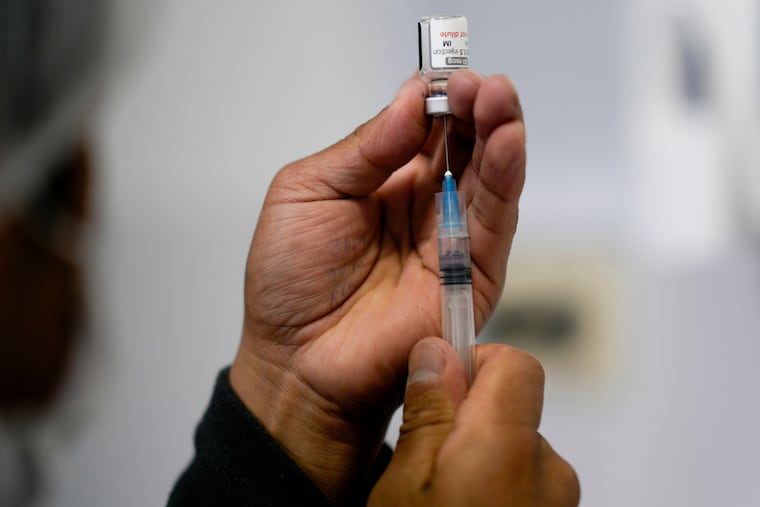
The measles vaccine contains a live but weakened virus, and her granddaughter was already immunocompromised from the leukemia treatment.
After getting measles, her granddaughter began to feel better in early September. She picked vegetables from the family’s garden to make soup using tomato juice as the broth. She canned jars for the coming cold months, her grandmother said.
“She had good days,” the grandmother said.
Then, in mid-September, she spiked a high fever, and her breathing became labored.
“She could hardly breath. Her lungs were just in bad shape,” she said.
The Amish typically only seek emergency hospital treatment until “sometimes we’re dying,” the grandmother said, recalling how her husband got chided by a doctor in 2018 for waiting too long to get the heart surgery he desperately needed.
“We do what we can at home,” she said. “We have so many natural things we can do.”
By Sept. 11, the family knew it was time to take her granddaughter for emergency care at Hershey Medical Center.
At Hershey’s ER, doctors gave her a chest X-Ray, but sent her home before reading it, the grandmother said.
“They wouldn’t do anything for her. They didn’t want her there,” she said. (A Hershey spokesperson did not reply to a request for comment on Friday.)
A Hershey provider later called and left a voicemail message asking the family to bring her back. Although the family has a phone in their house, the grandmother said they rarely use it. With the ringer off, all calls go to voicemail, she said.
A driver took them back to the hospital, where she was admitted on Sept. 14. An ultrasound showed fluid between the lining of her lungs and in her lungs. She was diagnosed with double pneumonia, her grandmother said.
Hospital staff hooked her up to supplemental oxygen.
“They had the oxygen up as far as they could and she still had to work to breathe,” the grandmother said.
About a week later, they moved her to the intensive care unit, where they sedated her so they could put her on a ventilator while intubated.
The hospital allowed two family members at a time to sit by her bed. Her granddaughter’s young husband and the girl’s mother sat vigil, the grandmother said.
As she continued to deteriorate, life support was the only remaining option, and it carried the risk of neurological complications, including brain death.
The family didn’t want that, the grandmother said. “They couldn’t do anything more,” she said.
They turned off the oxygen and shut off the ventilator, Family members, including her new husband’s parents, gathered around her bed.
She died with a breathing tube still in her mouth, the grandmother said.
A happy first year of marriage
More than 300 people came to the family’s home on Monday for the funeral service and viewing. She was buried in a cemetery near the family’s home, about a month before what would have been her first wedding anniversary.
Despite being ill with leukemia, her granddaughter’s trademark “rosy pink cheeks” and “beautiful smile” beamed on her wedding day, her grandmother recalled.
The November 2025 wedding, held at the family home, was a festive affair, with plates loaded up with chicken and vegetables, chicken and filling, pickled cabbage, and cooked celery.
She feels sorry for her granddaughter’s husband, who declined to be interviewed. “They had a good year together,” she said.
At the young woman’s home, two black dogs, with hay in their matted curly hair, greeted an Inquirer reporter on Thursday. Some of her family members were outside, unloading cornstalks from a horse-drawn wagon and feeding them into a John Deere harvesting machine.
They stopped working and spoke to one another in Pennsylvania Dutch, a centuries-old German dialect, before fetching the young woman’s father, who declined to be interviewed.
Staff writers Aubrey Whelan and Sarah Gantz contributed to this article.