Violinist makes recital debut
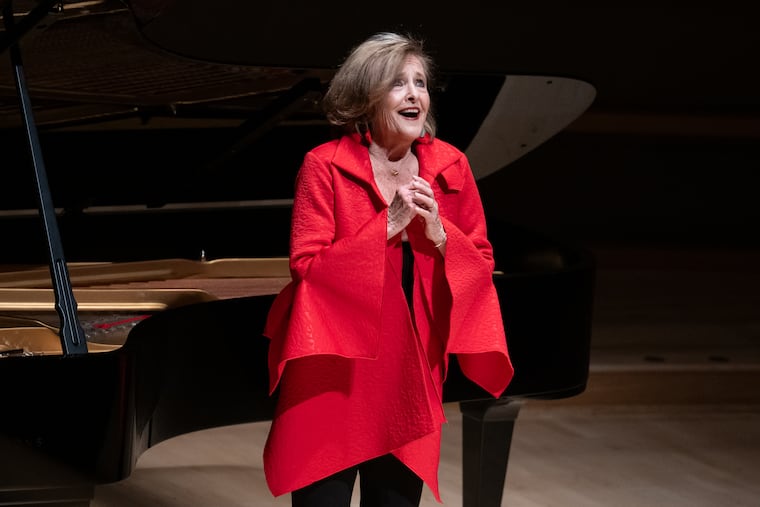
Violinist Jennifer Curtis arrived at her Philadelphia recital debut - intriguingly - with the world-weariness of the young and the committed, as if she'd been out all day protesting something important. She was game for the local premiere of an unfinished
Violinist Jennifer Curtis arrived at her Philadelphia recital debut - intriguingly - with the world-weariness of the young and the committed, as if she'd been out all day protesting something important. She was game for the local premiere of an unfinished George Enescu
Airs on Romanian Folk Style
in a program featuring composers who were also violinists. One such composer was she: Her unaccompanied violin work titled
Cave Paintings
reflected enlightened global influences from just about everywhere.
Whether or not these were pluses in this Astral Artistic Services event (and they were for me, since Curtis is the antithesis of the perky, efficient conservatory grad), she treated Brahms not as an unfathomable mystery or a monument admired from a distance. She was eyeball-to-eyeball with Brahms'
Violin Sonata No. 1
(Op. 78)
in a startlingly authoritative performance that took you deep inside the piece. Most performances have the big moments, but Curtis' structural understanding created a keen through line, often via intense treatment of secondary voices, not by imposing a sweeping, Wagnerian sense of line onto the piece. Each musical thought had a distinctive, less-than-seamless personality; somehow, overall unity wasn't taxed.
The performance was so much of a piece, you weren't sure how much credit belonged to the ever-marvelous Natalie Zhu, whose treatment of the keyboard was almost Mozartean, following the old Wanda Landowska dictum that every finger should act like it has its own brain.
Elsewhere, repertoire discoveries were rampant. The world doesn't have enough Enescu, and these newly completed
Airs
are welcomely craggy in ways his early, folk-style piece are not. For Tartini's
Sonata in G minor ("Devil's Trill")
, usually a showpiece for violin and piano, Curtis used a baroque bow and period-style continuo with harpsichordist Davyd Booth and cellist Susan Babini. The performance's delicacy - not virtuosity - was the most memorable aspect, as well as trills that flickered attractively. Ysaye's sumptuously lyrical
Poeme Elegiaque
came off so well you wondered why it's never heard. Curtis' own
Cave Paintings
lost me, but if composing enables her insights into other composers, it's an activity seriously worth pursuing.