They got dream jobs when they were hired at the Academy of Natural Sciences. Then it closed.
These Academy of Natural Sciences museum staffers dreamed of working with dinosaur fossils and live animals most of their lives. It got ripped away when the museum shuttered in late September.
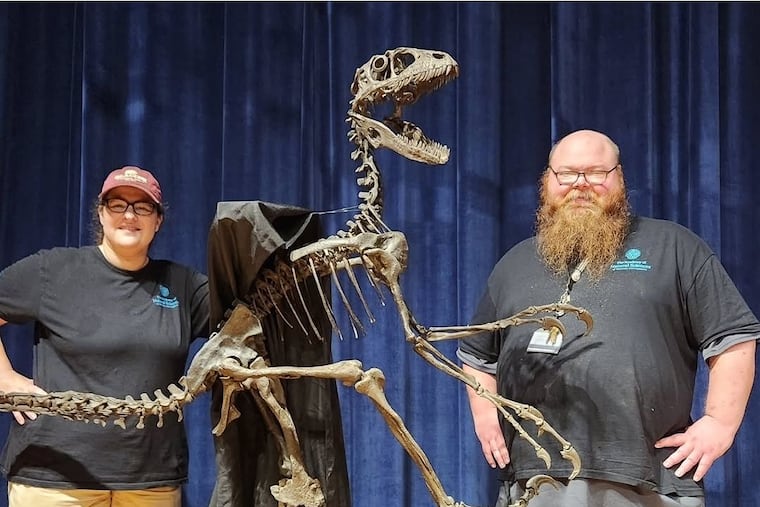
As a toddler gazing up at the meticulously assembled cast dinosaur bones evoking a Tyrannosaurus rex, Amber Redfield knew she wanted to spend as much of her life as possible at the Academy of Natural Sciences.
By then, The Land Before Time and Jurassic Park had already hooked her on all things dino, but beholding their actual body parts and scale at the museum molded her passion into a dream.
For nearly 15 years, she lived that dream as an Academy employee, most recently as an educator, until it all came tumbling down on Sept. 1, when she and her department learned the museum would close at the end of the month and their jobs would be eliminated.
The news broke the hearts of employees, many of whom aspired to work at the Academy not long after they learned to walk and talk. For some, that goal served as a guiding light through academic hardships. For others, working and volunteering there fostered confidence and creativity. For all, it offered a rare opportunity to ignite a passion in local kids that the museum had ignited in them.
“My whole life is that place,” said Redfield, 37, whose last day was Nov. 1. “I feel like a part of my soul has been ripped out.”
This career was all she ever wanted. She managed Dinosaur Hall, the exact room in the museum she marveled at as a child, geeked out with visitors about new developments in the field, and whipped out fossils so mind-bogglingly ancient they brought museum patrons to tears.
“‘I can’t believe I’m holding this right now,’” they would tell her, grasping an approximately 66 million-year-old hadrosaur leg or back bone.
Perusing some of the older specimens in the academy’s collections — “it’s the closest we get to time travel,” said Liam O’Donnell, 27, who worked with Redfield. His last day as an experience and engagement educator was Oct. 1.
Working at the Academy over the last four years was a dream come true for O’Donnell — presenting a wide-eyed child with a hissing cockroach or answering questions about whether velociraptors would have liked tacos.
O’Donnell dreamed of working at the Academy since his first visit there at around 6 years old. He was wowed by how much humanity had managed to learn about such old species.
But, throughout his academic career, his ADHD presented hardships, particularly as he pursued his biology degree at Widener University.
“I came very close to flunking out,” he said. “I failed chem three times.”
Weekend visits to the Academy, he said, kept him motivated to graduate.
The museum served a similar purpose for former education and experiences manager David Schloss, 39, who worked at the Academy for 15 years before his last day Nov. 1.
Schloss’ love for dinosaurs dates back to kindergarten, when he was asked to name a word that starts with P and offered pterodactyl.
As a biology student at Wheaton College in Massachusetts, Schloss was having difficulty in school. So he took several months off to be with his sister in Philadelphia and volunteered at the Academy cleaning and preparing fossils.
After that, “I kind of had a direction and drive,” Schloss said. “I was dean’s list for the rest of my time until I graduated.”
Inspiration and fulfillment always lived around the corner during Schloss’ time working at the museum. Before it closed during the pandemic, he ran the butterfly house and discovered a half-male, half-female butterfly that he got to put his name on when it was entered into the entomology collections.
The live animals at the Academy similarly spoke to Anwar Abdul-Qawi.
Now 32, he still remembers seeing his first live animal show at there as a child. A self-proclaimed “super animal nerd,” he was awestruck at seeing the creatures onstage handled with such expertise.
“I can’t wait to do this one day,” he thought to himself.
But he was a shy child with a pretty severe stutter, so speaking in front of a crowd seemed impossible.
In high school he began volunteering at the Academy, then got his degree in zoology at Delaware Valley University. Soon after, the academy hired him. One live animal show after another his stutter subsided, his confidence grew, and, 11 years later, public speaking became one of his greatest skills.
His final role at the Academy was manager of animal programs, running the live animal department that hosted the shows that awed him as a child.
The Academy never wavered in supporting his dreams. When he got interested in wildlife photography, the museum displayed his photos. When he yearned to go abroad, Academy leaders sent him to Equatorial Guinea to document a research trip. It was his first time leaving the country. He was so excited, he cried in bed the whole night leading up to the flight, wondering: “Is this real?”
“I didn’t think this was something that was ever going to happen to me,” he recalled.
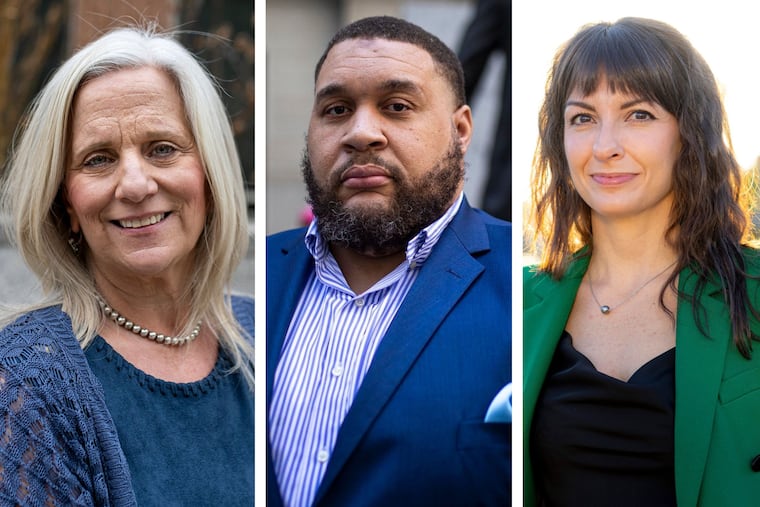
Working at the Academy also opened doors for Redfield and Buddy Muhler, an educator who ran the school programs at the museum. Neither Redfield nor Muhler ever graduated college. For Redfield, that was due to learning challenges, including dyslexia. For Muhler, school just was not his strong suit.
Nevertheless, the Academy gave them a chance. For Redfield, it came after she did a stint volunteering there and her enthusiasm and level of paleontologic knowledge quickly became evident. For Muhler, 42, that opportunity came after several years working at another museum.
It “took a lot of hard work and timing and luck,” Muhler said.
For Schloss, learning that the museum would close felt like witnessing “a seismic event,” he said — one not unlike the alleged asteroid strike that wiped out the dinosaurs. This time, it was the extinction of “a community of people who tried to do their absolute best to engage the public with what felt like a piece of string, a pencil, and a wad of gum,” Schloss said.
Perhaps the hardest part is knowing that, if the museum never reopens, he won’t be able to share the place he has spent the last decade and a half with his 19-month-old daughter as she grows up.
“It crushes me,” Schloss said.
Developments earlier this month offered a glimmer of hope when Drexel University, which is affiliated with the Academy, accepted an offer from the William Penn Foundation to fund feasibility studies on the future of the Academy. But whether that could yield a reopening of the museum will likely remain unknown for months.
In the meantime, O’Donnell, Muhler, and Schloss are job hunting.
“I can’t imagine myself working anywhere else,” Muhler said, but “I can only live on severance for so long.”
Abdul-Qawi moved to Costa Rica to do full-time sea turtle conservation work.
As for Redfield, she has turned down job offers at other institutions in the hopes the Academy museum will reopen.
“But I can’t wait forever,” she said. “That’s the scary part.”