Democrats: Women, Latinos back Clinton in popular vote.
LAS VEGAS - Sen. Hillary Rodham Clinton won the popular vote in the Nevada caucuses yesterday with strong support from women, brushing past rival Sen. Barack Obama and giving a lift to her campaign as the race for the Democratic nomination moves to South Carolina.
LAS VEGAS - Sen. Hillary Rodham Clinton won the popular vote in the Nevada caucuses yesterday with strong support from women, brushing past rival Sen. Barack Obama and giving a lift to her campaign as the race for the Democratic nomination moves to South Carolina.
It was the second victory over Obama in as many weeks for the New York senator and former first lady, whose win in the New Hampshire primary this month also was fueled by female voters.
But the Illinois senator claimed to have won the edge in the state's national-convention delegates, 13-12, because of the complex formula that the Nevada party uses to award them.
Former North Carolina Sen. John Edwards finished a distant third.
"I guess this is how the West was won," Clinton told cheering supporters at the Planet Hollywood Resort & Casino on the Las Vegas Strip. "Obviously this is about delegates, but it's also about what people are voting for and who they think the best president will be."
Clinton's Nevada victory showed her strength with Hispanic voters, a key segment of the electorate in several of the 22 states holding primaries and caucuses Feb. 5, including California and New Jersey.
Hispanics opted for Clinton by a ratio of better than 2-1 yesterday, according to a poll of people entering caucuses for the TV networks and the Associated Press.
Obama, who is expected to campaign in Georgia and South Carolina today, flew back to Chicago, leaving behind a short statement that did not acknowledge a setback.
"We ran an honest, uplifting campaign in Nevada that focused on the real problems Americans are facing, a campaign that appealed to people's hopes instead of their fears," the statement said. "That's the campaign we'll take to South Carolina and across America in the weeks to come, and that's how we will truly bring about the change this country is hungry for."
Nearly 116,000 Democrats streamed into 520 caucus precincts in a sometimes raucous display of democracy that included caucuses in nine casinos.
It was a record for the state party's caucuses, which drew just about 9,000 people four years ago.
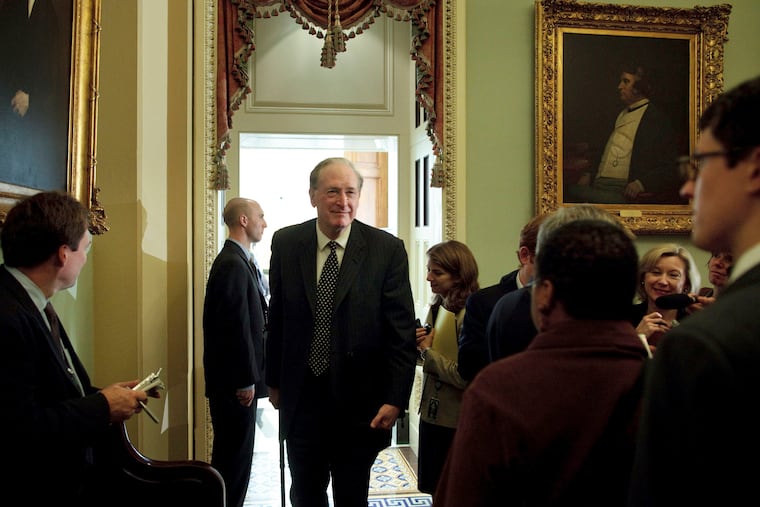
But this year, national party officials, at the urging of Senate Majority Leader Harry Reid (D., Nev.), moved the state to an early position in the nomination process. They said they wanted to give the West a more influential voice and draw on Nevada's large Latino population.
Nevada has been both a swing state and a good predictor of the eventual winner in general elections for president. The state has been decided by 4 percentage points or fewer in each of the last four presidential elections - and Nevada voters have gone with the winner every time since 1976.
The key battle between Obama, seeking to become the first African American president, and Clinton in South Carolina on Saturday is expected to be over the vote among blacks, who make up about half the Democratic primary electorate in that state.
Race was a factor in yesterday's voting, the entrance poll suggested. White caucus-goers went for Clinton over Obama, 52 percent to 34 percent; whites made up two-thirds of the electorate in Nevada. African Americans broke heavily for Obama, 83 percent to 14 percent; blacks were 15 percent of the electorate.
Independents were allowed to participate in the Democratic caucuses, and Obama enjoyed a healthy margin among them, but they made up only 15 percent of yesterday's electorate, lower than in Iowa and New Hampshire.
But the main factor behind Clinton's win appeared to be a gender gap. Women made up nearly 60 percent of the electorate, and they favored the former first lady 51 percent to 38 percent. The two candidates ran about even among men.
"Obama talks a lot about change, but I haven't heard as much specificity from him," Mary Witti, a 60-year-old tax preparer from Boulder City, said in an interview after a Clinton rally Friday night. "She has experience. You need to have some gray hairs because the 'how' is as important as the 'what' in getting things done."
Said her friend, Marilyn Doty, 84: "I've always wanted a woman president, and I want to have one before I go six-foot under."
Rachel Johnson of the Summerlin section of Las Vegas said she supported Clinton because of her experience and the belief that she would be tough enough to withstand a Republican onslaught in the fall.
"She has a lot of experience of people being mean to her," said Johnson, 39, who is a lawyer. "I like the way she kept going after losing in Iowa. And I'd like to see a woman president."
Clinton spent the week leading up to the caucuses roughing up Obama. She said he would not protect Nevadans from the proposed nuclear-waste disposal facility at Yucca Mountain - 90 miles north of Las Vegas - because he had accepted money from the nuclear-energy industry. Her campaign used a vote in the Illinois legislature to argue that Obama was insufficiently devoted to abortion rights, and said he opposed the spread of gambling in his native state because of its social costs and questionable morality in preying on the poor.
More pointedly, the Clinton campaign sent out a mailer (and repeated the accusation in stump speeches) accusing Obama of favoring a "trillion dollar" tax increase on "hard-working families" in Nevada.
This was a reference to Obama's proposal to raise the cap on income subject to Social Security tax - currently, no payroll tax is levied on income above $97,500 - to solidify Social Security and Medicare. Obama has said he wants to begin collecting Social Security tax on incomes over $200,000.
Clinton says that economic growth and greater fiscal discipline in Washington would ensure the solvency of the system.